China-linked hackers impersonated US AI insiders as global race heats up

Daftar Isi
Suspected China-Aligned Hackers Targeted US AI Policy Experts
Activelifezero.com – A cyber espionage campaign that used the identities of American technology and policy figures sought access to people working on artificial intelligence policy, export controls and military uses of AI, cybersecurity firm Proofpoint said Thursday.
The activity focused on email accounts connected to US universities, think tanks and law firms. The apparent goal was not simply to compromise a company developing AI systems, but to gain visibility into the people shaping the United States’ response to a fast-moving technological and strategic competition with China.
Proofpoint said it had not identified evidence that the organizations targeted in the campaign were successfully breached. Still, attempted access to researchers, lawyers and policy specialists can be valuable to an intelligence operation, particularly when those individuals exchange ideas about regulations, commercial restrictions and national-security applications of AI.
Mark Kelly, a staff researcher at Proofpoint, said the company believed the group operated in alignment with the Chinese government.
“We are confident that [the hacking group] is a Chinese government-aligned threat actor based on targeting consistently in line with Chinese government interests, observed infrastructure and technical artifacts, and corroboration from industry partners,” Kelly said in an email.
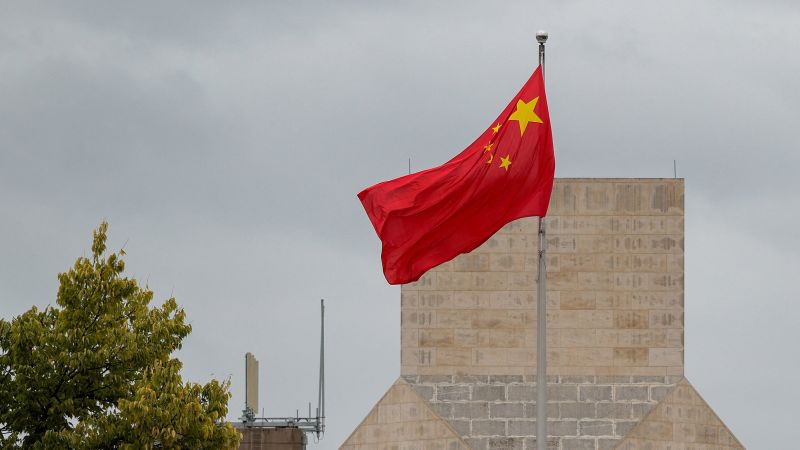
The Chinese Embassy in Washington, DC, was asked for comment. Beijing has repeatedly rejected allegations of state-backed hacking by the United States.
Impersonation of former White House official
One element of the campaign involved the identity of Lynne Parker, a former senior White House technology official who served during both the Trump and Biden administrations. Parker is now associate vice chancellor emerita at the University of Tennessee, Knoxville.
In one attempted intrusion, the actors sent a message to an employee at a US law firm while posing as Parker. The email invited the recipient to join an “AI policy advisory committee.” A later message included a malicious document presented as additional information about the supposed committee.
Parker said she learned about the impersonation after professional contacts began reporting questionable emails apparently sent in her name. Because she did not know every intended recipient, warning all possible targets was difficult.
“My first concern was for the colleagues who might receive the impersonated email,” Parker said. “I wanted to warn them but realized that’s very difficult to do when I don’t know who is being targeted.”
She also described the personal impact of seeing long-standing professional relationships used as a tool for deception.
“On a personal level, I felt sadness that relationships I’ve built over my career were being exploited by bad actors to deceive others,” Parker said in an email.
The use of recognizable names is a common social-engineering tactic. A message that appears to come from a respected policymaker, colleague or industry executive may be more likely to prompt a reply, a password submission or the opening of an attachment. In this case, the apparent focus on AI specialists suggests the attackers saw policy networks themselves as a valuable source of intelligence.
Anthropic identity also used in phishing effort
Proofpoint said the suspected operatives also impersonated a senior employee of Anthropic, the US artificial intelligence company behind the Claude models. On February 26, an email sent under that employee’s name reached an AI policy analyst at a US think tank.
The message carried the subject line, “Request for Feedback on Military Integration of Claude,” referring to Anthropic’s AI technology. During the exchange, the attackers tried to obtain the policy analyst’s email credentials, Proofpoint said.
The timing placed the operation near a period of heightened debate about the military use of advanced AI. The day after that email was sent, the Trump administration directed federal agencies and military contractors to stop doing business with Anthropic after the company declined to permit unrestricted Pentagon use of its technology.
The episode illustrates why AI governance has become a target-rich area for espionage. Decisions about how AI systems may be used, which capabilities require restrictions, and what technology may be exported can affect commercial competition, military planning and diplomatic relationships. Researchers and advisers may hold sensitive insights even when they do not work directly for a technology company or government agency.
AI Competition Raises the Stakes
The suspected hacking attempts took place in February and July, during a period when AI has remained central to US-China relations. President Donald Trump discussed the subject with Chinese leader Xi Jinping at the White House last week, but the meeting did not result in a major agreement on the technology.
Trump has pushed back on calls for stronger safeguards around leading AI models, arguing that excessive restrictions could leave the United States behind China in the contest for technological leadership. The debate has put pressure on policymakers to balance innovation, security and the potential risks of increasingly capable systems.
Last month, the Trump administration accused Chinese AI companies of carrying out “industrial-scale” theft of trade secrets from American competitors to cut costs and accelerate product development. China denied those claims.
Concerns about access to AI expertise are not limited to the United States. Britain’s MI5 intelligence service warned Wednesday that British academics had contributed AI and cybersecurity research to a Chinese institute with close links to Chinese intelligence. The advisory said some researchers might not have realized the nature of those ties.
Security specialists tracking Chinese cyber activity have warned that the pursuit of AI-related intelligence can extend across the entire sector. Targets may include semiconductor technology, researchers, policy advisers, legal experts and organizations working on the rules governing advanced systems.
For institutions involved in AI policy and research, the campaign is a reminder that sensitive work can attract attention even when it is not classified. Verifying unexpected invitations, confirming attachment authenticity through a separate communication channel and using strong account protections can help reduce the risk posed by persuasive impersonation attempts.
As governments and companies debate how rapidly AI should advance and what limits should accompany it, the people participating in those discussions are increasingly part of the security landscape. The contest over artificial intelligence is being fought not only through model development and chip production, but also through efforts to understand and influence the decisions surrounding the technology.
Related Reading
Frequently Asked Questions
What is China linked hackers impersonated US AI insiders?
China linked hackers impersonated US AI insiders is the main topic of this guide. The article explains the context, practical details, and next steps readers should understand.
Why does China linked hackers impersonated US AI insiders matter?
China linked hackers impersonated US AI insiders matters because readers are looking for a useful answer, not just a short summary. Good content should match search intent and help them decide what to do next.