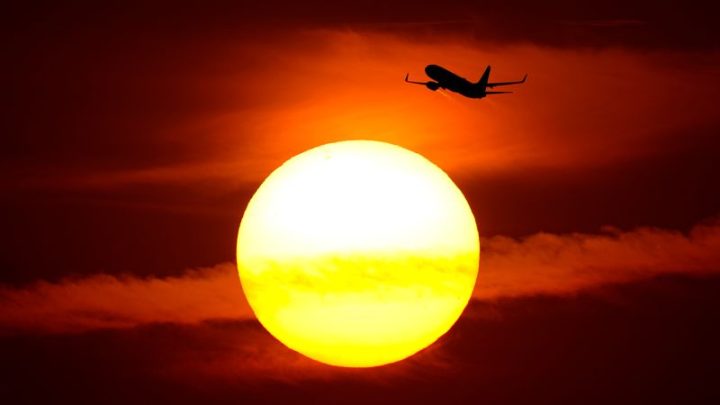
Volcanic ash leaves 170,000 travelers stranded at eight Indonesian airports

Daftar Isi
Volcanic Ash Blankets Jakarta as Eight Airports Ground Flights Across Indonesia
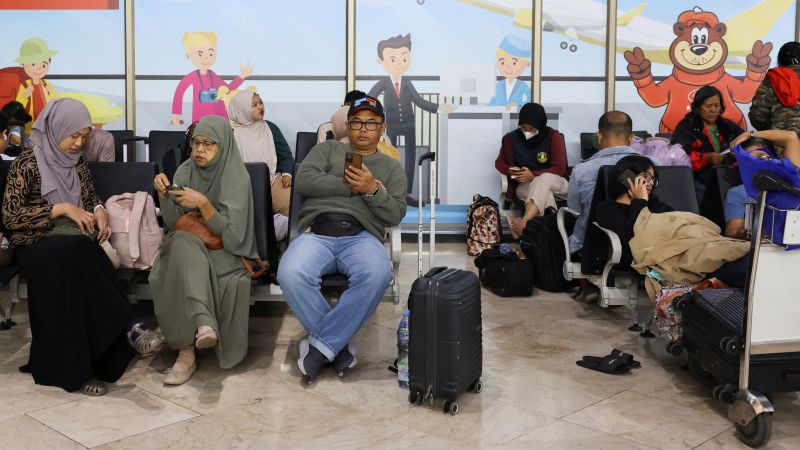
Activelifezero.com – A plume of volcanic ash stretching tens of thousands of feet into the sky has paralyzed air travel across western Indonesia, leaving roughly 170,000 passengers without flights as of early Monday morning. Eight airports — including both terminals serving the capital, Jakarta — remain shut while authorities assess the evolving hazard posed by repeated eruptions at Mount Anak Krakatau, a submarine volcano positioned midway between the islands of Java and Sumatra.
The Eruption and Its Reach
Anak Krakatau, whose name translates to “child of Krakatau,” entered its second consecutive day of major eruptive activity after first venting ash late on Friday. The volcano monitoring agency logged the most recent event at 8:23 p.m. on Sunday and cautioned that the likelihood of additional eruptions in the near term remains elevated. Meteorological agency BMKG recorded ash columns reaching approximately 20,000 feet (6,000 meters) above the Java-facing flank of the volcano and as much as 50,000 feet (15,000 meters) above the Sumatra-facing side. Fine particulate also drifted over portions of Banten province on Java’s western tip, blanketing residential neighborhoods and disrupting daily life well beyond the immediate volcanic zone.
The sheer altitude of the plume explains why the disruption has spread so widely. At those heights, prevailing winds can carry ash particles hundreds of kilometers before gravity and atmospheric turbulence settle them. For aviation, even concentrations far below what the naked eye detects can damage jet engines, corrode avionics, and reduce visibility to dangerous levels — which is why international operating standards mandate closure of affected airspace rather than case-by-case risk assessment.
Airport Closures and the Traveler Toll
Operators of Jakarta’s primary international gateway confirmed on Monday, via their official Instagram channel, that the airport would stay closed until at least 6 p.m. local time. The remaining seven airports in the closure zone — spanning the provinces of Lampung and West Java, among others — were ordered to remain grounded until no earlier than 08:59 a.m. Monday, giving airlines and ground crews only a narrow window to reorganize schedules.
Transport Minister Dudy Purwagandhi addressed the uncertainty in a written statement issued Monday:
“We cannot ascertain when this will end due to the dynamic weather.”
The minister’s remark underscored a recurring challenge in volcanic aviation response: unlike a storm front that can be tracked and timed with reasonable precision, eruptive activity is governed by subsurface magma dynamics that shift without reliable short-term forecasting. Airlines operating into and out of the affected corridor face cascading delays, crew-duty violations, and hotel overbooking as flights are cancelled or rerouted.
Ground-Level Health and Education Measures
Beyond the skies, the ashfall has prompted public-health advisories. Indonesia’s national disaster agency urged residents to wear protective masks whenever traveling outdoors, warning that inhaling fine volcanic particulate can irritate the respiratory tract and exacerbate conditions such as asthma. In Jakarta and the Lampung region, schools shifted to remote-learning arrangements to keep students away from ash-laden air, a measure confirmed by state news agency Antara.
For residents accustomed to Jakarta’s already dense traffic and air-quality challenges, the added particulate load represents a meaningful short-term health burden, particularly for children, the elderly, and those with pre-existing pulmonary conditions. Local hospitals and clinics have been advised to expect increased walk-in consultations for coughing, eye irritation, and skin rashes in the days following peak fallout.
Geological Context: A Volcano Born from Catastrophe
Anak Krakatau did not appear in isolation. It began to rise roughly a century ago from the caldera left behind when the older Krakatau (historically spelled Krakatoa) annihilated itself in a series of cataclysmic eruptions in August 1883. That event produced a chain of tsunamis that killed more than 36,000 people across the Sunda Strait and was loud enough to be heard nearly 3,000 miles away. Indonesia’s position along the Pacific Ring of Fire — the arc of subduction zones encircling the Pacific basin where tectonic plates converge — makes such volcanic and seismic activity a recurring feature of national life rather than a singular anomaly.
The ongoing eruption of Anak Krakatau, while dramatic, fits within the long pattern of activity expected from a young island volcano still consolidating its structure above a restless magma system. Authorities monitor the summit continuously, and the elevated probability of further events flagged by the monitoring agency means that the closure of airports and the suspension of flights may extend beyond the initial Monday window if eruptive frequency does not subside.
What Travelers Should Watch
Passengers with itineraries touching Jakarta, Lampung, or West Java airports in the coming hours should check airline status pages and airport social-media channels directly, as rebooking and refund policies vary by carrier. Ground transportation in ash-affected zones may also experience delays due to reduced visibility on highways and the need to clear runways and taxiways of deposited material before operations can resume. The transport ministry indicated it would issue updated timelines as meteorological conditions and eruption frequency permit, but no firm reopening schedule has been committed beyond the stated Monday deadlines.
Related Reading
Frequently Asked Questions
What is Volcanic ash leaves 170 000 travelers?
Volcanic ash leaves 170 000 travelers is the main topic of this guide. The article explains the context, practical details, and next steps readers should understand.
Why does Volcanic ash leaves 170 000 travelers matter?
Volcanic ash leaves 170 000 travelers matters because readers are looking for a useful answer, not just a short summary. Good content should match search intent and help them decide what to do next.