His family long wondered what happened to the World War II veteran who vanished in 1965. Then the FBI knocked on the door

Daftar Isi
A Knock at the Door Unlocks a 60-Year-Old Mystery on Oregon’s Coast
Activelifezero.com – Sandra Kalander, 85, lives in the wooded hills above Astoria, Oregon, where the Pacific fog rolls in thick each morning and the sound of gulls replaces the hum of traffic. When a woman in jeans and a sweatshirt appeared at her front door one spring day, Kalander assumed the worst: a door-to-door salesperson. What she did not expect was an FBI agent with a question that would unravel a decades-old silence in her family.
The agent, Special Agent Meagan Sharp, explained that a DNA sample from an ancestry test taken by Kalander’s late son Robert — who passed away more than a decade ago — had produced a genetic match to unidentified remains discovered in 1972 along a stretch of forest beside Highway 101 near Bandon, Oregon. The FBI needed a closer familial connection to confirm the identification. That single conversation set in motion the final piece of a puzzle investigators had been circling for over half a century.
The Man Behind the Mystery
The remains belonged to Armas Henry Lahti, a World War II Navy veteran who, after the war, made his living as a commercial fisherman along the Oregon coast. Lahti was the second cousin of John Kalander, Sandra’s husband, now 87. Though his family knew him by the nickname “Mousy,” those who met him described a man who was anything but timid — jolly, outgoing, and deeply embedded in the rhythms of coastal life.
Sandra Kalander remembers Lahti arriving at the household after the peak fishing season, dropping to the floor to play cards with her then-toddler Robert. The same Robert whose DNA sample, decades later, would bridge the gap between a forgotten body and a grieving family.
“It was shocking to find out, finally after all these years, what happened,” Kalander said.
A Disappearance Wrapped in Rumor
Sometime around 1965, when Lahti was in his 50s, he simply stopped appearing. His wife had died years earlier, and he had no children. He ran his own boat, moved constantly between ports, and kept to his own company. Family members noticed his absence but assumed he was simply following his solitary pattern. In that era, filing a missing-person report was far less common than it is today, and no formal report matching the body’s description ever surfaced.
Over the decades, whispers accumulated. The most persistent rumor held that Lahti had walked away from a bar dispute one evening, rifle in hand. Whether that story carried any truth remained unverified, and with each passing year the pool of living witnesses shrank to almost nothing.
Five Decades of Dead Ends
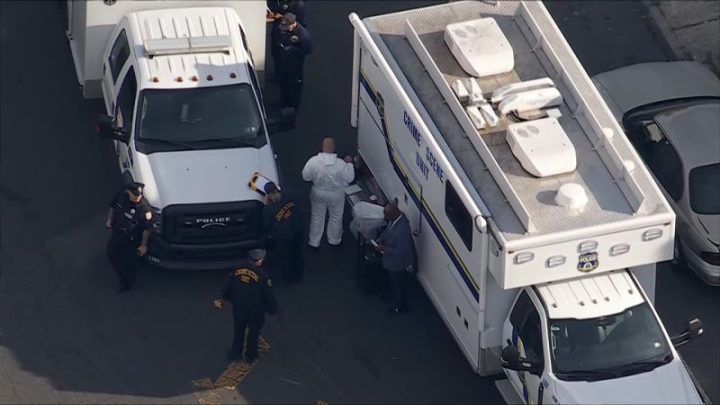
The body itself had endured a brutal history. Found in 1972 in the woods near Bandon, it had spent an unknown period exposed to rain, insects, and scavenging animals before being recovered. It then sat in storage for roughly 50 years. By the time investigators revisited the case, decomposition had erased most identifying features. The Coos County Sheriff’s Office noted that the remains bore “marks indicative of homicidal violence” — specifically, two bullet wounds to the head.
Detectives shared a composite sketch with the public in an attempt to jog a memory. No one came forward. Every conventional avenue — newspaper archives, vessel registries, neighbor interviews — yielded fragments but no definitive answer. The victim’s nomadic lifestyle, his lack of children, and the absence of a missing-person report made identification nearly impossible through traditional means.
Genetic Genealogy Closes the Loop
When Chancy Fabrizio, a volunteer special deputy at the Coos County Sheriff’s Office, took up the case in 2024, she was left with two realistic paths forward: decode the serial number stamped on the victim’s denture plates, or persuade a relative to undergo a costly DNA test. It was the latter route, combined with the growing field of genetic genealogy, that ultimately cracked the case open.
Genetic genealogy — the practice of tracing family lines through consumer ancestry databases — has become a powerful tool for solving cold cases in which traditional records fail. By comparing a victim’s DNA profile against millions of uploaded samples, investigators can identify distant cousins and work backward to a name. In Lahti’s case, the match surfaced through Robert Kalander’s test, linking the unidentified remains to a living family member and, by extension, to the man himself.
What Remains
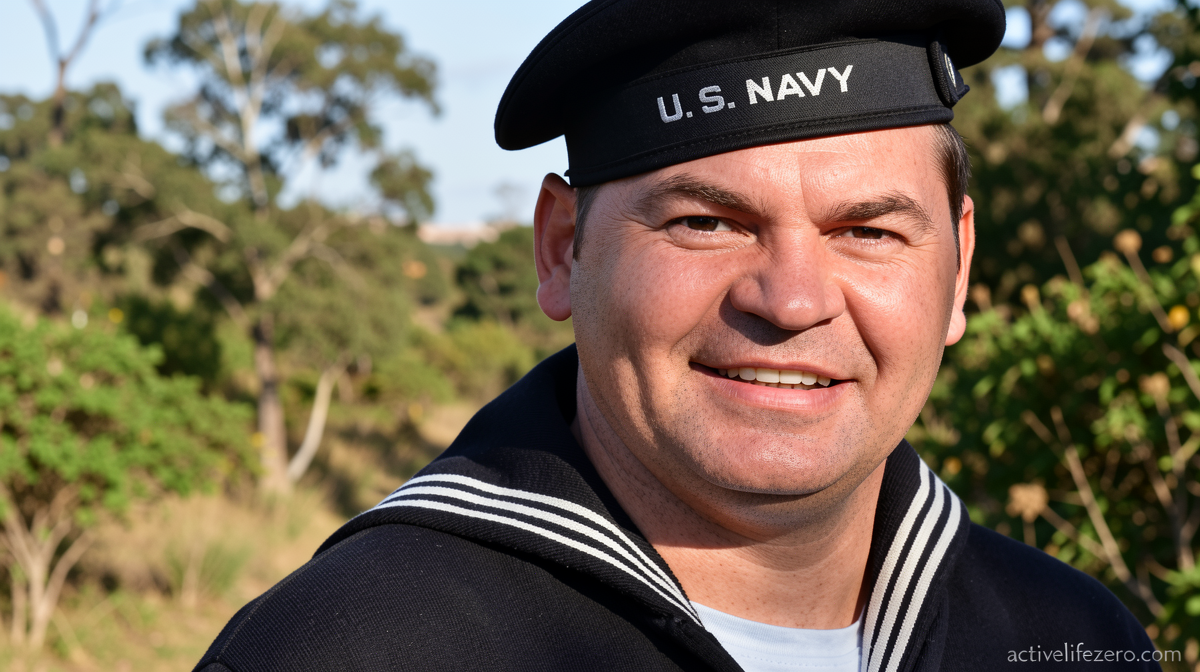
Old newspaper clippings offer scattered glimpses of Lahti’s life: a 1942 announcement of his enlistment as a boatswain’s mate, a photograph of him and his wife at a wedding, his mother’s obituary. Some records spell his first name “Armes,” an anglicized rendering of the Finnish form Armas that his family preferred. Among the Kalander household’s surviving possessions is a single photograph of Lahti in his Navy uniform, wearing his regalia with evident pride.
John Kalander recalls fishing alongside his cousin in his youth, slowly learning the man over successive seasons. Sandra Kalander, asked to characterize him, offered a simple assessment:
“Just a heck of a nice guy.”
For the Kalander family, the identification brings a measure of closure after more than sixty years of wondering. For Fabrizio and the small cadre of volunteers still working the file, the work is not finished. Questions remain about how Lahti ended up in that stretch of forest, whether the bar-fight rumor holds any grain of truth, and whether the person responsible is still alive. Time has eroded most of the context that might answer those questions. What it has not erased is the family’s need to know — and the quiet determination of investigators who refuse to let a nameless grave stay nameless.
Related Reading
Frequently Asked Questions
What is His family long wondered what happened?
His family long wondered what happened is the main topic of this guide. The article explains the context, practical details, and next steps readers should understand.
Why does His family long wondered what happened matter?
His family long wondered what happened matters because readers are looking for a useful answer, not just a short summary. Good content should match search intent and help them decide what to do next.