What it’s like to live with – and lose – a loved one with CTE

Daftar Isi
The Invisible Wound: How CTE Reached a Family Far From the NFL Spotlight
Activelifezero.com – Every few years, a headline lands that sends shockwaves through American sports culture: a new study suggesting that roughly one in four former NFL players who died between 2016 and 2021 carried chronic traumatic encephalopathy in their brains. The public debates for a few days, parents question whether their children should lace up cleats, and then the news cycle rolls forward to whatever fills the next slot. For most households, CTE remains an abstraction — a statistic attached to a sport that only .023% of high school athletes will ever play at the professional level.
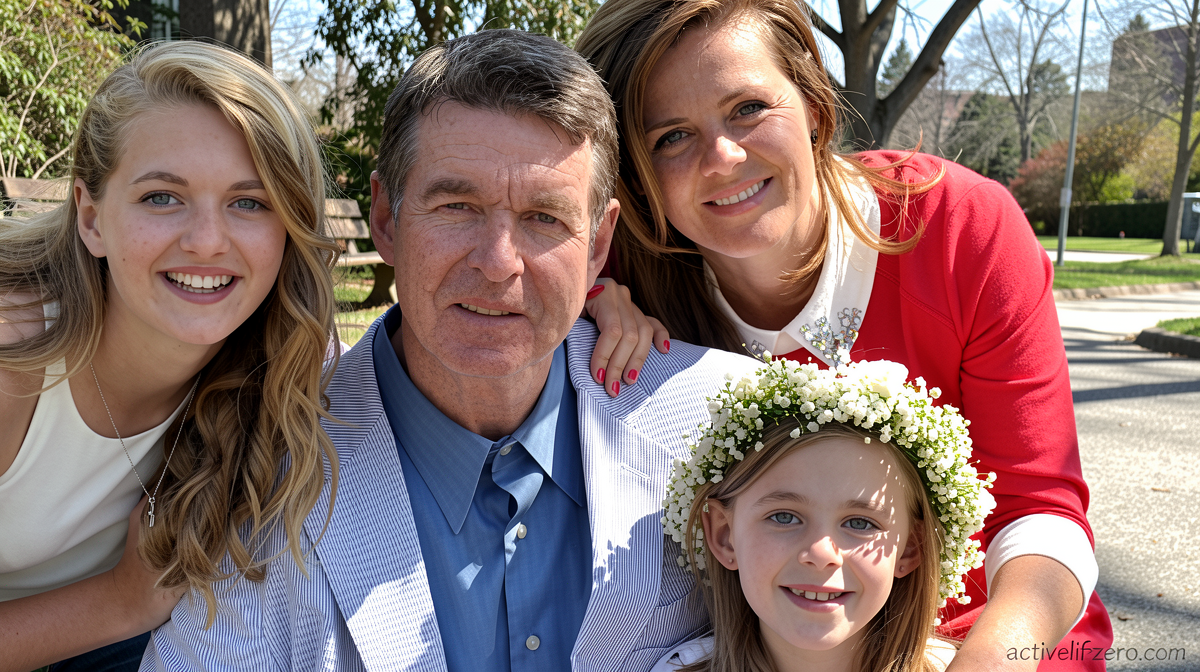
For Maura Horton, however, the condition was never abstract. It was the name given to the slow unraveling of her 58-year-old husband, Don, the father of her two daughters Hadley and Libby, and the man she had married with the expectation of decades together. Don never wore an NFL uniform. He never stepped onto a field under stadium lights for a national audience. And yet the cumulative toll of repeated head impacts sustained over a college football career ultimately claimed his life in May 2016, a fact confirmed only after a postmortem examination of his brain.
A Diagnosis That Missed the Mark
Don was a devoted fitness enthusiast. He avoided junk food, trained regularly, and treated his body with the discipline of someone who understood that health was non-negotiable. So when he began struggling to lift weights he had handled for years, the medical community pointed toward Parkinson’s Disease. Friends and acquaintances offered the familiar reassurance: of all neurological conditions, this one was supposedly the most manageable. They invoked Michael J. Fox as proof that a life could continue with dignity and even humor.
Maura remembers the diagnosis with a wry laugh now, but at the time the trajectory made no sense. One morning Don would be in the gym completing a full workout; the next afternoon he would collapse on the floor without explanation. Mood swings crept in. Sleep became fractured and fitful. Paranoia surfaced, followed by outright hallucinations. Maura initially attributed the worst episodes to medication side effects, but the pattern deepened rather than resolved.
She became what she calls her husband’s “self-appointed pit bull,” attending every physician appointment and peppering doctors with questions. In parallel, she researched independently. As Don’s condition continued its steep decline, a possibility she had not previously entertained began to take shape: what if the root cause was not Parkinson’s at all, but CTE?
The Conversation No One Wants to Have
Maura reached out directly to Chris Nowinski, co-founder of the Boston-based Concussion Legacy Foundation, via direct message. She then sat down with Don and proposed that he donate his brain to science after his death. His reaction was immediate and visceral. Here was a man who had built his identity around healthy living, who had turned his back on shortcuts and excess, and his wife was telling him that a decision made as a teenager on a college football field had set him on an irreversible course. That the game had done this to him. That nothing he had done since — no gym session, no dietary choice, no coaching decision — could alter the outcome.
Football was not merely what Don did. It was who he was. The moment his playing career ended, he pivoted into coaching, beginning a peripatetic life that carried him through stops in Ohio, New Mexico, and Virginia. In 1997 he landed what he considered the pinnacle: an offensive line coaching position at Boston College. He spent a decade with the Eagles before concluding his career at N.C. State. The sport had woven itself into every decade of his adult existence, and asking him to accept that it had also authored his death was asking him to surrender the narrative of his own life.
The Chasm Between Research and Reality
Maura does not resent the ongoing scientific work. She told CNN Sports that she remains grateful the reports are published and the investigations continue. What she resents is the silence that follows. The studies appear, generate a brief public conversation, and then vanish from public attention until the next death forces another cycle of headlines.
“No one sees the aftermath. No one understands what it’s like on a day-to-day basis. You see these studies and then no one talks about it again until someone dies.”
She frames her own experience with a metaphor she returns to repeatedly: CTE was an earthquake that entered her household and obliterated the blueprint she and Don had drawn together. That blueprint included a long marriage modeled on her own parents’ sixty-plus years of partnership. It included evenings in the stands watching Hadley play soccer, and watching Libby channel her analytical mathematics mind into a professional career. It included extraordinary walks down wedding aisles and ordinary walks around the neighborhood. It included the quiet, creaky privilege of growing old side by side. All of it, rerouted and ultimately destroyed.
“But this is an earthquake that shattered my family, and no one understands how shattering it is. I’m 10 years past and it’s still shattering us.”
Why the Gap Matters
Don Horton is not a data point in the most recent epidemiological study. He played at Wittenberg University, a Division III institution in Springfield, Ohio, that has collected five national championships and 799 wins over its football history — a record that earns respect among true college football loyalists but draws no national television coverage. His story illustrates a gap that research alone cannot close: the distance between the laboratory finding and the kitchen-table reality of a family watching a parent deteriorate, misdiagnosed, and ultimately lost. Maura wants to be a conduit, she says, helping to open a dialogue that moves beyond the annual headline and into sustained understanding of what CTE does to the people who remain. The earthquake, in her telling, does not stop shaking the day the aftershocks are measured. It keeps going, year after year, in the rooms where no one is watching.
Related Reading
Frequently Asked Questions
What is What it s like to live?
What it s like to live is the main topic of this guide. The article explains the context, practical details, and next steps readers should understand.
Why does What it s like to live matter?
What it s like to live matters because readers are looking for a useful answer, not just a short summary. Good content should match search intent and help them decide what to do next.