Republicans worry Trump’s midterms convention will flop

Daftar Isi
As Dallas Prepares for a Two-Day Political Spectacle, GOP Insiders Question Whether the Show Will Save the Party
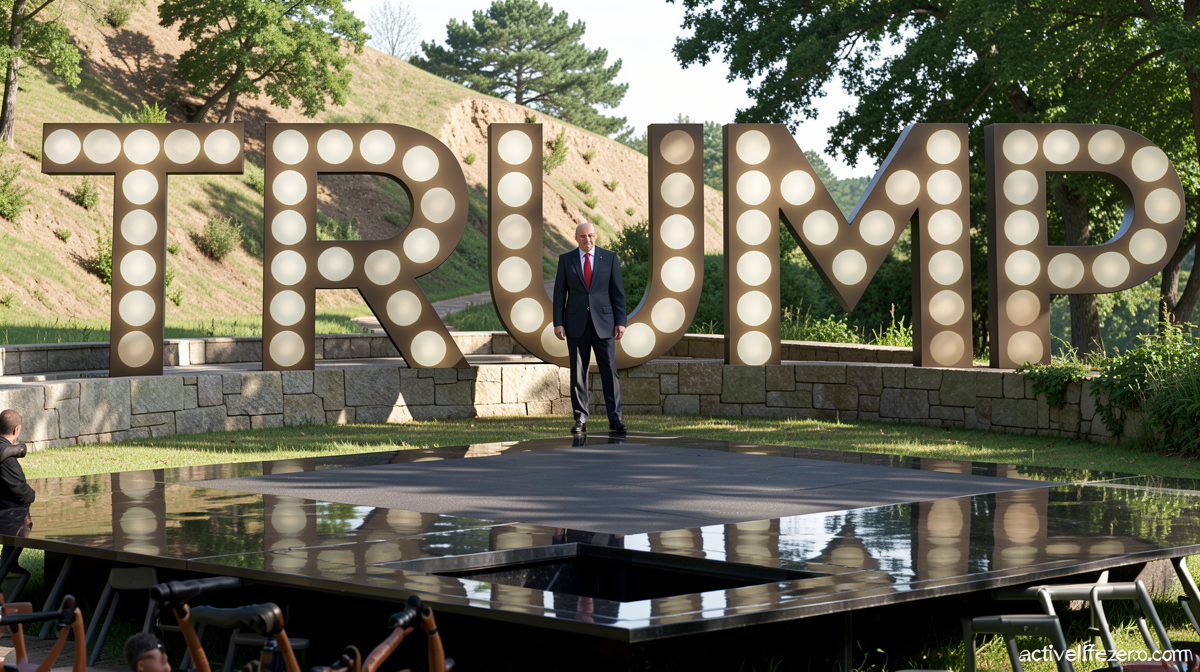
Activelifezero.com – The Republican National Committee has spent months assembling what it calls a landmark midterm convention in Dallas, a two-day gathering designed to rally the party’s base and project unity ahead of November’s elections. President Donald Trump, who personally championed the concept, framed the event as an unprecedented spectacle capable of reinvigorating a fatigued electorate and reshaping the party’s electoral trajectory. Yet within the GOP’s own corridors of power, a quiet but growing chorus of doubt has emerged over whether the production will land as intended — or simply amplify the very anxieties that already threaten the party’s seat totals.
The Political Arithmetic Working Against the Party
Every midterm cycle since 1946 has carried a structural penalty for the president’s party, and Republicans concede openly that this dynamic already tilts the odds against them. What makes the 2026 contest particularly treacherous is the absence of Trump’s name on any ballot. Exit polls and tracking surveys from the 2024 cycle showed that a substantial share of the MAGA coalition turned out specifically because of the president’s candidacy. Without that gravitational pull, party strategists fear turnout among their most reliable voters will crater.
“What is always the biggest issue when Trump is not on the ballot? Voters don’t show up,” said one Republican lawmaker running in a competitive district. “So what’s [Trump] trying to do? Motivate the base to come out.”
Compounding the turnout problem, national sentiment has deteriorated sharply over the past several months. Voters remain locked in anger over grocery prices, housing costs, and the broader cost-of-living squeeze. Simultaneously, frustration with the ongoing military engagement in Iran has eroded confidence in the administration’s foreign-policy judgment. Candidates across the map are scrambling to find local messaging that can outrun these national headwinds, and many question whether a weekend in Dallas will help them do so.
From Bold Idea to Execution Anxiety
The convention was conceived roughly a year ago, when the political environment was measurably calmer and the GOP’s polling position less precarious. At the time, most operatives inside the party regarded the concept as clever: a multiday showcase that would give candidates a national platform, generate media coverage, and energize donors. The nickname “Trumpapalooza” circulated informally among staff, underscoring the expectation that the president would be the event’s gravitational center.
That expectation has become the source of the most persistent internal criticism. Several state party chairs and district-level operatives have expressed concern that the programming will function less as a candidate-boosting vehicle and more as a presidential promotional tour — an outcome that could alienate voters who tuned in hoping to learn about the people actually on their ballots.
“I’ve heard people say, why are we doing this? What’s going on?” said Reb Wayne, a Texas-based Republican consultant. “It was a good idea at the time, but as we’ve gotten closer to it, I’m not sure it’s going to serve much benefit.”
One operative involved in internal deliberations acknowledged that the political climate has shifted materially since the convention was greenlit. Still, the operative noted that once Trump publicly announced the event, reversing course was no longer a realistic option. The same operative argued that meaningful upside remains: candidates who secure speaking slots gain a national-stage moment that can be repurposed into fundraising appeals and local media clips for weeks afterward.
Logistics, Fees, and the NFL Problem
The practical architecture of the event has generated its own friction. Lawmakers must pull out of their districts for two full days to travel to Dallas, where late-August temperatures are expected to make indoor venues feel oppressive. The choice of Dallas was driven largely by capacity: an RNC official explained that the city could accommodate the scale of production the committee envisioned.
“It’s not easy to get to Dallas,” said one person close to the White House. “They should’ve done it in Florida, or in DC.”
Entrance fees have drawn particular ire. House members face a minimum cost of $25,000 to attend, according to people familiar with the matter. Some colleagues dismissed the figure as a conventional fundraising mechanism rather than a personal charge, noting that the money typically flows from donors rather than members’ own accounts.
“It’s not the members themselves, it’s donor money,” one Republican lawmaker said, attributing the grumbling to a broader skepticism about whether the event will justify the time cost for members in vulnerable races.
Puck first reported the fee complaints before they spread through party channels. Adding a layer of scheduling friction, the convention’s two primetime speaker slots coincide with the opening weekend of the NFL season — meaning the event will compete directly with the most-watched sport in the country for the attention of casual viewers. Separately, the dates overlap with the annual 9/11 commemorations, further fragmenting the media landscape.
“I don’t understand the programming still. It seems to just be five hours of speeches,” said one GOP donor, adding that they were approaching the convention primarily as a networking opportunity rather than a policy event.
The Narrow Window and the Downside Argument
The RNC positioned the convention at the tail end of primary season and just before early voting opens in most states — a slot that maximizes media pickup while minimizing the number of candidates already locked into general-election mode. Defenders of the event argue that even a modest lift in name recognition for the few dozen candidates whose races will determine congressional control justifies the experiment. At minimum, they contend, trying something new carries little downside if the alternative is a passive, low-visibility final stretch of campaigning.
Whether that calculus holds will become clear within days. For now, the party finds itself caught between the spectacle its leader demands and the exhausted, budget-stressed electorate it must persuade to return to the polls — a tension no amount of staging can fully resolve.
Related Reading
Frequently Asked Questions
What is Republicans worry Trump s midterms convention?
Republicans worry Trump s midterms convention is the main topic of this guide. The article explains the context, practical details, and next steps readers should understand.
Why does Republicans worry Trump s midterms convention matter?
Republicans worry Trump s midterms convention matters because readers are looking for a useful answer, not just a short summary. Good content should match search intent and help them decide what to do next.