The AI-related reason every billionaire suddenly wants to own a sports team

Daftar Isi
Billionaires Are Racing to Buy Sports Teams — and Artificial Intelligence Is the Quiet Reason Why
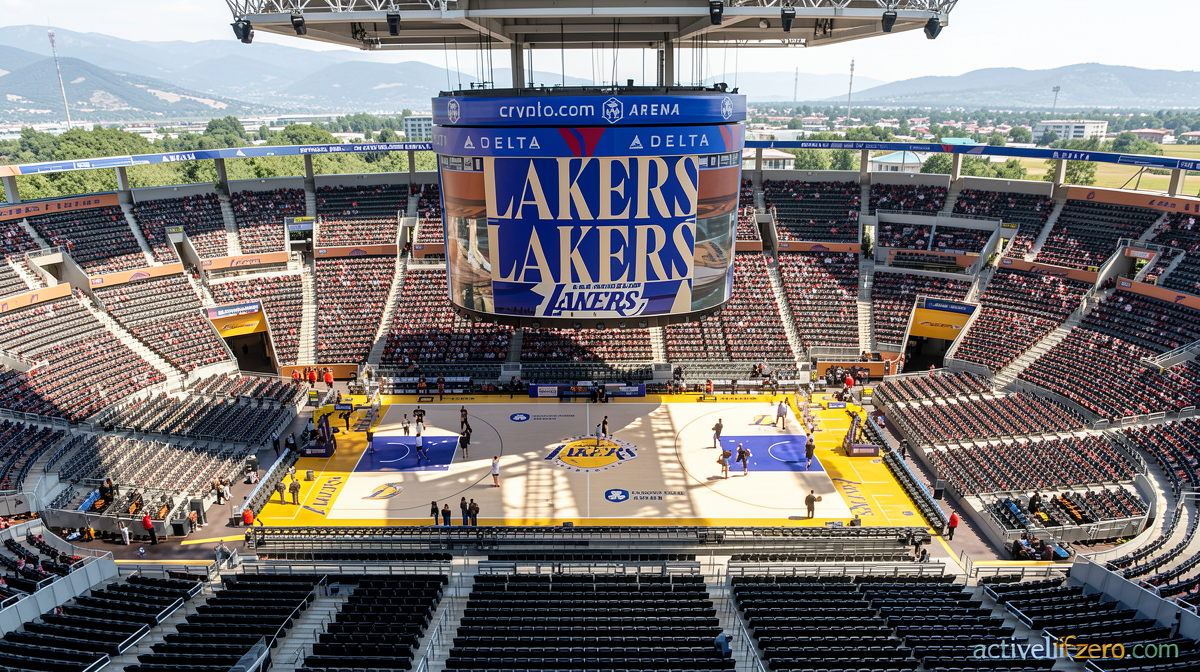
Activelifezero.com – A wave of record-breaking transactions is reshaping professional sports ownership across North America and Europe. Within a single month, deals worth tens of billions of dollars have closed or moved through final approval stages, pushing team valuations to levels that would have seemed fantastical just a few years ago. The Los Angeles Lakers, the Seattle Seahawks, a slice of the New York Yankees, the San Diego Padres, and Liverpool Football Club all changed hands or saw new capital poured in during the same compressed window. The sheer velocity of these transactions has left analysts scrambling to explain what is fueling the frenzy.
The obvious answer is straightforward: more ultra-wealthy individuals now exist than at any prior point in history, and the number of purchasable franchises remains fixed. Demand outstrips supply, prices climb. Yet industry insiders point to a less intuitive catalyst that has quietly repositioned sports franchises in the minds of sophisticated investors: the perceived immunity of live sport to artificial-intelligence disruption.
The “AI-Proof” Thesis
For three decades, Sal Galatioto has negotiated purchases of sports franchises and minority stakes on behalf of wealthy clients. He describes the current market as unlike anything he has witnessed in his career. The traditional rationale for buying a team — long-term asset appreciation, personal prestige, the scarcity premium attached to owning a piece of cultural history — has been joined by something newer.
“I’m willing to bet odds are greater that in 100 years that the Yankees will be here compared to IBM being here.”
Galatioto’s point is that a baseball franchise, a football club, or a basketball organization is unlikely to be rendered obsolete by the same technological upheavals that could dismantle software companies, advertising agencies, or content studios. The product — two teams competing in front of a live audience — resists automation in a way that most other asset classes do not.
“People have never bought teams for cash returns. You bought it for long-term appreciation, and ego gratification and scarcity value. You bought it like fine art. Now it’s a hedge against technology disruption.”
Victor Matheson, an economics professor at the College of the Holy Cross who specializes in sports business economics, acknowledges that other sectors — electric utilities, for instance — also enjoy a degree of insulation from AI-driven disruption. But he argues that sports carries an emotional and aspirational weight that no utility company can match.
“No one has ever dreamed of being CEO of (electric company) National Grid. But everyone dreamed of being the owner or manager of the Yankees.”
The Deals Driving the Boom
The transaction pipeline over recent weeks reads like a catalog of record prices. Former Disney chief executive Bob Iger and venture capitalist Josh Kushner struck a deal to acquire a controlling interest in the Lakers at a valuation of $12.5 billion — the highest price ever paid for an NBA franchise. Fenway Sports Group, parent company of the Boston Red Sox, reportedly divested a 40 percent stake in Premier League side Liverpool to a buyer group that includes Amazon founder Jeff Bezos. Major League Baseball cleared a $3.9 billion sale of the San Diego Padres to a private-equity billionaire and his spouse, a figure that eclipses the $2.4 billion hedge-fund manager Steve Cohen paid for the New York Mets in 2020.
In football, the NFL advanced closer to rubber-stamping a record $9.6 billion transfer of the Seattle Seahawks. On a Friday this month, the NBA’s Minnesota Timberwolves and the WNBA’s Minnesota Lynx were sold together in a package valued at $4.5 billion. And the Yankees, baseball’s most valuable franchise, accepted a $2.6 billion capital injection from Apollo Global Management in exchange for a minority stake.
Why Broadcast Revenue Keeps Climbing
Underpinning every one of these valuations is the extraordinary strength of live-sports media rights. In an era when most viewers skip advertisements on on-demand platforms, televised sporting events remain among the few programs audiences will watch with commercial interruptions intact. The entry of streaming giants — Amazon, Apple, Netflix — into the rights market has bid fees upward rather than downward, because each new entrant competes for the same finite inventory of premium games.
“Who knows what new technology will come out to distribute the games. If you own the content, it doesn’t matter how it’s distributed.”
Galatioto’s observation underscores a structural advantage: the franchise itself is the content, and no delivery-platform shift can eliminate the need for that content.
Betting, Scarcity, and the Widening Buyer Pool
The 2018 Supreme Court decision that struck down the federal ban on sports wagering has since normalized betting for a mainstream audience. Matheson estimates that as much as one billion dollars per year in total gambling revenue now flows back to teams and leagues through revenue-sharing arrangements, sponsorships, and ancillary fees. The psychological effect matters as well: a fan with money on the line will tune in to a matchup they would otherwise ignore, filling seats and inflating television audiences.
“And there’s the thought that people who are gambling more are more likely to tune in, which means more butts in the seats, as well as more eyeballs on the TVs.”
Scarcity compounds the pressure. There are only so many franchises in existence, and many sit with ownership families for generations. The New York Giants, for example, have remained under the control of the Mara family for more than a century. Some clubs, like the Padres, reach the open market only after an owner’s death. Others are now willing to sell minority slices without relinquishing control, a practice that was once rare but has become routine.
Irwin Kishner, who heads the sports-law practice at Herrick Feinstein, notes that private-equity firms have begun to recognize the compounding upside of these assets year over year.
“Every year (valuations) seems to go up more, and so I think private equity started to recognize the value of this opportunity.”
The buyer pool is also broadening geographically. American capital is flowing into European soccer clubs at an accelerating pace, while North American franchises attract international investors seeking a foothold in the world’s most lucrative sports markets. The convergence of AI-driven portfolio hedging, surging media revenue, legalized wagering, and an irreducible supply constraint has created what insiders describe as a once-in-a-generation window — one that, for now, shows no sign of closing.
Related Reading
Frequently Asked Questions
What is The AI related reason every billionaire?
The AI related reason every billionaire is the main topic of this guide. The article explains the context, practical details, and next steps readers should understand.
Why does The AI related reason every billionaire matter?
The AI related reason every billionaire matters because readers are looking for a useful answer, not just a short summary. Good content should match search intent and help them decide what to do next.