Roche, Eli Lilly’s Alzheimer’s blood test gets FDA clearance

Daftar Isi
A New Blood Draw Could Reshape How Doctors Screen for Alzheimer’s
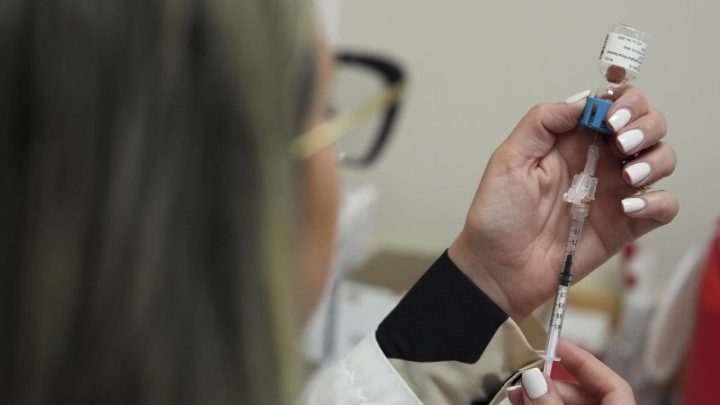
Activelifezero.com – For decades, confirming whether a patient’s memory lapses stem from Alzheimer’s disease has required either a costly brain scan or a needle inserted between the vertebrae of the spine. That era may be narrowing. The U.S. Food and Drug Administration has granted clearance to Elecsys pTau217, a biomarker blood assay developed jointly by Roche and Eli Lilly, designed to flag the presence of Alzheimer’s-related pathology in adults aged 55 and older who are already showing signs of cognitive decline.
The announcement, made by Roche on Monday, marks a significant step in the ongoing effort to move Alzheimer’s diagnostics out of specialized memory clinics and into routine primary-care settings. The test measures levels of phosphorylated tau protein 217 (pTau217) in a standard venous blood sample, giving clinicians a quantitative signal about whether amyloid-driven brain changes are likely underway.
What the Test Does — and What It Does Not
Roche emphasized that Elecsys pTau217 is not a standalone diagnostic instrument. Its results are meant to be weighed alongside clinical history, neurological examination, and other biomarker data before a physician reaches a conclusion about a patient’s condition. In practical terms, the assay functions as a triage tool: it helps separate patients who are probable candidates for Alzheimer’s-related neurodegeneration from those whose cognitive symptoms are more likely attributable to other causes.
“The test can help doctors identify patients who are likely or unlikely to have Alzheimer’s-related brain changes,” Roche stated in its Monday announcement.
That framing matters. Alzheimer’s disease accounts for roughly six to eight percent of Americans aged 65 and older, yet the disease’s earliest biological changes begin years — sometimes decades — before noticeable memory loss appears. A blood-based biomarker that can be ordered in a general practitioner’s office lowers the threshold for early investigation, potentially catching patients at a stage when emerging disease-modifying therapies might still alter the trajectory.
How It Compares to Existing Diagnostic Pathways
Until now, the two principal routes for detecting amyloid plaques — the protein hallmark of Alzheimer’s — have been positron emission tomography (PET) imaging and lumbar-puncture cerebrospinal fluid (CSF) analysis. PET scans carry costs that frequently exceed several thousand dollars per study, require access to nuclear-medicine facilities, and involve radiotracer injection. CSF collection, while less expensive, is an invasive procedure that many patients find intimidating and that demands trained procedural staff.
A finger-prick or venipuncture sample processed on an automated analyzer sidesteps both limitations. Roche noted that Elecsys pTau217 is compatible with more than 4,500 Roche laboratory analyzers already installed in U.S. clinical labs, meaning the hardware infrastructure is largely in place. The company did not disclose a per-test price, but the operational model suggests a cost profile far below that of a PET study.
Broader Diagnostic Landscape
The FDA clearance arrives amid a visible acceleration in Alzheimer’s diagnostic development. In 2025, Fujirebio’s Lumipulse assay became the first blood test cleared by the agency to aid in Alzheimer’s assessment, opening the door for a new category of point-of-care-adjacent biomarker tools. Elecsys pTau217 is the second such clearance, and industry watchers expect additional entries before the decade closes.
The regulatory pathway also reflects a transatlantic sequence: European authorities approved the assay in May of this year, and the U.S. clearance follows that earlier green light. For Roche, the dual-market status strengthens the commercial case for continued investment in its neurodegenerative-diagnostics portfolio.
Access Through Major Laboratory Networks
Distribution logistics are already taking shape. Labcorp and Quest Diagnostics, the two largest reference-laboratory operators in the United States, announced plans to incorporate the assay into their existing test menus. Because both networks service thousands of physician offices, hospital systems, and outpatient clinics nationwide, inclusion in their catalogs could place the test within reach of patients in rural and suburban areas that lack nearby academic memory centers.
Whether the assay ultimately becomes a routine part of cognitive-decline workups will depend on clinical-utility data, payer coverage decisions, and physician adoption rates. Still, the combination of an already-deployed analyzer base, major-lab distribution, and a regulatory clearance that explicitly targets the 55-and-older cognitive-decline population positions the test for rapid uptake if insurance reimbursement follows.
Why Timing Matters
The therapeutic landscape for Alzheimer’s has shifted markedly since the approval of anti-amyloid monoclonal antibodies in recent years. Those agents work best when administered early, before extensive neuronal loss has occurred. Earlier detection therefore translates directly into more patients who are candidates for disease-modifying treatment rather than symptomatic management alone. A blood test that can be ordered in a primary-care visit, processed within a day, and interpreted in the context of a full clinical picture compresses the diagnostic timeline from months to weeks.
Roche and Eli Lilly’s collaboration on Elecsys pTau217 sits at the intersection of two industries — pharmaceuticals and diagnostics — that have historically operated in separate silos. The pairing underscores a growing recognition that companion diagnostics are as critical to the value of new Alzheimer’s therapies as the drugs themselves. As more disease-modifying agents enter late-stage trials, the demand for accessible, repeatable biomarker monitoring will only intensify, and cleared blood assays like this one are likely to become foundational infrastructure in neurology practice.
Related Reading
Frequently Asked Questions
What is Roche Eli Lilly s Alzheimer s blood?
Roche Eli Lilly s Alzheimer s blood is the main topic of this guide. The article explains the context, practical details, and next steps readers should understand.
Why does Roche Eli Lilly s Alzheimer s blood matter?
Roche Eli Lilly s Alzheimer s blood matters because readers are looking for a useful answer, not just a short summary. Good content should match search intent and help them decide what to do next.