
People of Burkina Faso should forget about democracy, says military ruler
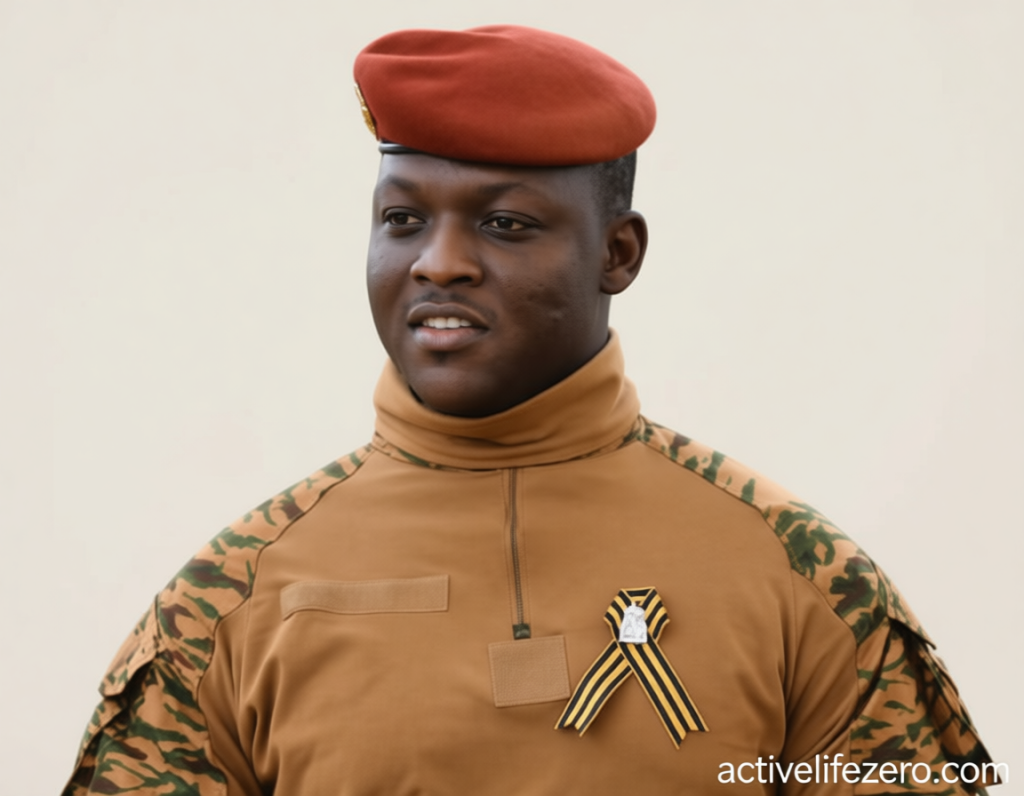
People of Burkina Faso should forget about democracy, says military ruler
Transition delayed as leader dismisses democratic ideals
Following a coup in September 2022, military president Ibrahim Traoré has declared that democracy is no longer relevant for Burkina Faso. In an exclusive interview with the state broadcaster Radiodiffusion Télévision du Burkina (RTB), Traoré stated that citizens should abandon their aspirations for democratic governance. This assertion comes as the country’s political landscape has been reshaped by his regime, which has moved swiftly to suppress dissent.
“We’re not even talking about elections, first of all… People need to forget about the question of democracy… We must tell the truth, democracy isn’t for us,” Traoré said.
Authoritarian measures and extended rule
Since seizing power, Traoré has implemented strict controls, including the outright banning of political parties in January 2023. A previously agreed timeline for a democratic transition had set 2024 as the target, but the junta extended his leadership until 2029. This move has sparked concerns about the erosion of civil liberties and the concentration of authority in military hands.
Human Rights Watch report highlights atrocities
Amid these developments, Human Rights Watch (HRW) released a report on Thursday condemning the military for its role in civilian casualties. According to the group, over 1,800 non-combatants have been killed by armed forces, allied militias, and al-Qaida-linked Jama’at Nusrat al-Islam wa al-Muslimin (JNIM) since 2023. The report also accused the junta of ethnic cleansing, targeted killings, and forced displacement of Fulani communities, framing the violence as crimes against humanity.
“Democracy, we kill children. Democracy, we drop bombs, we kill women, we destroy hospitals, we kill civilian population. Is that democracy?” Traoré said, echoing the sentiments of his regime.
Legacy of Sankara fuels anti-western narrative
Traoré has gained support across Africa by adopting the rhetoric of Thomas Sankara, the Marxist revolutionary who led Burkina Faso from 1983 until his assassination in 1987. Sankara’s emphasis on African independence and anti-colonialism resonates with Traoré’s current stance against Western influence. However, the effectiveness of his rule remains questionable, as the jihadist insurgency continues to claim thousands of lives and displace over 2.1 million people—nearly 9% of the population—since 2014.
Denial and crackdown on critics
While the government has denied HRW’s allegations, it has taken steps to silence the organization and other international media outlets. The Guardian, among others, was reportedly banned for reporting on the military’s execution of 223 civilians in a single day, an incident documented by HRW in April 2024. This marks a pattern of suppression, with Traoré’s administration framing democratic aspirations as obstacles to national stability.
