
What were the Covid ‘lockdowns,’ really?
Reexamining the Lockdown Debate: A Historical Perspective
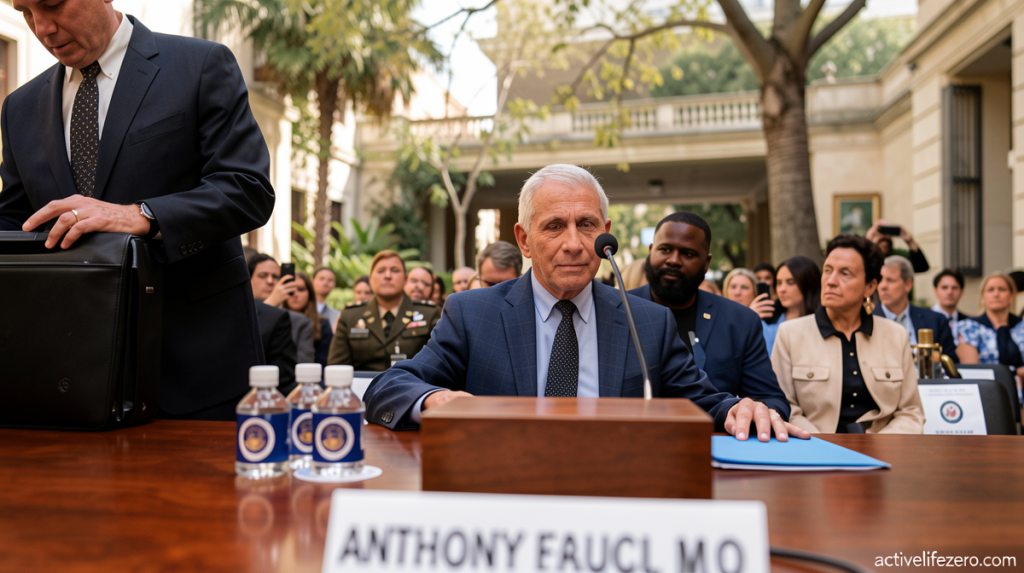
Activelifezero.com – Political figures and government officials have recently turned their attention to Dr. Anthony Fauci, questioning his role during the coronavirus crisis. Critics argue that the former White House medical adviser contributed to avoidable hardship through his pandemic management decisions. The scrutiny intensified following a congressional session where lawmakers challenged Fauci’s approach to public health policy.
Political Backlash Against Fauci
Senator Rand Paul of Kentucky organized a hearing that became a focal point for criticism. Paul suggested that Fauci failed to disclose the true origins of the virus and provided misleading information about its emergence. According to Paul’s assessment, the response strategy relied too heavily on reactive measures rather than evidence-based approaches.
If there’s one thing I wanted to make clear to Anthony Fauci, it’s that he’s culpable for the lockdowns we all endured.
Following the July 29 session, Paul expressed his position on social media, emphasizing his belief that Fauci deserved responsibility for the restrictions imposed on citizens. This sentiment found additional support from Health Secretary Robert F. Kennedy Jr., who discussed the issue during a television interview.
President Trump, as you recall, wanted to end the lockdowns. I think the thing that did the most damage to our country was the lockdowns.
Kennedy Jr.’s comments came during a conversation with CNN’s Dana Bash, where he highlighted concerns about the economic and social impact of containment measures. CNN Medical Correspondent Meg Tirrell subsequently examined the validity of these assertions.
Beyond Partisan Lines
The questioning of lockdown effectiveness extends beyond conservative circles. A March 2025 episode of The New York Times podcast “The Daily” posed the central question: whether these restrictions ultimately served the public interest. Stephen Macedo and Frances Lee, political scientists at Princeton University, offered a negative assessment in their book “In Covid’s Wake: How Our Politics Failed Us.”
To understand the controversy, one must first define what “lockdown” actually meant during the pandemic. Media organizations began employing the term on January 23, 2020, when covering Chinese authorities’ decision to suspend nearly all transportation in Wuhan. This policy, known as “fengcheng” or “sealing the city,” represented an unprecedented level of movement restriction.
Global Implementation
The Guardian captured the atmosphere with its headline about Wuhan’s lockdown, describing widespread panic and frustration among residents. Chinese officials subsequently strengthened controls, implementing round-the-clock monitoring of residential areas, prohibiting private vehicle use, and requiring citizens to obtain permission before leaving their homes.
Similar measures spread to other Chinese municipalities over the following two years. While official government documents rarely used the term “lockdown,” journalists adopted it as convenient shorthand for describing stringent containment strategies worldwide.
Italy initiated its approach in March 2020, beginning with regional restrictions before expanding nationally. Citizens faced confinement to their residences, prohibitions on public gatherings, and closures of educational institutions and commercial establishments. Spain, France, and India implemented comparable frameworks, with India’s population of 1.3 billion asked to remain indoors.
The American Experience
The United States developed a different model, characterized by decentralized decision-making rather than unified federal action. State and local governments determined their own levels of restriction, creating a mosaic of policies that often aligned with political affiliations. California issued its directive on March 19, 2020, ordering residents to stay home and nonessential businesses to close.
Forty-three states adopted similar measures between March and April 2020. Republican-controlled jurisdictions typically removed restrictions more quickly than Democratic-led areas. Duration varied considerably, with some regions maintaining limitations for weeks while California sustained them for months.
Researchers from Oxford University evaluated international responses and placed the United States in the middle range during 2020 and 2021. Principal investigator Anna Petherick emphasized that substantial differences between states complicated national-level assessment. By 2002, American policies ranked among the least restrictive globally, yet public discourse continued referencing “lockdowns” as if uniform restrictions had prevailed nationwide.
Historical Context
The term “lockdown” entered modern usage in 1973, originally describing the practice of confining prisoners to their cells for security purposes. A 1974 New York Times article documented an outbreak of violence that prompted such containment measures, establishing the word’s association with restricted movement and controlled environments.
Understanding this etymology helps clarify why the term resonated during the pandemic. Whether applied to prisoners, cities, or entire nations, lockdowns fundamentally represent the restriction of freedom of movement in response to perceived threats. The debate continues not merely about whether restrictions were necessary, but about their scope, duration, and implementation across different communities and political landscapes.
Related Reading
Frequently Asked Questions
What is What were the Covid lockdowns really?
What were the Covid lockdowns really is the main topic of this guide. The article explains the context, practical details, and next steps readers should understand.
Why does What were the Covid lockdowns really matter?
What were the Covid lockdowns really matters because readers are looking for a useful answer, not just a short summary. Good content should match search intent and help them decide what to do next.
