Sean Grayson, former Illinois deputy convicted of killing Sonya Massey, dies in prison, lawyer says

Daftar Isi
Sean Grayson, Deputy Who Shot Sonya Massey in Her Kitchen, Found Dead in Illinois Prison
Activelifezero.com – The man whose body-camera footage of a woman pleading for her life in her own kitchen became one of the most-watched police-shooting videos of the decade has died. Sean Grayson, the former Sangamon County sheriff’s deputy convicted of second-degree murder in the July 2024 killing of Sonya Massey, was found dead Sunday while serving a 20-year state prison sentence. His attorney, Daniel Fultz, confirmed the death but offered no additional information about the circumstances.
Grayson was 32 years old. He had been incarcerated for barely more than a year when his life ended behind bars — a fate that will likely intensify scrutiny over the case that already reshaped Illinois policing policy and drew a federal civil rights investigation.
The Shooting Inside a Springfield-Suburb Home
The incident began in the early hours of July 6, 2024, when Massey, a 36-year-old Black woman, dialed 911 to report what she believed was a prowler circling her home in the Springfield, Illinois area. Two deputies from the Sangamon County Sheriff’s Office responded: Grayson and Dawson Farley.
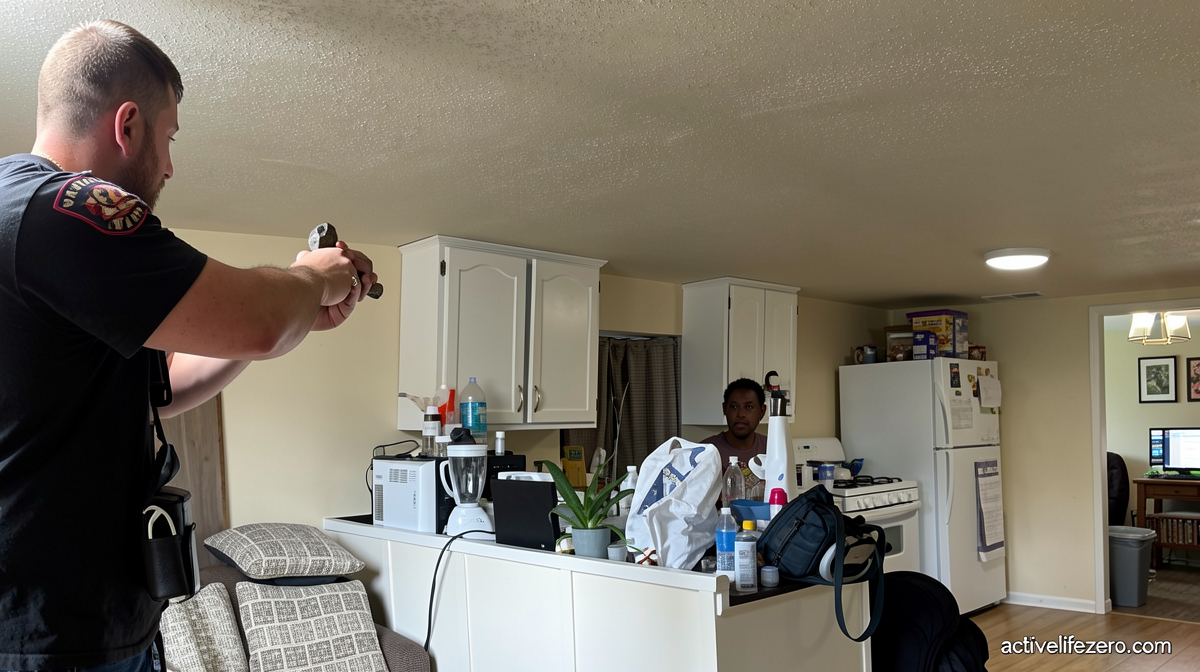
Body-camera footage captured the final minutes. Grayson directed Massey to take a pot of hot water off the stove. While she held the steaming vessel, Massey told the officers:
“I rebuke you in the name of Jesus.”
Grayson then threatened to shoot her, drew his sidearm, and ordered her to drop the pot. Massey apologized and ducked behind a kitchen counter. Grayson fired three times, striking her in the face. She died at the scene.
Farley later testified that he never regarded Massey as a threat and that he drew his own weapon only after Grayson had already done so — a detail jurors were asked to weigh during deliberations.
Trial, Conviction, and Maximum Sentence
Grayson was fired from the sheriff’s office shortly after the shooting and charged with first-degree murder. At trial, his defense centered on the claim that he feared Massey would hurl the hot water at him. Jurors rejected that framing on the top charge but convicted him of the lesser included offense of second-degree murder in October. In January, a judge imposed the statutory maximum: 20 years in the Illinois Department of Corrections.
The verdict did not end the legal fallout. Massey’s family and Sangamon County subsequently reached a $10 million settlement over the fatal shooting, a figure that underscored how seriously the county viewed its institutional exposure.
Colon Cancer and a Denied Medical Release
Grayson had been diagnosed with colon cancer before the Massey shooting. At his sentencing hearing, his attorneys told the court the disease had metastasized to his liver and lungs. In May — only months into his sentence — he petitioned for medical release under an Illinois statute that permits early discharge for prisoners facing terminal diagnoses or severe medical conditions. The Illinois Prisoner Review Board denied the request last month, leaving him in custody until his death this Sunday.
National Repercussions and Legislative Response
Massey’s killing ignited protests across Illinois and drew sustained national attention. One thread of public questioning focused on Grayson’s employment history: before joining the Sangamon County Sheriff’s Office, he had moved through several other law enforcement agencies, raising questions about how quickly and thoroughly hiring managers vetted his record.
Illinois lawmakers responded by passing the Sonya Massey Act, which obliges state and local agencies to conduct more rigorous review of an applicant’s prior employment history before extending a law-enforcement offer. The statute bears Massey’s name as a permanent marker of the case’s legislative legacy.
Federally, the Department of Justice opened a civil rights investigation following the death. That probe culminated in a consent-style agreement with Sangamon County, the sheriff’s office, and other local agencies. Required reforms included expanded training for officers interacting with people who have behavioral-health disabilities and the creation of a mobile crisis-response program designed to dispatch mental-health specialists alongside or in lieu of armed officers for certain calls.
Grayson’s death in custody will not erase those reforms, but it will add another chapter to a case that already moved from a kitchen in suburban Springfield to the halls of the Illinois General Assembly and the offices of the U.S. Attorney General.
Related Reading
Frequently Asked Questions
What is Sean Grayson former Illinois deputy convicted?
Sean Grayson former Illinois deputy convicted is the main topic of this guide. The article explains the context, practical details, and next steps readers should understand.
Why does Sean Grayson former Illinois deputy convicted matter?
Sean Grayson former Illinois deputy convicted matters because readers are looking for a useful answer, not just a short summary. Good content should match search intent and help them decide what to do next.