
Scientists newly identify species of tiny, blue octopus that fits in the palm of your hand
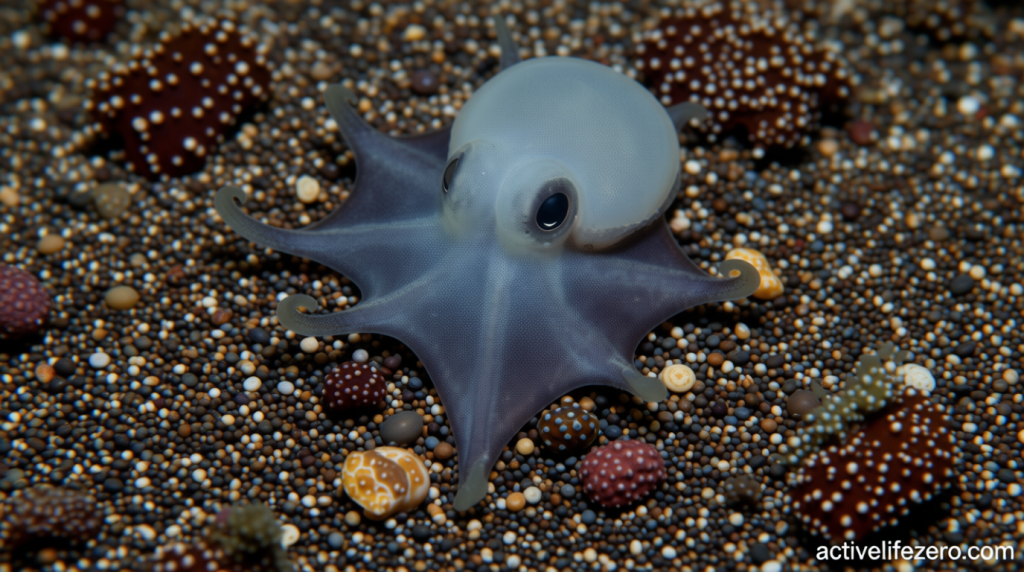
Tiny Blue Octopus Species Identified by Scientists
Scientists newly identify species of tiny – Scientists have recently identified a previously unknown species of tiny, blue octopus, a remarkable discovery that highlights the hidden diversity of marine life. This minute creature, small enough to fit in the palm of a hand, has captivated researchers with its striking coloration and unique characteristics. The identification process, which spanned over a decade, revealed a new chapter in the study of deep-sea cephalopods. Despite its size, this species plays a significant role in understanding evolutionary adaptations in extreme environments.
First Discovery: A Plush Toy in the Depths
In 2015, a remotely operated vehicle (ROV) captured footage of the tiny blue octopus as it navigated the soft ocean floor at nearly 5,800 feet (1,773 meters). The video, recorded by the research vessel E/V Nautilus, showed the creature’s peculiar appearance, leading to its initial recognition. One team member compared it to a “cute little plush toy,” while another exclaimed,
“Is that a cute little guy, or what?”
This whimsical observation underscores the charm of the newly identified species, which remains a subject of fascination.
The process of confirming this as a distinct species required extensive analysis. While the octopus was first spotted by the crew, it took years to gather enough data for classification. Janet Voight, a curator emerita at the Field Museum, led the final identification, emphasizing the challenges of studying such a delicate and rare specimen. “The cost of deep-sea exploration is high, and the likelihood of encountering another one is low,” she noted, highlighting the dedication needed for such discoveries.
Preserving the Tiny Blue Octopus: A Technological Breakthrough
Voight faced a unique challenge when examining the preserved specimen. Formaldehyde, typically used to halt decomposition, could not fully penetrate the octopus’s body due to its large eggs. This left the creature’s soft tissues vulnerable, requiring meticulous handling. “One wrong cut and it’s gone forever,” she warned, stressing the importance of careful preservation techniques.
To overcome this, the Field Museum utilized a cutting-edge CT scanner, allowing for non-invasive 3D imaging. Thousands of X-ray images were combined to reveal the octopus’s anatomy and classify it among other cephalopods. This method proved critical in distinguishing the species from its closest relative, Microeledone mangoldi, which was previously described in the southwest Pacific. The tiny blue octopus’s unique traits now offer new insights into marine biodiversity.
Evolutionary Clues from the Tiny Blue Octopus
The newly identified species, Microeledone galapagensis, shares features with M. mangoldi, including smooth skin and large funnel organs. Both have similar numbers of arm suckers and gill lamellae, but their mantle linings differ. While M. mangoldi displays color on internal organ sheaths, the tiny blue octopus exhibits vibrant hues on the upper walls of its mantle. These distinctions may reflect convergent evolution, where species develop similar traits independently.
Voight theorized that their common ancestor likely inhabited regions between the Pacific Ocean’s distant habitats. “Their evolutionary paths diverged in the deep sea,” she said, illustrating the adaptability of life in extreme conditions. The discovery of this tiny blue octopus adds to the growing evidence that the ocean’s depths harbor untapped biological secrets, further motivating exploration efforts.
Significance of the Tiny Blue Octopus in Marine Research
The identification of M. galapagensis underscores the importance of deep-sea exploration. NOAA estimates that less than 0.001% of the seafloor has been explored, implying countless species await discovery. This tiny blue octopus exemplifies how even small organisms can provide profound insights into marine ecosystems. Its existence challenges assumptions about the limits of cephalopod diversity and adaptation.
Jim Barry, a senior scientist at the Monterey Bay Aquarium Research Institute, praised the discovery for its enigmatic nature. “The tiny blue octopus is unlike anything we’ve seen before,” he remarked. Such findings not only enrich scientific knowledge but also inspire public interest in oceanic mysteries. As researchers continue to study this species, its role in deep-sea biodiversity will become clearer, offering hope for future discoveries in uncharted waters.
