
Rare T. rex fossil sells for record $50.1 million at auction
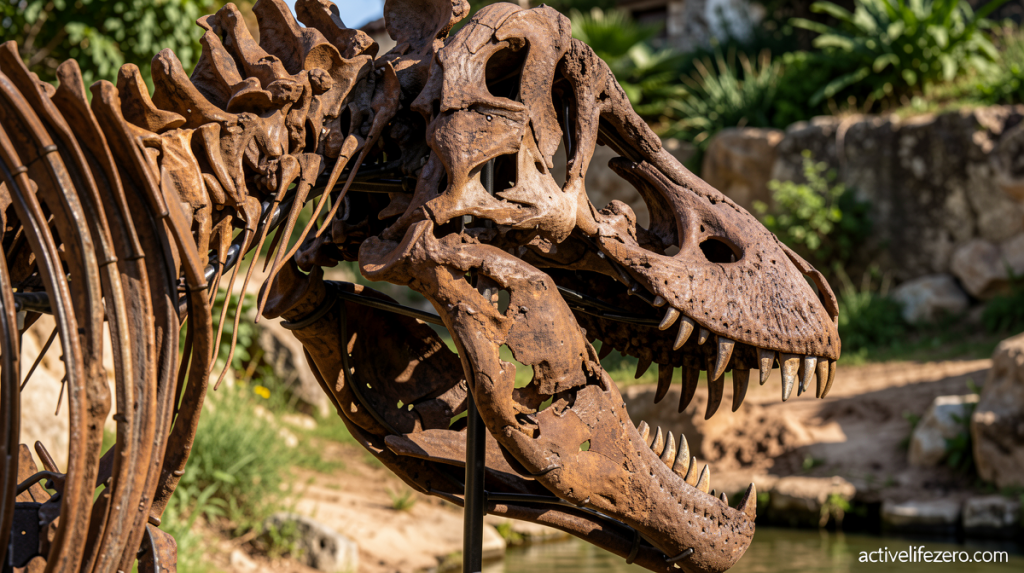
South Dakota T. rex Achieves Historic Auction Milestone
Rare T rex fossil sells for record – A remarkable Tyrannosaurus rex skeleton unearthed in South Dakota has shattered previous auction records, commanding an unprecedented sum of $50,130,000 at Sotheby’s prestigious New York auction house on Tuesday. This extraordinary specimen, dating back approximately 67 million years, now holds the distinction of being the most valuable fossil ever sold at auction worldwide.
A Legacy Named in Honor
The magnificent creature has been affectionately christened “Gus,” paying tribute to Gary ‘Gus’ Licking, a dedicated cattle rancher from Harding County, South Dakota. Licking was the proprietor of the land where this incredible discovery was made. Tragically, he passed away in 2022, merely one year after excavations of the fossil began. According to Sotheby’s documentation, Gus measures an impressive 38 feet in length and stands 12.5 feet tall, with a skull spanning 54 inches. These dimensions place it among the largest T. rex specimens ever discovered. The skeleton comprises 183 distinct fossil bone elements, achieving approximately 61% completeness by bone count, or between 75% and 80% when measured by mass.
Geological Significance and Scientific Context
Like numerous other T. rex discoveries, Gus originates from the renowned Hell Creek Formation, a legendary geological repository extending across Montana, Wyoming, and both Dakotas. This formation holds particular historical importance, as one of the very first T. rex skeletons was discovered there in 1902. The species’ scientific name was subsequently assigned based on fossils excavated from this region. The specimen possesses numerous characteristics that captivated both scientific researchers and potential purchasers. Its skull contains approximately 82% of the original bones, while the complete skeleton features rarely encountered components including a wishbone, an intact pelvis, and both feet. Sotheby’s noted that only one other known specimen possesses two well-represented feet.
Market Comparison and Previous Records
The previous auction record belonged to Apex, a Stegosaurus purchased in 2024 by billionaire Ken Griffin for $44.6 million. Apex currently resides on a four-year loan at New York’s Museum of Natural History. Gus’s presale estimate ranged between $20 and $30 million, with the winning bid ultimately placed via telephone. While Gus ranks among the most complete T. rex fossils ever found, it falls slightly short of two other notable specimens. Stan, a T. rex sold at auction in 2020 for $31.8 million, achieves approximately 70% completeness by bone count. Sue, the first dinosaur fossil ever sold at auction in 1997, set the benchmark with an impressive 90% completeness rate.
Scientific Implications of Private Ownership
Paleontologists generally maintain that once a fossil enters private hands, it becomes effectively lost to scientific community. Scientific journals typically publish research only on specimens housed within publicly accessible collections. When fossils remain privately held, studies cannot be reliably reproduced—a crucial standard for validating scientific findings. Gus arrives with “full rights,” meaning it contains no copyrighted elements from other dinosaurs. When bones are missing from a skeleton, collectors traditionally purchase casts from existing specimens to fill gaps. Stan serves as the de facto standard for this process, originating from the same South Dakota county as Gus.
Future Possibilities
The new owner of Gus holds potential opportunities to compete with Stan by licensing or producing casts for museums and private collectors. All attention now focuses on the unidentified buyer and their future decisions regarding this extraordinary prehistoric treasure. Additionally, Gus displays fascinating evidence of its life experiences, including bite marks and fractures that the dinosaur successfully survived. These features add another layer of scientific interest to an already remarkable specimen that promises to captivate both scientists and the public for years to come.
