
Livestreamer known for posting racist content faces attempted murder charge after shooting outside courthouse
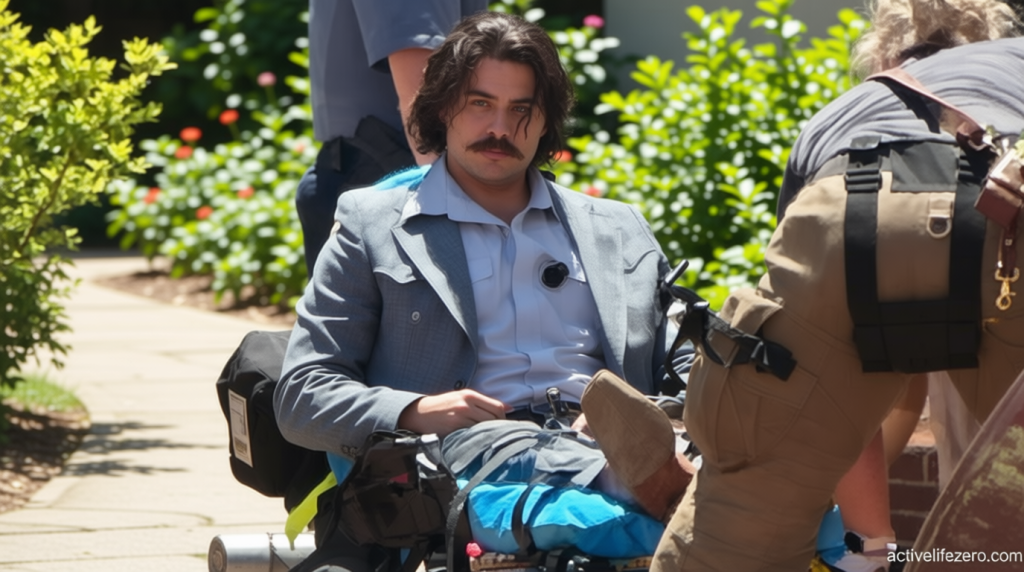
Chud the Builder, Racist Livestreamer, Charged with Attempted Murder Following Tennessee Courthouse Shooting
Livestreamer known for posting racist content – On Wednesday, a man known for uploading racially charged videos to social media was charged with attempted murder after a shooting occurred near a Tennessee courthouse. Officials confirmed that Dalton Eatherly, who streams under the moniker Chud the Builder, is now facing multiple counts, including the serious offense of attempted murder, following the incident. The event unfolded outside the Montgomery County Courthouse in Clarksville, according to the Tennessee District Attorney General’s Office. Eatherly’s actions have sparked renewed discussions about the role of online content in real-world violence.
The Shooting Incident
The confrontation between Eatherly and an unidentified individual led to gunfire, as reported by the Montgomery County Sheriff’s Office. Both men were wounded and transported to local hospitals, where they were reportedly in stable condition by early Wednesday evening. Details about the altercation remain sparse, with authorities still investigating the sequence of events. However, Eatherly’s livestreamed account of the incident provides some insight into his perspective.
“I had to defend myself by shooting him,” Eatherly stated in a video shared after the incident. He described the man as laughing and pointing at him before the conflict escalated. “He said, ‘You start saying all that chimp out s**t to me and ‘imma hit you,’ and he hit me, he started whaling on me,” he recounted. This account highlights his tendency to frame racial slurs as personal attacks, a pattern evident in his online content.
Eatherly’s history of using derogatory language against Black individuals has been well-documented. His videos often feature explicit racial epithets, including the repeated use of the term “chimp” to describe people of color. One such video, posted on X last week, shows him spraying a chemical agent at a Black man after the man knocked his hat off. The footage captures Eatherly’s verbal aggression as he shouts the slur multiple times, underscoring his provocative behavior.
Previous Incidents and Legal Actions
Days prior to the courthouse shooting, Eatherly had already drawn attention for his disruptive actions. On Saturday, he was removed from a restaurant in Nashville for causing a disturbance, as detailed in an affidavit. The staff reportedly asked him to stop livestreaming and avoid being disruptive, but Eatherly continued regardless. Prosecutors described him as a content creator who regularly posted racially charged material online, emphasizing his tendency to incite conflict in public spaces.
“He became disruptive and started making racial statements, yelling, screaming, and causing a scene,” the affidavit noted. During the incident, Eatherly allegedly told the staff, “I’m not paying if you are kicking me out,” and refused to settle his $371.55 meal bill. This incident led to his arrest the following day on charges of theft of services, disorderly conduct, and resisting arrest.
Eatherly’s actions in the restaurant were not an isolated event. His conduct has been scrutinized for its pattern of inciting racial tension. The affidavit also mentions his history of using force against Black individuals, including the chemical agent incident. These events have been cited by critics as examples of his escalating aggression and disdain for racial diversity.
Community Reaction and Criticism
The shooting has prompted criticism from both the public and prominent figures in the right-wing movement. Montgomery County Sheriff John Fuson addressed the incident in a statement, reiterating the community’s commitment to holding perpetrators accountable. “This kind of violence won’t be tolerated, and our office will work to make sure those responsible are held accountable to the fullest extent of the law,” he said. His remarks reflect broader concerns about the impact of racist rhetoric on public safety.
“It’s unfortunate that incidents like this are happening in our community,” Fuson added. The sheriff’s comments align with calls for stricter measures against individuals who use hate speech to justify violence, particularly those associated with White nationalist ideologies. The US government has been increasingly vocal about addressing such threats, with some officials linking Eatherly’s actions to the broader movement.
Eatherly’s livestreaming has also drawn criticism from influential figures. Nick Fuentes, a well-known White nationalist and Holocaust denier, expressed disapproval of Eatherly’s approach on his podcast. When asked about the case, Fuentes remarked, “I don’t like that approach of antagonizing people in public … I think it’s wrong, it’s unethical.” His response highlights the tension between Eatherly’s content and the values of the far-right movement he represents.
Legal Proceedings and Current Status
Following the shooting, Eatherly was taken into custody and booked into the Montgomery County jail. He will remain in detention until his arraignment, which is expected to be scheduled soon. Prosecutors are currently assessing whether Eatherly has legal representation, a detail that could influence the charges he faces. The multiple counts include not only attempted murder but also employing a firearm during a dangerous felony, aggravated assault, and reckless endangerment with a deadly weapon.
“He was arrested without further incident after officers found him walking on a street,” the affidavit stated. When told he was under arrest, Eatherly pulled his arm away from the handcuffs, indicating resistance to authority. This moment was captured in a video, adding to the narrative of his defiance and willingness to escalate conflicts.
Eatherly was later released on a $5,000 bond, as per a judge’s order. This decision has been viewed by some as lenient, given his history of provocative behavior. His legal team will now work to defend him against the charges, potentially arguing that the shooting was a self-defense measure. However, the evidence from his own livestream and the affidavits presented by authorities suggest a premeditated or at least aggressive intent.
Broader Implications and Public Debate
The case has reignited debates about the influence of livestreaming on public conduct and the responsibility of content creators. While Eatherly’s actions are not the first instance of racial slurs leading to violence, they underscore the potential consequences of online rhetoric. Some argue that his livestreamed confrontations serve as a form of real-time activism, while others see them as calculated attempts to provoke outrage.
His arrest in the restaurant last weekend further illustrates his pattern of behavior. The incident, combined with the recent courthouse shooting, has prompted calls for more stringent oversight of online influencers. Critics contend that platforms should take greater responsibility in moderating content that incites hate or violence. Meanwhile, supporters of Eatherly maintain that he is simply expressing his views and defending himself in public spaces.
As the legal proceedings unfold, the case will likely be watched closely for its implications on both individual accountability and the role of social media in shaping real-world outcomes. The tension between free speech and hate speech continues to be a central issue, with Eatherly’s story serving as a focal point for discussions about how far online expression can extend into physical harm.
With more information emerging, the story is expected to evolve. CNN is continuing its investigation into Eatherly’s background, legal history, and the extent of his online influence. The next steps in his case will depend on the evidence presented, the testimonies of witnesses, and the broader context of racial tensions in the region. For now, the shooting outside the courthouse remains a stark reminder of the potential for online rhetoric to escalate into violence.
