
Kevin Warsh sworn in as Fed chair at pivotal moment for US economy
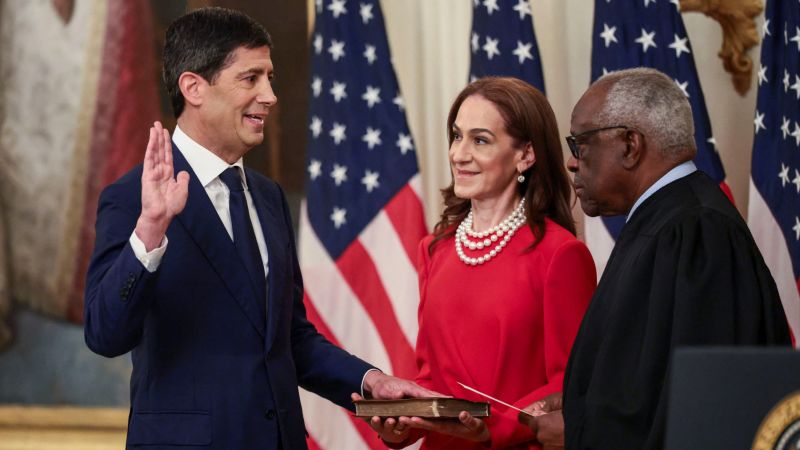
Kevin Warsh Assumes Role as Federal Reserve Chair Amid Economic Uncertainty
Kevin Warsh sworn in as Fed chair – On Friday, Kevin Warsh officially took office as the Chairman of the Board of Governors of the Federal Reserve System at the White House, stepping into the influential economic leadership role previously held by Jerome Powell. The 56-year-old appointee now faces a complex array of challenges, including persistent inflation, escalating geopolitical tensions, and a fluctuating financial landscape. These conditions have heightened the stakes for the central bank as it navigates the delicate task of maintaining economic stability while addressing growing political scrutiny over its independence.
Warsh’s tenure begins during a period marked by significant economic volatility. The ongoing conflict between the United States and Iran has intensified global market uncertainties, contributing to a sharp rise in oil prices. This has, in turn, driven up gasoline costs and pushed mortgage rates to their highest level in nine months. Meanwhile, overall inflation has surged to a three-year peak, creating a challenging environment for both consumers and policymakers. Despite these pressures, the US consumer has shown surprising resilience, continuing to spend at a steady pace and shielding the broader economy from a potential downturn.
However, this resilience has not quelled widespread dissatisfaction. Consumer sentiment has reached an all-time low, with Americans reporting a sense of unease that surpasses their experiences during major crises such as the 9/11 attacks, the Great Recession, and the aftermath of the Covid-19 pandemic. This sentiment reflects growing concerns about affordability, as rising prices strain household budgets and threaten to impact voter behavior in the upcoming midterm elections. Warsh’s challenge lies in balancing these competing demands while steering the Federal Reserve toward a more assertive reform agenda.
President Donald Trump, who nominated Warsh in January, expressed confidence in his ability to lead the central bank effectively. “I expect he will go down as one of the truly great chairmen of the Federal Reserve that we’ve ever had,” Trump remarked during a speech in the East Room. “He’s got abilities that very few people have, covers a lot of territory, and is respected by everybody.” Trump emphasized his support for Warsh’s independence, urging him to act without external influence. “Don’t look at me, don’t look at anybody, just do your own thing and do a great job,” the president added, signaling his trust in the new leader’s judgment.
Warsh, however, has not shied away from articulating his vision for the Fed. In his inaugural remarks, he highlighted a commitment to a reform-oriented approach, aiming to learn from past successes and mistakes. “I will lead a Federal Reserve that prioritizes stability and performance, while distancing itself from outdated frameworks and ensuring accountability,” he stated. This pledge underscores his focus on restoring the central bank’s credibility and redefining its role in the economy.
The shift in the Fed’s priorities aligns with Trump’s broader economic strategy, which has emphasized aggressive rate cuts to stimulate growth and reduce government borrowing costs. Trump has often criticized previous Fed leaders for hesitating to lower interest rates, even suggesting legal action if they failed to act swiftly. Yet, he has also acknowledged the importance of the Fed’s independence, urging Warsh to maintain autonomy in decision-making. “Kevin will have the full support of my administration,” Trump said, framing the new chair as a key ally in his policy goals.
Warsh’s approach has drawn attention for its focus on simplifying the Fed’s operations and tightening its focus on core responsibilities. He has proposed limiting public communications from Fed officials regarding rate decisions, arguing that transparency should be balanced with clarity in policy direction. This stance reflects a belief that the central bank should avoid distractions from its primary mission of price stability and maximum employment. “The Fed lost its way in recent years,” Trump noted, criticizing past leadership for straying from its fundamental objectives.
As the Fed enters this new phase, its monetary policy decisions remain the responsibility of the Federal Open Market Committee (FOMC), which evaluates economic conditions and future outlooks. While policymakers had previously projected a rate cut later this year, recent assessments of higher energy prices and geopolitical instability have led to a shift in sentiment. The majority of FOMC members now favor maintaining current rates, with some considering the possibility of raising them if inflation proves difficult to control. This evolving stance highlights the uncertainty surrounding the Fed’s next steps.
Warsh’s first major meeting as chair is scheduled for June 16–17, where he will present his strategy for addressing the nation’s economic challenges. The meeting will serve as a critical opportunity to communicate the Fed’s intentions to the public and market participants. With the economy in a state of flux, the new leadership will need to navigate a fine line between maintaining stability and responding to the pressures of inflation and consumer sentiment.
Trump’s endorsement of Warsh comes at a time when the president’s economic agenda is under close scrutiny. The administration’s push for lower rates has been a cornerstone of its policy, but Warsh’s emphasis on independence may complicate this goal. While Trump has framed the Fed as a tool for his economic vision, he has also acknowledged the need for the central bank to operate without direct presidential interference. This duality presents both an opportunity and a challenge for Warsh, who must align with Trump’s priorities while upholding the Fed’s institutional integrity.
Consumer behavior remains a crucial indicator of the economy’s health. Despite higher prices, spending has held firm, suggesting a degree of adaptability among households. However, this resilience has not translated into widespread satisfaction. Many Americans are vocal about their frustration with inflation, which has become a central issue in public discourse. Warsh’s ability to address these concerns will be vital in shaping the Fed’s credibility and public perception.
As the Fed charts its course, the interplay between political pressure and economic analysis will be a defining factor. Warsh’s reforms, including a narrower focus on core responsibilities, aim to streamline decision-making and restore confidence in the central bank’s ability to manage the economy effectively. Whether these changes will succeed in stabilizing inflation and fostering growth remains to be seen, but his leadership will be tested in the coming months as the US economy continues to evolve under the weight of global conflicts and domestic challenges.
