
Israel’s far-right openly boasts of resettling Gaza as election looms
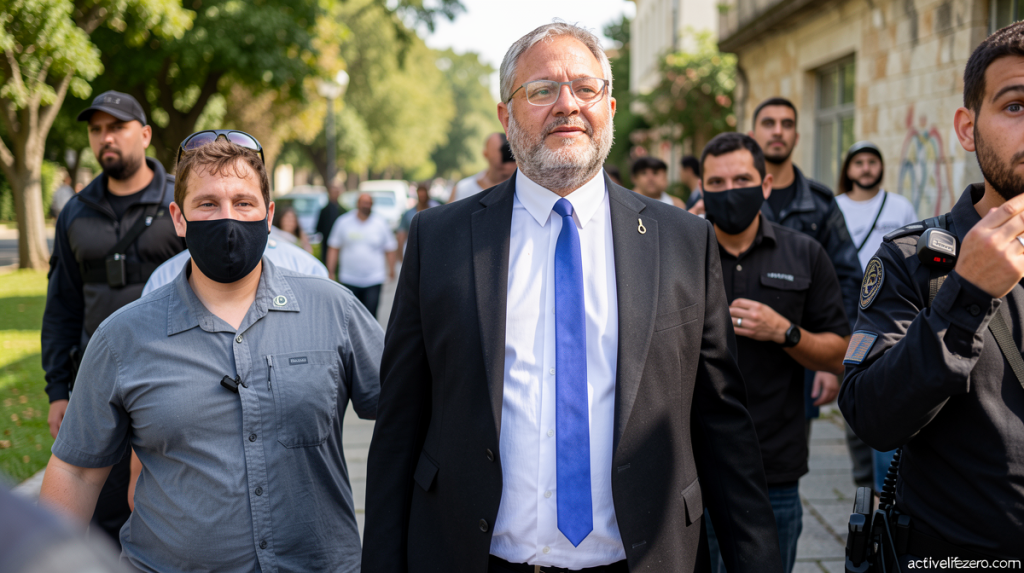
Far-Right Israeli Ministers Champion Gaza Resettlement Ahead of October Vote
A March to Remember: Settlers Rally at Gaza’s Edge
Activelifezero.com – As the October elections approach, Israel’s political landscape is shifting dramatically around the question of Gaza. The far-right wing has elevated the restoration of Jewish communities in the Gaza Strip to a defining campaign issue, positioning it as a cornerstone of their electoral strategy. This movement represents more than mere rhetoric—it reflects a coordinated effort to compel Prime Minister Benjamin Netanyahu to undo the 2005 disengagement that removed Israeli settlements from the coastal territory.
On Sunday, the demonstration reached its peak when National Security Minister Itamar Ben Gvir and Finance Minister Bezalel Smotrich guided thousands of participants toward the Gaza boundary. Both ministers, prominent figures within Netanyahu’s coalition, led settlers and activists in demanding the revival of three specific northern Gaza settlements: Nisanit, Dugit, and Elei Sinai. The event, coordinated by the staunch Nachala settler movement, featured numerous government officials and legislators among its ranks.
The gathering transcended typical political theater. For Israel’s far-right, expanding settlements across the occupied West Bank and reestablishing communities in Gaza represents a long-held aspiration. With Israeli forces currently controlling more than half of the Gaza Strip, they view this moment as particularly advantageous for pressuring the prime minister to accelerate their vision.
Despite the Israel Defense Forces declaring the surrounding area a closed military zone to prevent marchers from entering Gaza, participants pressed forward. They navigated around barriers erected by military and police forces while buses carried families—including children and teenagers—from West Bank settlements. Young activists affiliated with Ben Gvir’s and Smotrich’s parties distributed campaign literature throughout the procession.
Political Stakes and Electoral Calculations
Ben Gvir captured the sentiment of the crowd with a powerful statement about Israel’s expanded presence in Gaza.
“If someone had said three years ago that we would control 70% of the Gaza Strip, no one would have believed it,” Ben Gvir said at the rally. “So today I say: there will be Jewish settlement throughout Gaza,” he said, adding that Israel should “encourage voluntary migration” of Palestinians – an idea briefly floated by the Trump administration before it was ultimately rejected in the Gaza ceasefire agreement.
He concluded with an emotional declaration:
“We are returning home. Gaza is ours,” Ben Gvir said.
Smotrich framed the demonstration in explicitly political terms, cautioning that a change in government could reverse the settlement achievements of the past four years under what he described as Israel’s most right-wing administration.
“All of this could go down the drain – and we will march here again to prevent evacuations,” he said.
During his tenure, Smotrich has overseen significant settlement expansion in the West Bank and has signaled his intention to continue this trajectory. Both he and Ben Gvir have advocated for rebuilding Gaza settlements since the October 7, 2023 attacks, characterizing the ongoing conflict as an opportunity to reverse the 2005 withdrawal.
Settlement Plans and Security Architecture
Smotrich, who simultaneously serves as the minister responsible for settlement affairs within the defense ministry, revealed in June that finalized plans for three northern Gaza settlements await Netanyahu’s signature. He has consistently characterized Gaza as
“an inseparable part of the land of Israel”
and argued that renewed settlement activity would function as a security buffer for the region.
His security philosophy was articulated clearly in late June:
“Where there is no settlement, there is no security,” Smotrich said in late June.
Defense Minister Israel Katz has independently announced plans to establish three military outposts in the same area. These outposts serve as precursors to civilian presence, gradually evolving into full settlements over time. This approach mirrors historical patterns of Israeli territorial expansion.
Netanyahu has neither fully endorsed nor rejected these settlement proposals, and they have yet to reach the Israeli cabinet for formal consideration. The prime minister currently heads a caretaker government until the October 27 election.
Historical Context and Ceasefire Framework
Israeli forces presently maintain control over approximately 60% of Gaza’s territory. Netanyahu has publicly stated that he directed the military to secure 70% or more of the strip. Under the October 2025 United States-brokered ceasefire agreement, Israel committed to withdrawing to roughly 53% of the territory, though the IDF has since extended its control significantly beyond that boundary.
Notably, Trump’s Gaza peace plan and ceasefire framework explicitly prohibited Israeli occupation or annexation of the territory, creating tension with far-right settlement ambitions.
Before the 2005 disengagement orchestrated by former Prime Minister Ariel Sharon, Israel maintained 21 settlements throughout Gaza, housing approximately 8,000 settlers. The unilateral withdrawal dismantled those communities and simultaneously evacuated four additional settlements in the northern West Bank, marking a significant shift in Israel’s territorial posture that the far-right now seeks to reverse.
