
India’s youth are fuming. A Boston University graduate wants to fix that
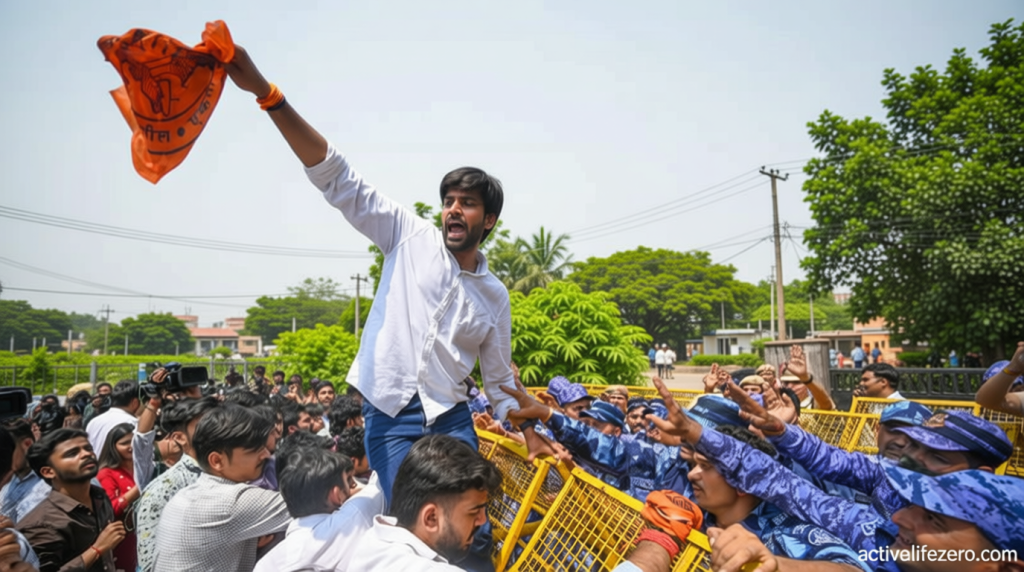
India’s Youth in Revolt: A Satirical Movement Sparks Nationwide Protests
India s youth are fuming A Boston – India’s young population is increasingly restless, driven by a combination of academic disillusionment, economic uncertainty, and a sense of being overlooked by political leaders. For years, students have grappled with systemic issues in education, including widespread exam fraud, technical glitches, and a lack of transparency. Meanwhile, unemployment rates among the country’s 15-to-29-year-old demographic have remained stubbornly high, fueling frustration across social media and public spaces. Now, a viral satirical group founded by a Boston University graduate is taking a bold step to transform this simmering discontent into tangible action.
A Graduate’s Determination to Bridge the Gap
Abhijeet Dipke, a 30-year-old graduate of Boston University, has turned his concerns into a movement. As the creator of the Cockroach Janta Party—a satirical political group that has gained immense traction across India—he is now leading a physical protest in New Delhi, aiming to confront the government directly. His goal: to demand the resignation of Education Minister Dharmendra Pradhan, whom he and many others believe has failed to address the deepening crisis in India’s education system.
“My friends and family are scared that I could get arrested at the airport,” Dipke said in an Instagram post earlier this week. “But how long can I fear jail? This country belongs not just to one party, but to all of us. This is a question of our future. Our future is getting ruined.”
Dipke’s journey from online satire to street-level activism began after the Chief Justice of India, Surya Kant, famously referred to unemployed youth as “cockroaches” in a statement that resonated deeply with many. While the Chief Justice later clarified his comments were about individuals using fake degrees, the phrase became a rallying cry for a generation feeling ignored and undervalued. The Cockroach Janta Party, which has amassed over 10 million Instagram followers, has since evolved from a meme-based critique into a platform for collective action.
When Dipke arrived in New Delhi on Saturday, he was greeted by a significant security detail at the airport. Despite the precautions, he expressed confidence in his cause, stating that the protests were necessary to force change. The group’s upcoming demonstration at the Jantar Mantar monument marks a shift from virtual outrage to real-world engagement, with the hope of drawing attention to the systemic failures that have left so many feeling disenfranchised.
The Weight of High-Stakes Exams
Central to the youth’s anger is the pressure of India’s competitive entrance exams, which serve as gateways to prestigious institutions. These tests, often dubbed “make-or-break” assessments, have become a source of immense stress for students and families alike. With millions of aspirants vying for a limited number of seats, the system has long been plagued by scandals, from leaked question papers to grading inconsistencies. These issues have not only undermined the integrity of academic achievement but also placed a heavy financial burden on families investing in their children’s futures.
Veronica Madan, a 24-year-old who took the medical school entrance exam twice, echoes this sentiment. “The pressure doesn’t start on exam day,” she explained. “It begins months, even years, before.” Her experience highlights the long-term toll of a system that prioritizes success at any cost. After two years of rigorous preparation, she fell short of securing a spot at one of India’s top medical colleges. “That was a very disheartening situation for me,” she said. “But that rejection became my redirection.” Now, she is pursuing a master’s degree in forensic science, a field she believes offers more stability and opportunities for meaningful contribution.
Madan’s story is emblematic of a larger trend: the rising anxiety among students who feel the stakes of their education are too high. The exams, which are seen as a pathway to elite careers, have become symbols of a system that often feels unresponsive to the needs of the younger generation. This frustration is compounded by the reality that even after years of study, many graduates struggle to find employment, leaving them questioning the value of their investments.
A Nation in Transition: Youth as the Future’s Hope and Challenge
India’s demographic landscape is shifting rapidly. With over 1.4 billion people and more than 360 million individuals aged 15 to 29, the country is home to the world’s youngest population. This demographic is not only more educated and digitally savvy but also increasingly connected to global trends and aspirations. Yet, for all their potential, many feel trapped in a cycle of high expectations and limited opportunities.
A recent report by Azim Premji University in Bengaluru underscores the challenges. It notes that unemployment among this age group remains a persistent issue, with nearly 40% of graduates under 25 and about 20% of 20-29-year-olds lacking stable jobs. These figures are stark, especially in a society where education is often viewed as the primary route to upward mobility. The transition from academic success to economic stability, the report argues, is a “major challenge” that requires urgent reform.
As inflation continues to strain household budgets and political leaders face growing scrutiny, the youth’s dissatisfaction is no longer confined to social media. The Cockroach Janta Party, with its blend of humor and sharp criticism, has tapped into this sentiment, using AI-generated imagery of its cockroach mascot to capture the public’s imagination. The symbol has become a powerful representation of resilience and defiance, resonating with a generation that refuses to be sidelined.
The party’s rapid rise—from 10 million followers to over 22 million in just one week—demonstrates the strength of its message. While its initial focus was on ridiculing the education and employment systems, its current mission is to transform online outrage into on-the-ground action. For Dipke and his supporters, the movement is about reclaiming agency and ensuring that the government addresses the grievances of a population that is both the country’s greatest asset and its most vulnerable group.
As the protest gains momentum, it raises important questions about the future of India’s youth. Will their frustration lead to meaningful policy changes, or will it remain a voice of discontent? The answer may depend on the ability of leaders to listen and adapt. For now, the Cockroach Janta Party stands as a testament to the power of youth-driven movements in shaping a nation’s direction.
