
Gunshots heard in Philippine Senate, where senator wanted by ICC is resisting arrest
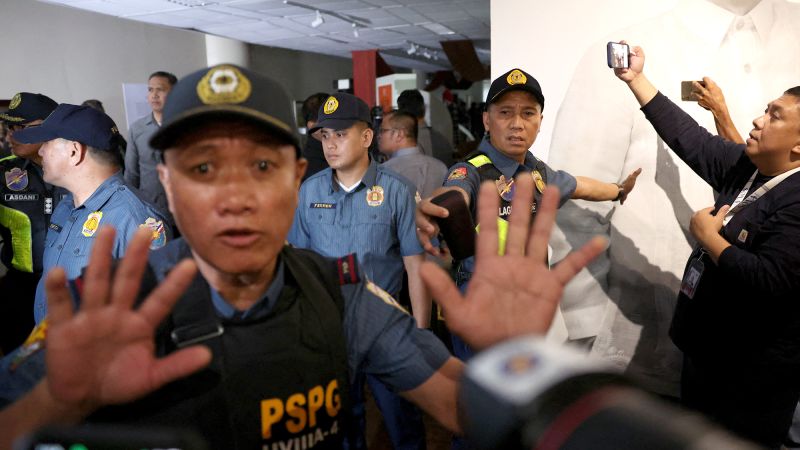
Gunshots in Philippine Senate as ICC-Wanted Senator Resists Arrest
Gunshots heard in Philippine Senate where – Gunshots rang out in the Philippine Senate complex on Wednesday, sparking confusion and heightened security as Senator Ronald Dela Rosa, who faces an ICC arrest warrant, refused to surrender. The incident occurred as authorities attempted to detain the senator, who had taken refuge in the building to evade capture. While no injuries were reported, the exact cause of the gunfire remains under investigation, with senators and officials scrambling to secure the premises. The chaos underscored the ongoing tension between the senator and the government’s efforts to enforce international legal action.
ICC Charges and Dela Rosa’s Legal Defiance
S Senator Dela Rosa, 64, has been at the center of an ICC investigation into alleged crimes against humanity. Prosecutors accuse him of aiding former President Rodrigo Duterte during the country’s violent anti-drug campaign, which led to thousands of deaths. The ICC issued a warrant for his arrest on Monday, citing 32 fatalities linked to the program between 2016 and 2018. Dela Rosa, known as “Bato” in the local language, has been holed up in the Senate since the warrant was announced, seeking a temporary restraining order to delay his transfer to The Hague.
“I don’t know what is happening. I do not know if I can keep my people safe here,” said Senate President Alan Peter Cayetano during a live Facebook stream. “I’m willing to face anyone who is going to serve the warrant … but do not do this.”
Philippine President Ferdinand Marcos clarified that the incident was not a government-organized operation. He confirmed that no military or investigative units had entered the Senate to arrest Dela Rosa, who has been a close ally of Duterte. Dela Rosa’s resistance highlights the broader debate over the ICC’s jurisdiction, as he claims the court lacks authority to act without local court approval. CCTV footage shows him dodging agents as they sought to detain him, reinforcing his determination to avoid capture.
Security Actions and Escalating Tensions
Interior Secretary Jonvic Remulla entered the Senate building on Wednesday night, assuring Dela Rosa that the arrest warrant would not be executed immediately. He conducted a security sweep to identify potential suspects, emphasizing that all senators were safe. Despite this, gunshots were heard as police and security teams moved through the premises, creating a tense atmosphere. The lockdown underscored the senator’s ability to disrupt the process, even as officials worked to regain control.
Video from Rappler, a Philippine news outlet, captured the moments of gunfire in the Senate halls. Reporters documented the swift movements of soldiers, police, and security personnel before the lockdown. Multiple shots were heard, prompting evacuations and a tense standoff. Dela Rosa’s actions have intensified political divisions, with his supporters defending his right to resist arrest and critics condemning the use of force.
“I will face it, as long as they follow the proper process. If there is a legitimate warrant of arrest, they should bring it before the local court,” Dela Rosa said in a Tuesday livestream. His emotional plea highlighted the stakes of the situation, as he sought to delay his legal fate by invoking domestic procedures.
Political Context and Legal Challenges
Before the gunfire, Dela Rosa had already been in the Senate for two nights, pleading with lawmakers to shield him from international scrutiny. He argued that the ICC’s warrant lacked domestic validation, emphasizing the need for Philippine courts to authorize his arrest. His resistance reflects a pattern of defiance seen in Duterte’s administration, where legal processes were sometimes bypassed to pursue political goals. The incident has reignited debates over the balance between national sovereignty and international justice in the Philippines.
As the situation unfolded, Dela Rosa’s presence in the Senate became a focal point for both supporters and detractors. His refusal to leave the building symbolized the broader conflict between his loyalty to Duterte and the government’s push for accountability. The senator’s actions have also raised questions about the effectiveness of domestic legal mechanisms in deterring international judicial pressure. The gunfire served as a dramatic reminder of the high stakes involved in this political showdown.
