
Fossil reveals bizarre gliding creature that hunted birds 120 million years ago
Fossil Reveals Bizarre Gliding Creature That Hunted Birds 120 Million Years Ago
Fossil reveals bizarre gliding creature that – A newly unearthed fossil, dating back 120 million years and discovered in present-day northwestern China, is challenging existing scientific theories about a unique group of predatory dinosaurs known as microraptors. This find not only expands the known geographic distribution of these feathered dinosaurs but also sheds light on their ecological roles and evolutionary significance. The specimen, identified as the most recent definitive example of its kind, provides crucial insights into the timeline of avian evolution and the transition between dinosaurs and birds.
A Unearthed Discovery in the Changma Basin
The fossil was uncovered in the Changma Basin of Gansu province, a region now renowned for its rich deposits of bird fossils. This location marks the first known instance of a microraptor specimen outside the traditional northeastern China hotspot, suggesting that these creatures inhabited a broader range than previously believed. The bones, remarkably preserved, offer a rare glimpse into the anatomy of a dinosaur that combined features of both terrestrial predators and aerial gliders.
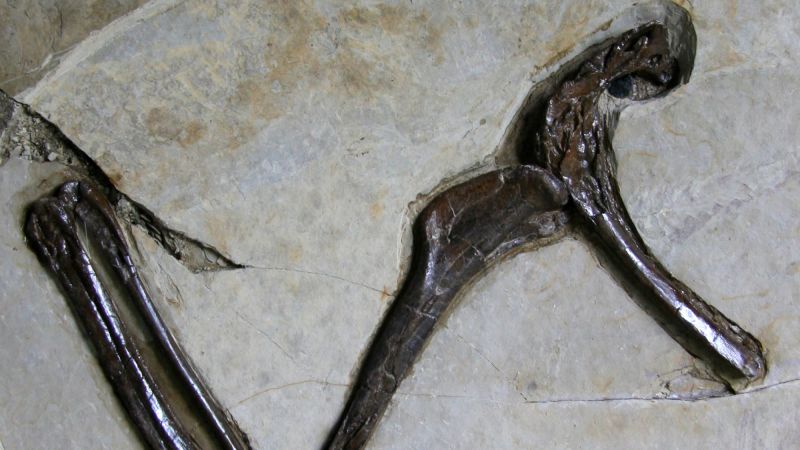
According to the study published in the Annals of Carnegie Museum, the newly named species—Jian changmaensis—was identified through a detailed analysis of its intact shoulder and forelimb structures. The research team, led by Dr. Matt Lamanna, a senior dinosaur researcher at the Carnegie Museum of Natural History, emphasized the importance of this discovery in understanding the biodiversity of the Cretaceous period. “Jian changmaensis reveals that non-avian dinosaurs lived in what is now the Changma Basin, an area famous for its fossil birds,” Lamanna stated in a statement.
Feathers and Flight: A Unique Adaptation
The fossil’s most striking feature is its feather coverage, which extends beyond the typical wings to include elongated feathers on the hind legs. This configuration gives the creature the appearance of having four wings, a trait that has sparked debates among paleontologists about its locomotion and behavior. “That’s led many experts to suggest these dinosaurs probably lived on the ground but could climb and glide between trees, almost like a modern flying squirrel,” Lamanna explained.
Jian changmaensis, while smaller than its velociraptor relatives, was likely comparable in size to a barn owl. Its skeletal structure indicates a compact, agile form suited for arboreal movement. However, the presence of long shoulder bones—more pronounced than those of most known microraptors—suggests it may have had a specialized adaptation for flight. “The exceptionally long shoulder bone could hint at gliding capabilities or changes in the shoulder structure that made flight more efficient,” Lamanna added.
Ecological and Evolutionary Implications
The discovery of Jian changmaensis has significant implications for understanding the ecological context of early birds. These dinosaurs, though not birds themselves, are closely related to the ancestors of modern avian species, such as Archaeopteryx. The presence of a microraptor in the Changma Basin adds a new dimension to the study of how these creatures interacted with their environment and other species.
“If you saw that thing sitting in a tree, you wouldn’t think velociraptor from ‘Jurassic Park,’” Lamanna remarked in an interview with CNN. “This is an extraordinarily birdlike dinosaur that could take to the air to some degree.” The fossil’s preservation allows scientists to examine the mechanics of gliding, offering clues about the origins of flight in birds. This could help bridge the gap between ground-based dinosaurs and the fully airborne species that dominate today’s skies.
A Distinctive Feature: The Coracoid Hole
One of the key indicators that the fossil belonged to a microraptor rather than a bird is a distinctive feature in the coracoid bone, a part of the shoulder structure. This bone contains a large hole known as the supracoracoid fenestra, which nearly divides the shoulder into two halves. Lamanna highlighted that this trait is unique to microraptors and is rarely seen in other prehistoric animals. “The presence of this hole is something all microraptors possess but almost no other creature has,” he said.
While the function of the supracoracoid fenestra remains unclear, Lamanna speculated that it could be linked to flight mechanics. “It might have played a role in reducing weight or aiding in the movement of feathers during gliding,” he hypothesized. The study also notes that microraptors, like modern birds, had elongated shoulder bones, a feature that supports their ability to navigate through trees. This adaptation may have been crucial in their survival and ecological niche during the Mesozoic era.
The Line Between Dinosaurs and Birds Blurs
Velociraptors and microraptors, though not classified as birds, are closely related to the earliest avian ancestors, such as Archaeopteryx. The distinction between these groups has become increasingly ambiguous as more fossils are discovered. “They’re all dinosaurs in an evolutionary sense, but it really depends on which side of Archaeopteryx you fall,” Lamanna said, underscoring the importance of the coracoid hole as a defining characteristic of microraptors.
Modern birds are considered the closest living relatives to dinosaurs, having evolved from theropod ancestors that lived millions of years ago. The extinction of non-avian dinosaurs 66 million years ago, triggered by a massive asteroid impact, left birds as the sole survivors of this ancient lineage. However, the fossil record continues to challenge this linear view, revealing a complex web of adaptations that blurred the boundaries between dinosaurs and birds.
A Rare Specimen and Its Significance
Jian changmaensis represents a rare example of a microraptor specimen, with its discovery adding to the growing body of evidence about their diversity and distribution. While the Changma Basin has yielded over a hundred bird fossils, this dinosaur specimen is the only one found in the region so far. Lamanna noted that the fossil provides critical information about the biological history of the area and the ecological dynamics of the time.
“This find is a game-changer,” Lamanna said, reflecting on the broader implications of the discovery. “It not only confirms the presence of microraptors in a new location but also deepens our understanding of their role in the ecosystem. The more we uncover, the clearer the picture becomes of how these creatures contributed to the evolution of flight.”
Additionally, the study highlights the importance of continued exploration in regions like the Changma Basin. As researchers analyze more fossils, they may uncover additional species and refine their understanding of how microraptors adapted to their environment. The work on Jian changmaensis is a testament to the evolving nature of paleontological research, where each new discovery adds a piece to the puzzle of life’s history.
Despite the advancements in knowledge, questions remain about the precise mechanisms of flight in these creatures. The supracoracoid fenestra, for instance, still eludes a definitive explanation. “The purpose of this hole remains an open question, but I believe it could be tied to the development of flight,” Lamanna said. “It’s a fascinating piece of the puzzle that we’re still trying to fit together.”
Conclusion: A Window into the Past
The fossil of Jian changmaensis is more than just a relic of the past—it is a key to unlocking the mysteries of dinosaur evolution and the origins of birds. By examining its anatomy and comparing it to other specimens, scientists can piece together the story of how these creatures transitioned from ground-dwelling predators to agile gliders. As the research continues, the findings will likely reshape our understanding of the Mesozoic era and the intricate relationships that defined life on Earth during that time.
“Jian changmaensis is a reminder that the evolutionary journey from dinosaurs to birds was far from straightforward,” Lamanna concluded. “Each new fossil adds depth to this narrative, helping us see the connections that once existed between these ancient and modern species.”
