
Extreme heat wave in its final stretch and could fuel storms during July 4 celebrations
Extreme Heat Wave Nears Its End, But Storms Loom for July 4
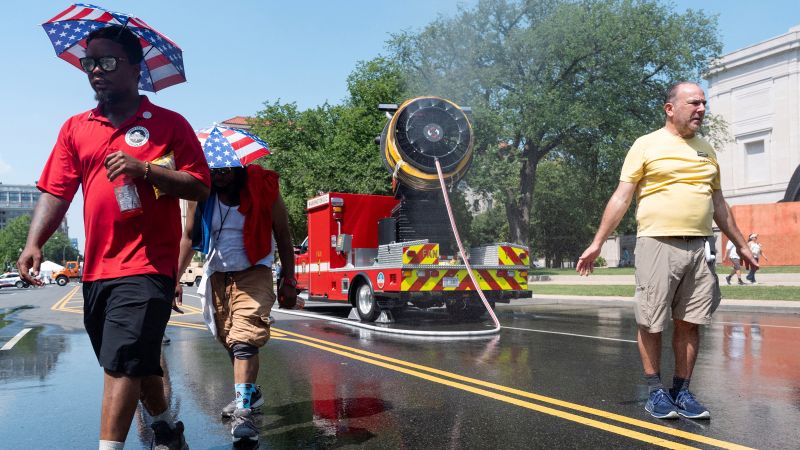
Extreme heat wave in its final – As the nation prepares to celebrate its 250th anniversary, the eastern United States is experiencing one of the most severe heat waves in recent memory. This prolonged period of intense heat, exacerbated by climate change, is set to reach its peak this weekend, potentially creating unexpected weather challenges for Independence Day festivities. The National Weather Service has issued warnings about rising temperatures, while meteorologists highlight the possibility of thunderstorms emerging as the heat continues to build.
A Record-Breaking Heatwave
High temperatures are expected to remain in the 90s and low 100s across New England, the Mid-Atlantic, and the Southeast. This includes major cities like Philadelphia and Washington, D.C., which are forecasted to endure their third consecutive day of triple-digit readings by Saturday. At least 22 locations have already tied or broken daily temperature records, with 17 additional sites seeing extreme heat on Friday. The combination of heat and humidity is pushing the region to its limits, creating conditions that could lead to significant health risks.
“A 68-year-old man died after trimming bushes on July 2 in Bethel Township, Pennsylvania, where temperatures exceeded 100 degrees,” said the Berks County Coroner’s Office. The cause of death was listed as a heart attack triggered by heat exhaustion, underscoring the life-threatening nature of the extreme conditions.
Meanwhile, the Centers for Disease Control and Prevention reported “extremely high rates of heat-related illness” across the Northeast, with symptoms ranging from dehydration to more severe cases. The heat wave’s intensity is being amplified by climate change, which has intensified the typical summer weather patterns through fossil fuel emissions and rising global temperatures.
Events in Peril
Amid the sweltering conditions, several events have been forced to adapt. The July 4 parade in Washington, D.C., scheduled for Saturday morning, was canceled due to the oppressive heat. President Donald Trump’s Great American State Fair, a major regional draw, will now begin two hours later at 12 p.m. to mitigate the risk for attendees. These changes reflect the growing impact of extreme weather on public gatherings.
Power Outages and Air Quality Concerns
Con Edison, the New York City utility company, reported thousands of customers in the metro area experiencing power outages on Friday and Saturday morning. Some of these outages were proactive measures to prevent longer disruptions, while others were due to strain on the grid from the relentless heat. In parts of Staten Island, Queens, the Bronx, Brooklyn, and Westchester, voltage reductions were implemented earlier in the day to safeguard infrastructure.
As fireworks light up the sky, air quality in cities across the region could worsen. The heat dome, a stationary area of high pressure trapping humid air, is creating an environment where pollutants linger. Fireworks, whether grand formal displays or impromptu street shows, are likely to generate air quality levels comparable to those of wildfires. In some areas, the air may not return to normal until late afternoon the following day, complicating plans for outdoor activities.
“Voltage reductions were also happening earlier in the day in parts of Staten Island, Queens, the Bronx, Brooklyn and Westchester,” explained Jamie McShane, a Con Edison spokesperson. This adjustment aims to prevent widespread blackouts during the peak heat hours.
Storm Threats on the Horizon
As the heat wave persists, the stage is set for a new weather development: thunderstorms. The combination of high temperatures and moisture in the air is fueling a storm threat for the Mid-Atlantic and Northeast beginning Saturday afternoon. These storms, while not widespread, could bring severe conditions with damaging wind gusts of 60 mph or more. Lightning, a major hazard for outdoor events, adds to the risks, particularly for those seeking relief by the water or in open spaces.
Although the potential for organized storm systems is lower than usual, the risk remains elevated in specific regions. The map highlights areas such as Washington, D.C., Baltimore, and Arlington, Virginia, as well as portions of Oklahoma and Kansas, where thunderstorms are most likely to form. These storms could disrupt fireworks displays, creating a challenging environment for celebratory events.
A Historical Perspective
The heat wave’s severity is accentuated by its contrast to historical conditions. When the Founding Fathers signed the Declaration of Independence in 1776, Philadelphia recorded a high of at least 76 degrees, a relatively mild day for the era. Today, the same city faces an entirely different scenario, with Saturday’s forecast predicting a high of 100 degrees. The heat index, which accounts for humidity, will further elevate the perceived temperature, making the region feel even hotter than the actual readings.
Washington, D.C., is also on track for its hottest July 4 in recorded history, with temperatures expected to hover in the upper 90s. Even New York City, which saw triple-digit highs on Thursday and Friday, will continue to feel the effects through Saturday, as the heat index remains stubbornly high. By Sunday, the heat is expected to begin easing, offering a brief reprieve before the next wave of weather challenges.
As the heat wave winds down, the focus shifts to managing its lingering impacts. While the air may cool slightly, the region remains under the watchful eye of meteorologists and public health officials. The interplay between extreme heat and atmospheric conditions is creating a complex weather picture, with both risks and opportunities for relief. For now, the Fourth of July will be remembered not just for its patriotic traditions, but for the challenges posed by a warming climate.
