
Ethiopia’s PM won a Nobel Peace Prize, stoked a civil war – and is set for re-election
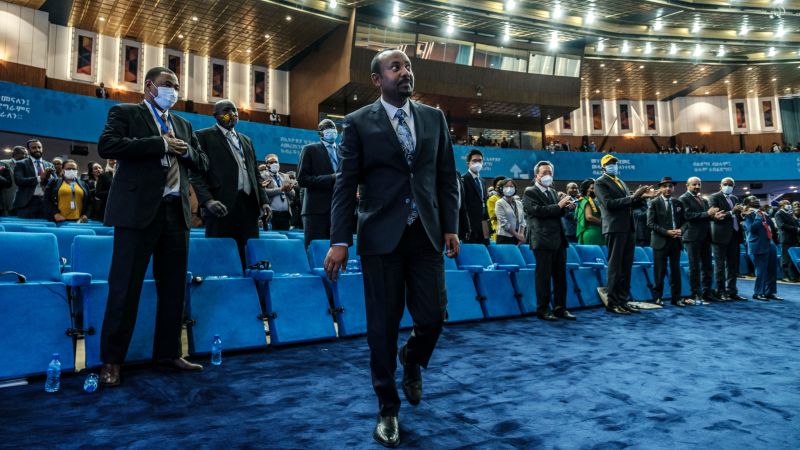
Ethiopia’s PM, Nobel Winner, Faces Re-election Amid Civil War
Ethiopia s PM won a Nobel – Ethiopia’s PM won a Nobel Peace Prize, stoked a civil war—and is set for re-election. The upcoming June 1 vote marks a pivotal moment for a country where political divisions have grown sharper since Abiy Ahmed’s ascent to power. His leadership, once synonymous with reform and optimism, now faces scrutiny as ethnic conflicts and political strife continue to challenge Ethiopia’s stability. With the Nobel award as a backdrop, Abiy’s tenure is seen as a mix of triumph and turmoil, raising questions about his legacy and the nation’s future.
The Rise of a Nobel Laureate
Abiy Ahmed’s election in 2018 brought a wave of hope to Ethiopia, a nation long marked by authoritarian rule. His leadership was celebrated globally after he secured the Nobel Peace Prize in 2019, a recognition that underscored his role in ending the 20-year border war with Eritrea. The Nobel win symbolized a shift toward reconciliation, but it also highlighted the fragile nature of Ethiopia’s political unity. Abiy’s early reforms, such as releasing political prisoners and promoting free speech, were hailed as steps toward a more inclusive governance model.
However, the promise of peace was short-lived. As Abiy pushed for centralization, tensions flared between the federal government and regional groups, particularly the Tigray People’s Liberation Front. The Nobel Peace Prize, while a mark of his achievements, has since become a symbol of the contradictions in his rule. Critics argue that his policies, though transformative, have also deepened ethnic divides and triggered widespread unrest.
Centralization and Political Fracture
Abiy’s consolidation of power began in late 2019 when he dissolved the EPRDF coalition, which had governed Ethiopia for nearly three decades. This move, seen as a bid to streamline decision-making, also signaled a departure from the ethnically based federalism that had defined the country’s political structure. The Prosperity Party, under Abiy’s leadership, now controls the majority of parliamentary seats, leaving opposition groups weakened and fragmented.
The centralization of authority has led to clashes in regions like Tigray, where the TPLF resisted federal control. The conflict, which erupted in November 2020, has claimed an estimated 600,000 lives and displaced millions. Despite the Nobel Peace Prize, Abiy’s government is now accused of using repression to maintain dominance. The election, scheduled for June 1, will test whether the nation can reconcile its fractured political identity or further deepen the divide.
Re-election and Unrest
Abiy Ahmed’s re-election campaign has drawn mixed reactions. Supporters see it as a continuation of his vision for Ethiopia, while opponents view it as a reinforcement of centralized rule. The Prosperity Party’s dominance in the electoral process raises concerns about fair representation, especially in regions that feel marginalized. With the Nobel Peace Prize as a legacy, Abiy’s re-election could either solidify his political stature or expose the cracks in his governance.
The election is not just a political event but a social test. In urban centers, economic growth and infrastructure development have been praised, but rural areas remain scarred by conflict. The Nobel award, once a beacon of hope, now coexists with the realities of a nation torn by ethnic strife and political ambition. As voters prepare to cast their ballots, the question remains: will the election restore unity, or will it cement Ethiopia’s division?
Ethiopia’s Path Forward
The June 1 elections are a critical juncture for Ethiopia, a country that has seen its political landscape shift dramatically since Abiy’s Nobel win. His reforms initially brought momentum, but the cost of centralization has been high. The conflict in Tigray, which began as a political dispute, has evolved into a full-scale war, complicating the electoral process. With millions unable to participate due to displacement and violence, the outcome may reflect not just Abiy’s popularity but the resilience of a divided population.
As Ethiopia s PM won a Nobel, the nation’s story has become one of both progress and polarization. The election will be watched closely by regional leaders, international observers, and the global community. Whether Abiy can unify the country or further entrench his political power will determine the future of Ethiopia’s democracy. The Nobel Peace Prize, once a symbol of his diplomatic prowess, now stands as a testament to the complex legacy of his leadership.
