
Ancient DNA reveals clues about mysterious ‘Golden Man’ and rise of the Scythian elites
Ancient DNA reveals clues about mysterious ‘Golden Man’ and rise of the Scythian elites
Genetic Analysis Unearths Hereditary Power in Scythian Society
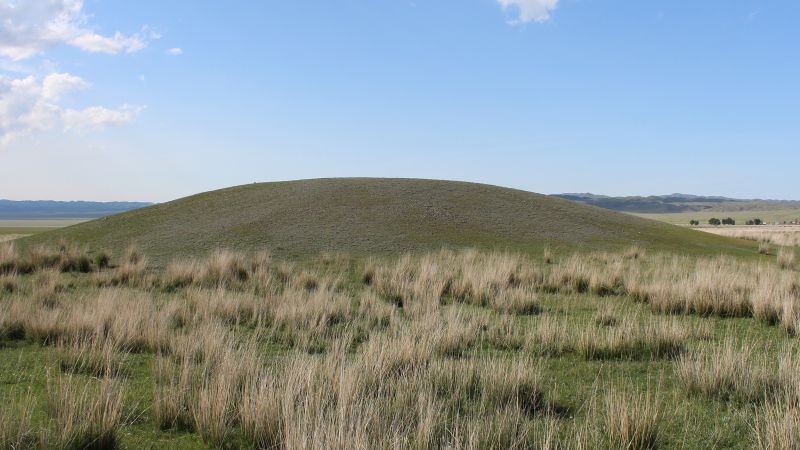
Ancient DNA reveals clues about mysterious – The Scythians, renowned for their mastery of mounted warfare across the Eurasian Steppe, thrived during the Iron Age. Their societal structure was marked by a distinct hierarchy, with a privileged class exercising control over military and political affairs. This elite group was honored in death through elaborate interments, often featuring iron weapons, bronze objects, a silver dish, and over 4,000 golden adornments. Among these iconic tombs, the burial of the so-called “Golden Man” stands out, as it was discovered in 1969 in a kurgan, or burial mound, in Kazakhstan. The site, dating to approximately 400 BC to 300 BC, has long intrigued historians and archaeologists due to its opulence and the mystery surrounding its occupant’s identity.
Recent genetic studies have shed light on the origins of Scythian elite power, revealing that social status was not solely determined by merit but often inherited within families. This discovery challenges previous assumptions about the fluidity of Scythian society and highlights a structured system of authority. By analyzing DNA from dozens of individuals across multiple burial sites, researchers identified genetic links among upper-class Scythians, even those separated by vast distances. These connections suggest that the elite were not isolated enclaves but part of interconnected family networks, which played a pivotal role in shaping the region’s social dynamics during this period.
The breakthrough comes from a study published in the journal *Science Advances*, which examined DNA markers from 85 individuals. Of these, 38 were associated with elite burials, while 47 belonged to non-elite groups. The findings indicate that the Iron Age populations were more genetically diverse compared to the Bronze Age, yet elites exhibited patterns of genetic homogeneity. This was evidenced by runs of homozygosity—segments of DNA where identical alleles were found in close proximity, suggesting common ancestry. The study authors noted that these genetic subgroups likely contributed to the stability of Scythian power structures amid widespread cultural and genetic exchange.
The Golden Man’s Burial and Identity
The “Golden Man” remains one of the most enigmatic figures of Scythian history, as his tomb was first unearthed in the 1960s. While the nickname implies a male individual, early interpretations were uncertain due to the lack of definitive skeletal evidence. This ambiguity was resolved through modern genetic analysis, which examined the complete genome of the remains. The results suggested the individual was likely male, aligning with the broader classification of Scythian elites. Additionally, the study placed him within a southern subgroup of Scythians known as the Saka, which inhabited regions further south than their northern counterparts.
Dr. Ainash Childebayeva, a key researcher in the study and assistant professor of anthropology at the University of Texas at Austin, explained the significance of these findings. “The Golden Man’s tomb provides a tangible link between genetic data and cultural practices, offering insights into how lineage influenced status,” she told CNN. The analysis of DNA markers also clarified that the individual belonged to a specific genetic lineage, reinforcing the idea that elite positions were not only political but also hereditary. This revelation adds depth to the understanding of Scythian social organization, suggesting that power was concentrated within certain families rather than distributed broadly.
The study’s broader implications extend beyond the Golden Man. By comparing genetic profiles of elite and non-elite individuals, scientists observed that the ruling class maintained a level of genetic continuity despite the region’s history of migration and intermarriage. This homogeneity, even among individuals from distant burial sites, indicates a deliberate strategy to preserve family ties and consolidate authority. For instance, a notable case involved an elite man and his grandchildren, whose kurgans were located more than 60 miles apart. The presence of such familial connections in elite burials supports the theory of dynastic rule, where status was passed down through generations.
Archaeological Practices and Social Stratification
Elite kurgans were not just burial sites; they were monumental structures designed to reflect the prestige of their occupants. Some reached heights of 49 feet (15 meters) and spanned diameters of up to 345 feet (105 meters), often containing corridors, catacombs, and side chambers. These features were used to house not only human remains but also those of animals and relatives, underscoring the communal aspect of Scythian burial rituals. However, the remains within these tombs frequently showed signs of mummification or postmortem trepanation—drilling a hole in the skull to extract the brain. Such practices were likely employed to preserve bodies that could not be immediately entombed due to the time required to prepare their elaborate funerary rites.
Dr. Childebayeva explained that these preservation techniques were essential in ensuring the remains of high-status individuals were available for ceremonial display. “If one had to construct a large mound to honor this person, or transport their body to a specific location, it would make sense to preserve their physical form as a symbol of their elevated position,” she stated. This perspective links the physical construction of kurgans to the cultural significance of lineage, as the effort required to create such structures underscores the value placed on familial ties.
The discovery of a 1-year-old grandchild buried in an elite tomb further emphasizes the hereditary nature of Scythian power. This finding, noted by Childebayeva, highlights how status was not only a personal achievement but also a familial legacy. “The fact that a young child was granted an elite burial suggests that the system was deeply entrenched, with power flowing through generations regardless of age,” she said. Such evidence challenges the notion that Scythian elites were solely defined by their military prowess, instead positioning them as custodians of a structured social hierarchy.
Integration of Genetic and Archaeological Findings
“This paper does a fantastic job of integrating genetic, archaeological, and textual findings to support their interpretations of lineage-based status,” said Dr. Alicia R. Ventresca-Miller, an associate professor of anthropology at the University of Michigan and an associate curator of archaeological sciences at the university’s Museum of Anthropological Archaeology. She was not involved in the new research but praised its comprehensive approach.
Ventresca-Miller added that the identification of hereditary status is a critical development in Scythian studies, as it demonstrates how wealth and power were perpetuated across generations. “An elite system based on lineage means that social mobility was limited, and influence was concentrated within certain families,” she explained in an email to CNN. This insight aligns with the broader implications of the study, which suggests that the Scythians’ social stratification was more rigid than previously thought.
The research also underscores the role of genetic analysis in bridging gaps between archaeological evidence and historical narratives. By combining DNA data with findings from burial sites, scientists can reconstruct the social fabric of ancient societies with greater precision. For example, the presence of genetic similarities among elites across different regions indicates a network of intermarriage and alliances, which may have strengthened their collective power. These connections, though geographically dispersed, were vital in maintaining the Scythian elite’s dominance during a time of significant cultural transformation.
As the study illustrates, the Scythians’ rise to prominence was not merely a result of conquest or individual strength but also of inherited privilege. The genetic evidence suggests that the elites were not just a transient group but a lineage that endured through centuries of change. This understanding provides a new framework for interpreting Scythian history, emphasizing the role of family in shaping the region’s political and social landscape. The findings also open avenues for further research, as they invite comparisons with other ancient societies where hereditary status played a similar role.
