
A cryptic message from a man at a California bank was the beginning of a 15-hour hostage situation
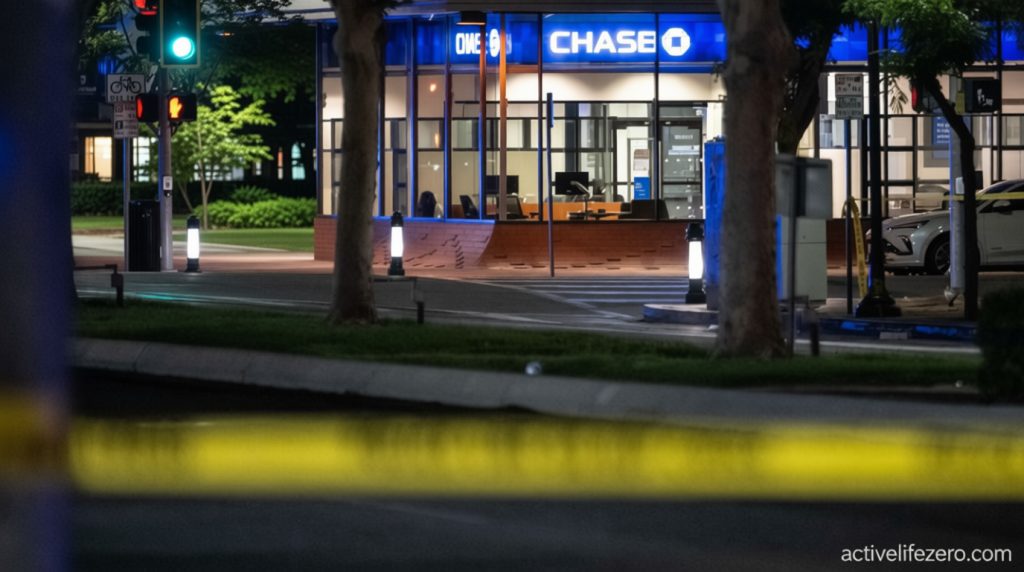
A Cryptic Warning at a California Bank Sparks 15-Hour Hostage Crisis
A cryptic message from a man at – On Tuesday afternoon, a seemingly ordinary scene unfolded at a Chase Bank branch in Bakersfield, California. Freddy Arredondo, a customer in line, was engaged in a casual conversation with a bank greeter when a man approached him. The man’s words, however, carried an ominous tone: “It’s a bad day to be in the bank.” Arredondo, interpreting it as a lighthearted comment, replied with a casual assurance, “No, it’s not that bad, it’s not that packed.” What began as a simple exchange quickly turned into a life-threatening situation as the man repeated his warning with growing intensity, declaring, “Today’s your last day on Earth, you guys are going to die today.”
The Tense Beginnings
Arredondo’s response triggered a sudden shift in the atmosphere. The man, later identified as 41-year-old Anthony Scott Searles-Harris, swiftly grabbed attention by pulling out a trigger mechanism from under his shirt, connected to wires that led to a vest. “I have a bomb,” he announced, his voice steady but urgent. “I need you guys to all get on the floor.” The group froze, their initial confusion giving way to fear as the threat materialized. Searles-Harris, a dishonorably discharged Army veteran and convicted sex offender, had set the stage for a harrowing 15-hour ordeal.
“I was like ‘Dude, I have a family, I can’t,’” Arredondo told CNN Wednesday. “I kept thinking to myself, ‘listen Freddy, listen to him’, but at the same time my body was like, ‘no’.”
The man’s actions escalated rapidly. He secured the second floor of the bank, where the Kern County school superintendent’s administrative offices are located, and began taking hostages. According to the Bakersfield Police Department, he tied up five individuals while others managed to hide from his sight. The presence of explosives on both Searles-Harris and the hostages added to the mounting tension, as the building became a battleground of uncertainty.
FBI’s Response
By midday, authorities had begun receiving multiple calls about a man with a bomb at the bank. The FBI was summoned around 1:30 p.m., and a coordinated response ensued. SWAT teams, crisis negotiators, and bomb technicians arrived at the scene, while surrounding buildings were evacuated to ensure safety. The standoff, which lasted over 15 hours, was marked by moments of high anxiety and desperate communication, including a dying phone call from one of the hostages.
Searles-Harris, who had a criminal history involving violent offenses, proved to be a persistent figure in the crisis. During negotiations, he voiced concerns about the handling of his court case, as noted by Bakersfield Assistant Police Chief Jeremy Blakemore in a news conference on Wednesday. His neighbor, Jimmy Smith, described his recent behavior as increasingly withdrawn and hostile. “He had asked for early on that notoriety of having FBI involved as well, and FBI negotiators,” said Sid Patel, special agent in charge of the FBI Sacramento field office.
“He had a ‘criminal history of using weapons to commit violent offenses,’” Patel said at the news conference.
The man’s strategy was deliberate. Every time he looked away, Arredondo and others at the bank took cautious steps backward, only to be scolded by Searles-Harris’s sharp commands: “Stop moving.” This cycle of tension and retreat lasted for hours, with Arredondo’s mind racing. When he spotted an opportunity, he and other patrons and employees made a daring escape. As he sprinted out, he shouted to a nearby officer, “There’s a bomb in there!”
The call to 9-1-1 marked the beginning of a broader effort to resolve the crisis. Throughout the standoff, hostages’ families were left in a state of suspense, hoping for news of their loved ones. Authorities grew increasingly worried about one hostage’s deteriorating health as the hours dragged on. The situation was compounded by Searles-Harris’s use of a “dead man’s switch,” a device that would trigger the explosives if he was no longer able to control them, according to Arredondo.
The Pivotal Moments
As the sun set over Bakersfield, the standoff entered its most critical phase. Searles-Harris had released one hostage around 4 p.m. on Tuesday, and a second was freed four hours later. Yet, his demands remained relentless, and negotiations hit a snag when he refused to let go of more captives. The FBI, with its specialized teams, worked tirelessly to de-escalate the situation, but the man’s resolve did not waver.
By Wednesday morning, the FBI had successfully cornered Searles-Harris in a final confrontation. The man, who had spent the night in the bank, was shot and killed during the exchange. His demise brought an end to the prolonged crisis, allowing authorities to recover the remaining hostages. Two individuals were released earlier that Tuesday, but the rest had to wait until the resolution of the standoff.
“Every time the man looked away, Arredondo and others at the bank would take a step back, and he’d scream at them to ‘stop moving.'”
The aftermath of the incident left a lasting impact on the community. For the hostages, the experience was a mix of trauma and relief. Arredondo, who had risked his life to call for help, reflected on the emotional toll of the event. “It felt like I blacked out,” he said, describing the moment he realized the gravity of the situation. His family’s worry, combined with the fear of the hostages, underscored the human cost of the crisis.
As the FBI and local police teams concluded their operation, the focus shifted to recovery and healing. Searles-Harris’s background as a former Army veteran and his history of sexual offenses added layers to the investigation. Authorities are now examining his motives, while the community grapples with the memory of the 15-hour standoff. The incident serves as a stark reminder of how quickly a routine banking transaction can turn into a life-threatening crisis.
The event also highlighted the importance of quick thinking and courage in emergency situations. Arredondo’s decision to flee and alert the police proved crucial in preventing a potential disaster. His actions, along with the coordinated efforts of the FBI and other agencies, ultimately saved lives and brought closure to the ordeal. While the details of Searles-Harris’s plan remain unclear, the sequence of events at Chase Bank will be remembered for years to come as a testament to the unpredictable nature of violence in public spaces.
