
50,000 residents in California told to leave their homes as threat of chemical explosion looms. Here’s what we know
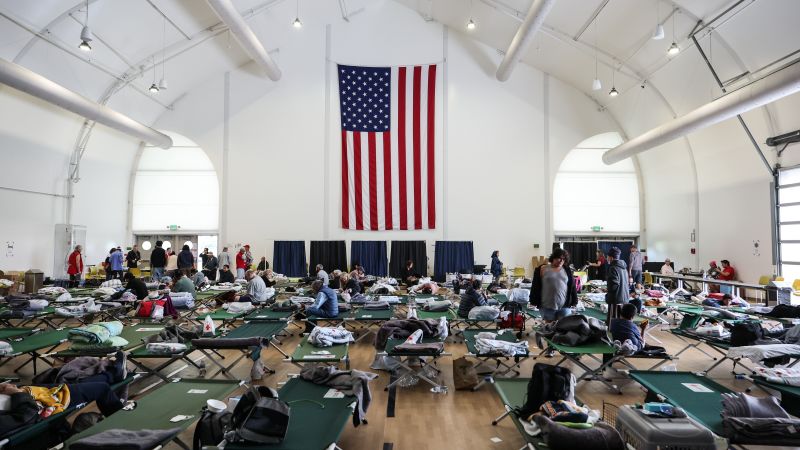
California Evacuation: 50,000 Residents Ordered to Leave Homes Amid Chemical Tank Crisis
50 000 residents in California told – Residents in Orange County, California, have been ordered to evacuate as officials work to prevent a potential chemical tank explosion. The situation involves a massive storage vessel containing methyl methacrylate (MMA), a toxic substance that poses serious health risks if released. With the temperature of the tank rising to critical levels, emergency crews are racing to stabilize the container before a catastrophic failure occurs. Over 50,000 people have been displaced, with many seeking temporary shelter or staying with relatives outside the affected zone.
What We Know About the Tank
The crisis began when GKN Aerospace, a manufacturing facility in Garden Grove, reported a vapor leak from one of its storage tanks on Thursday. Orange County Fire Authority Interim Fire Chief TJ McGovern revealed that the tank had overheated, triggering its relief valve and sprinklers to cool the system. However, the valves malfunctioned, allowing the temperature to climb to 90 degrees. This rise has raised concerns, as MMA’s optimal operating temperature is only 50 degrees, according to Craig Covey, a division chief at the Orange County Fire Authority and unified incident commander.
Experts warn that the increasing heat could lead to a catastrophic release or explosion. “We are in an emergency response phase, not yet an environmental one,” said EPA Administrator Lee Zeldin during a Sunday morning interview with CNN. “The scale of the environmental response will depend on what happens when the tank fails.” The agency’s goal is to monitor the situation closely, neutralize the threat, and contain the damage before it escalates.
Containment Efforts and Uncertainties
Authorities are attempting to cool the tank from the outside by solidifying the chemical within. Captain Steve Concialdi, an Orange County Fire Authority officer, compared this process to an ice cube freezing. “The tank is hardening from the exterior, while the interior remains liquid until it fully solidifies,” he explained. However, the method’s success is uncertain, as the tank could crack or rupture, releasing up to 7,000 gallons of MMA.
Concialdi emphasized that the situation is still in flux. “We’re not sure exactly at what temperature the tank will ignite or explode,” he said, highlighting the unpredictability of the outcome. The team’s focus is on preventing a disaster that could harm both the community and the environment. Covey reiterated this priority, stating, “Letting this thing fail and blow up is unacceptable to us. Our goal is to find a solution before that happens.”
Company Response and Resident Impact
GKN Aerospace issued a statement on Saturday, apologizing to evacuated residents and businesses. The company pledged to collaborate with emergency services and hazardous materials teams to “ensure the safety of the local community, our employees, and everyone else involved.” It also expressed gratitude for the efforts of Orange County’s first responders, who have been working around the clock to mitigate the risk.
Meanwhile, the state of California has taken decisive action. Governor Gavin Newsom declared a state of emergency in Orange County, prioritizing resident safety. “We are mobilizing every state resource available to support local responders and ensure the community has what they need to stay safe,” Newsom stated in a public declaration. This move allows for additional funding and personnel to aid in the ongoing crisis.
Health Risks and Resident Accounts
The health implications of MMA exposure are well-documented by the Environmental Protection Agency. The chemical can cause respiratory issues, skin irritation, and eye discomfort. In a recent update, Orange County Health Officer Dr. Regina Chinsio-Kwong noted that while symptoms like nausea and dizziness are possible with exposure, the effects of a full-scale explosion remain unpredictable due to limited documented cases of human interaction with the substance.
Residents have shared their experiences, with some reporting symptoms despite the absence of airborne detection. Stanton resident Van Ly described the incident as a personal ordeal. “I forgot to close the window during Thursday night, and I regret it,” she said. “The smell was overwhelming—it reminded me of burn pits.” Her account highlights the immediate impact of the situation on local communities, even as authorities work to contain it.
Timeline of the Incident
The incident unfolded rapidly, beginning with a vapor release on Thursday. By Friday, officials confirmed the tank’s temperature was rising, prompting evacuation orders. Over the weekend, emergency crews continued their efforts to cool the tank, with some residents spending the Memorial Day holiday in temporary accommodations. Despite the urgency, nearby tourist attractions such as Disneyland and Knott’s Berry Farm remain open, as they are not within the evacuation zone.
The chemical’s characteristic fruit-like scent has been noted by some residents, though Dr. Chinsio-Kwong clarified that the presence of the smell does not necessarily indicate harmful exposure. “Smelling MMA doesn’t always mean you’ve been exposed to enough to experience symptoms,” she noted. However, the uncertainty surrounding the tank’s condition has left many anxious, with some fearing the worst.
What’s Next for the Community?
As the situation unfolds, officials are preparing for different scenarios. If the tank fails, the response will shift from an emergency to an environmental crisis, involving broader efforts to clean up the chemical spill and protect the surrounding area. The community is also being advised to stay informed and follow updates from local authorities.
While the exact timeline for resolution remains unclear, the collaborative effort between GKN Aerospace, emergency services, and state agencies underscores the seriousness of the situation. The goal is not only to prevent a disaster but to minimize its long-term effects on public health and the environment. As the temperature continues to climb, every second counts in the race to secure the safety of thousands of residents.
Residents who have been displaced are now focusing on recovery, with some expressing relief at being out of harm’s way. “We’re just hoping the tank doesn’t blow up,” said Van Ly, reflecting the collective sentiment of many affected by the evacuation. The incident serves as a reminder of the potential dangers posed by industrial chemicals and the importance of swift, coordinated responses in such emergencies.
As authorities continue their efforts, the situation remains under close watch. The next few hours could determine whether the crisis is contained or escalates, with the safety of the community hinging on the success of these measures. Updates are expected as the temperature of the tank and the stability of the containment process are closely monitored.
