
One of India’s greatest food cities is finally getting the global attention it deserves
India’s Culinary Jewel Shines on the Global Stage
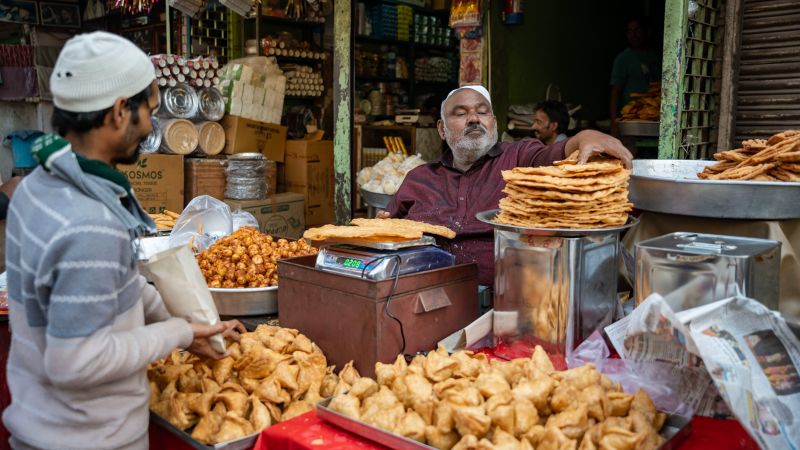
One of India s greatest food – In the heart of Lucknow’s historic old quarter, nestled within the narrow lanes of Phool Wali Gali, a vivid culinary ritual unfolds. At Tunday Kababi, a revered eatery, buffalo galawati kebabs are presented on the table, their aroma mingling with the soft warmth of paratha, a layered flatbread. Patrons pull off pieces of the bread, using it to wrap and savor the tender, melt-in-the-mouth meat. Nearby, cooks work in unison, shaping and frying fresh kebabs with practiced precision. This scene, steeped in tradition, has persisted for generations, yet Lucknow’s culinary legacy has long remained in the shadows of larger Indian food hubs like Delhi and Mumbai.
A City of Rich Heritage, Overlooked by the World
Lucknow, the capital of Uttar Pradesh, is widely regarded by Indians as a bastion of gastronomic excellence. Its cuisine, rooted in the historic Awadhi region, is a testament to centuries of royal innovation and local ingenuity. However, beyond its borders, the city has struggled to gain international recognition, often overshadowed by the more globally celebrated food cultures of the subcontinent. That is, until October 2025, when UNESCO bestowed the prestigious title of Creative City of Gastronomy upon Lucknow. This marked a significant milestone, as it became only the second Indian city—after Hyderabad (2019)—to receive the honor, joining a global network of over 400 cities across 100 nations.
The designation highlights Lucknow’s enduring culinary traditions, which continue to thrive in its bustling markets and historic eateries. Awadhi cuisine, named after the erstwhile kingdom of Oudh, has a storied past that traces back to the Mughal Empire. When the empire weakened in the early 18th century, the region gained autonomy, allowing its culinary practices to evolve independently. This shift was solidified in 1775 when Nawab Asaf-ud-Daula moved the capital from Faizabad to Lucknow, establishing it as a center of power until British rule took over in 1856. It was during this period, in the royal kitchens of the Nawabs, that Awadhi cuisine began to take shape, blending Mughal influences with the distinct flavors of the Indo-Gangetic plains.
The Art of Subtlety: A Delicate Culinary Philosophy
While Awadhi food is frequently categorized under the broader “Mughlai” label, its essence is far more nuanced. Unlike the bold, rich gravies of Delhi and Agra’s imperial kitchens, Lucknow’s culinary identity is defined by restraint and harmony. As Chef Ranveer Brar, a renowned restaurateur and MasterChef India judge, explains:
“The biggest misunderstanding is that Awadhi cuisine is ‘heavy.’ It isn’t. It is delicate. It is nuanced. It is built on restraint. The richness people speak about isn’t about excess—it is about technique, balance, and patience.”
This philosophy is echoed by Executive Chef Rohit Joshi of the Taj Mahal Lucknow, who emphasizes the importance of aroma, measured spice use, and texture. “The idea is not to overwhelm but to harmonize,” he adds. “It’s about creating a delicate interplay of flavors that lingers on the palate.”
Such subtlety is a hallmark of Awadhi cooking, which marries the sophistication of Mughal techniques with the earthy simplicity of regional ingredients. The royal kitchens, once a hub of innovation, drew inspiration from Persian culinary traditions while adapting them to the local context. This fusion resulted in a cuisine that is both refined and deeply rooted in the cultural fabric of northern India. Today, dishes like dum pukht—a slow-cooking method that has become synonymous with Awadhi cuisine—exemplify this balance. The process involves sealing ingredients in a heavy-bottomed vessel, often using dough to close the lid, and cooking them over low heat. The trapped steam allows flavors to develop gradually, preserving the natural moisture of the ingredients while enhancing their depth.
From Famine to Flavor: The Evolution of Dum Pukht
The dum pukht technique, now a cornerstone of Lucknow’s culinary heritage, has an intriguing origin. During a severe famine in the late 18th century, the Nawabs of Oudh implemented a work-for-food initiative to sustain laborers building the iconic Bara Imambara tomb complex. Large quantities of rice, meat, and vegetables were cooked in sealed pots, a method that not only nourished the masses but also showcased the region’s resourcefulness. Culinary lore suggests that the enticing aromas from these pots caught the Nawab’s attention, leading to the refinement of the dum method in royal kitchens.
Though the story may be apocryphal, it captures the essence of how Lucknow’s cuisine evolved from necessity into artistry. The technique became a symbol of the city’s culinary pride, reflecting its ability to transform hardship into innovation. In the 20th century, the method was reimagined for modern dining by the late chef Imtiaz Qureshi. At ITC Hotels, he popularized dum pukht, introducing it to contemporary audiences while preserving its traditional roots. Today, this slow-cooking method is celebrated as a signature of Awadhi food, embodying patience and precision.
Awadhi Cuisine: A Unique Cultural Expression
What sets Awadhi cuisine apart is its meticulous attention to detail and emphasis on controlled flavor development. Spices are not thrown in haphazardly but are layered gradually, allowing each ingredient to contribute its essence without overpowering the dish. This approach is particularly evident in the preparation of biryanis, kheers, and kebabs, which are known for their complex yet balanced profiles. The city’s culinary legacy is further enriched by its use of local staples like lentils, lentil-based gravies, and indigenous spices, creating a distinct identity that sets it apart from other regional cuisines.
The UNESCO recognition has sparked renewed interest in Lucknow’s food culture, both domestically and internationally. For years, the city’s culinary contributions were overlooked in favor of more prominent food hubs, but the designation has brought global attention to its unique offerings. This acknowledgment is not just a validation of Lucknow’s gastronomic artistry but also a platform to showcase its deep historical and cultural significance. As the city continues to refine its culinary traditions, the hope is that its rich heritage will inspire a new generation of food enthusiasts and chefs.
Among the many aspects that define Lucknow’s cuisine, the dum method stands out as a symbol of its enduring legacy. This technique, which involves slow cooking in sealed vessels, is not only a practical innovation but also an aesthetic one. The result is a dish that is tender, aromatic, and deeply flavorful, reflecting the city’s commitment to quality and precision. From the royal kitchens of the Nawabs to the modern restaurants of today, the essence of Awadhi cuisine remains unchanged—rooted in tradition, refined by time, and celebrated for its subtlety and sophistication.
With UNESCO’s endorsement, Lucknow is no longer just a city in the Indian heartland but a global destination for those seeking an authentic culinary experience. Its food, once seen as a regional curiosity, is now being recognized as a vital part of India’s diverse gastronomic landscape. As chefs and food historians continue to explore and promote this unique cuisine, the world is beginning to appreciate the layers of history, culture, and technique that make Lucknow’s culinary traditions truly exceptional.
