
Once home to the CIA, this tiny Southeast Asia runway was considered ‘the most secret place on Earth’
Once home to the CIA, this tiny Southeast Asia runway was considered ‘the most secret place on Earth’
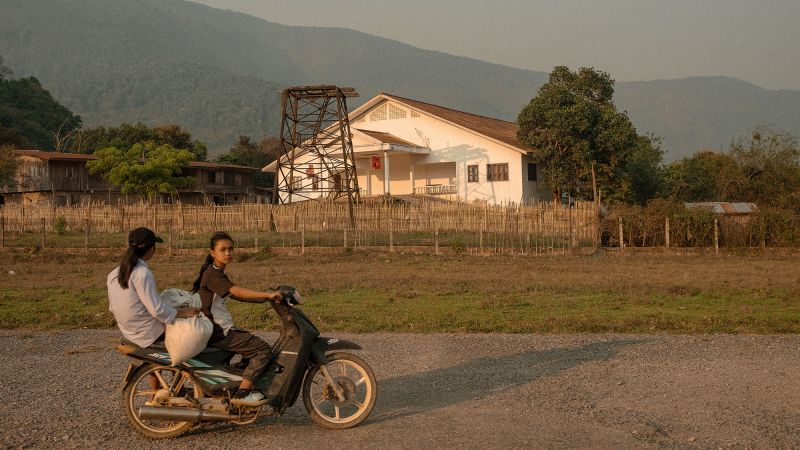
Once home to the CIA this – Nestled within the dense, humid jungles of central Laos, a modest 4,500-foot stretch of cracked concrete emerges from the foliage — a remote airstrip that once served as a covert nerve center for U.S. operations during the Cold War. Now, it functions more as a gathering spot for villagers, where children play on scooters, farmers lead their cattle, and elderly residents stroll through the morning mist. Yet, beneath its weathered control tower and runways pockmarked by explosions, a forgotten chapter of American Cold War strategy remains concealed. The village of Long Tieng, situated roughly 80 miles northeast of Vientiane, the capital, has long been a quiet settlement of several thousand people. Today, their lives revolve around agriculture, with local shops selling rice, tools crafted from repurposed bombshell metal, and a few eateries offering basic meals — a testament to their resilience and the enduring marks of wartime struggles.
A Secret Front in the War for Southeast Asia
For decades, Long Tieng was more than a village; it was a clandestine stronghold in the heart of a shadowy conflict. From the 1960s to the early 1970s, the region became a critical hub in the United States’ effort to counter the spread of communism across Southeast Asia. The airstrip, known by the codenames Lima Site 98 and Lima Site 20A, was the operational nerve center for the CIA-backed Hmong resistance, led by the charismatic General Vang Pao. This coalition of Hmong soldiers, their families, Thai allies, and a small contingent of American agents and pilots fought not only against the communist Pathet Lao forces but also launched guerrilla campaigns to disrupt North Vietnamese supply lines. The area’s remoteness made it an ideal location for such covert activities, shielding it from international scrutiny.
The airstrip’s significance extended far beyond its physical size. At its peak, it handled over 900 daily takeoffs and landings, making it one of the busiest airports in the world despite its unassuming appearance. Cargo planes delivered essential supplies — ammunition, fuel, and food — which were then transferred to smaller aircraft for distribution to other hidden bases across the country. This intricate system of logistics supported the Hmong army’s operations, enabling them to wage a relentless war against communist forces. The CIA’s role was pivotal, as the agency orchestrated the largest paramilitary campaign of its kind, operating in complete secrecy to avoid direct involvement in the war.
“The war in Laos was so compartmentalized… I knew guys who participated in that war, they didn’t even know Long Tieng existed until the late 1960s when they started letting the reporters in there,” said Paul Carter, a Laos Secret War specialist based in Southeast Asia.
Carter’s observation underscores the extent of the operation’s secrecy. Even those engaged in the broader conflict elsewhere were unaware of Long Tieng’s existence. This hidden battlefield, often referred to as the ‘most secret place on Earth,’ was a testament to the U.S. strategy of operating in the shadows. The CIA’s involvement was paramount, as the agency took the lead in coordinating military efforts under the guise of supporting the Hmong, a minority group whose loyalty to anti-communist causes made them invaluable allies. American pilots, known as ‘Ravens,’ flew thousands of missions from the site, dropping supplies and coordinating with Hmong forces to dismantle communist infrastructure.
A Legacy Etched in the Landscape
Today, the remnants of this high-stakes operation linger in the village’s everyday life. The airstrip, though no longer in use for military purposes, has been repurposed as a communal space. Its cracked surface still bears the scars of past battles, but now it hosts families and locals, a stark contrast to its former role as a frontline hub. The village’s history is a blend of hardship and survival, with the war’s impact evident in the tools made from bomb metal and the stories passed down through generations. For many, the airstrip is a symbol of both the struggle against communism and the sacrifices made during the era.
The Cold War in Laos was a quiet but fierce chapter in the larger narrative of Southeast Asia’s conflict. While the Vietnam War dominated global attention, Long Tieng operated in the background, a hidden front where the U.S. and its allies fought to secure strategic advantages. The decision to use the CIA as the primary operator was a calculated move to avoid direct military engagement, which would have required international approval. This allowed the agency to operate with greater flexibility, even as the war raged on with devastating consequences. The bombing campaigns, a key component of this strategy, targeted key supply routes and enemy positions, aiming to cripple the communist forces’ ability to sustain their advance.
As part of this secret war, the U.S. launched a relentless aerial assault on Laos, dropping over 2 million tons of bombs — a staggering figure that outpaced the total bomb tonnage used in Europe during World War II. This campaign, often overlooked in mainstream narratives, was instrumental in weakening the Pathet Lao and North Vietnamese armies. The Hmong, with their deep knowledge of the terrain, played a crucial role in this effort, guiding American forces and serving as local fighters. General Vang Pao, a key figure in the operation, led his people with a blend of military precision and cultural insight, turning the village into a vital asset for the U.S. strategy.
A Journey to the Past
Five decades after the fall of Long Tieng in 1975, the site still holds a magnetic allure for those seeking to uncover its secrets. My own exploration began after reading A Great Place to Have a War by Joshua Kurlantzick, a book that vividly captures the complexities of this overlooked conflict. The author’s account of the hidden battles and the CIA’s covert operations drew me into a world that felt both distant and intimate. Watching old, grainy newsreels of journalists navigating the base for the first time only deepened my curiosity. I realized that to truly understand its significance, I needed to visit it in person.
My journey took me to Vientiane, where I met an old college friend and a local guide named Mr. Pao, who had once worked near the mines in the area. His familiarity with the terrain made him an ideal companion for the adventure. With his help, I embarked on a route that took us through rugged mountains and dense forests, a path that had been used by U.S. pilots and Hmong soldiers for decades. Along the way, I reflected on the lives of those who had once called this place home — tens of thousands of people who relied on the airstrip for survival. Their presence transformed the village into a microcosm of the Cold War’s human toll, where every home and shop bore the mark of a shadowy past.
Despite its historical importance, Long Tieng remains a place of relative obscurity. Tour companies organize limited visits, but the number of tourists still lags far behind the bustling destinations of Luang Prabang and Vang Vieng. Chris Corbett, owner of Laos Adv Tours and Rentals, noted that his company runs approximately 10 motorbike tours annually to the site, accommodating around 40 visitors. “It’s not a place most people think about, but for those who do, it’s a window into a forgotten chapter of history,” he said. This small number of visitors highlights the site’s unique status as a Cold War relic, preserved in the hearts of those who remember its days of intensity and secrecy.
Long Tieng’s story is a reminder of the global reach of the Cold War, even in the most remote corners of the world. Its airstrip, once a symbol of American military might, now stands as a quiet testament to the resilience of the Hmong people and the ingenuity of the CIA’s operations. The village’s transformation from a war zone to a community center is a powerful narrative of adaptation and endurance, a story that continues to unfold in the present day. As I stood on the cracked runway, the echoes of the past seemed to linger in the air, a reminder that history is not always written in the spotlight — sometimes, it waits in the shadows of forgotten places.
