The Chinese mavericks looking to buck the trends in American college basketball

Chinese Mavericks Bucking the Trend in NCAA Basketball
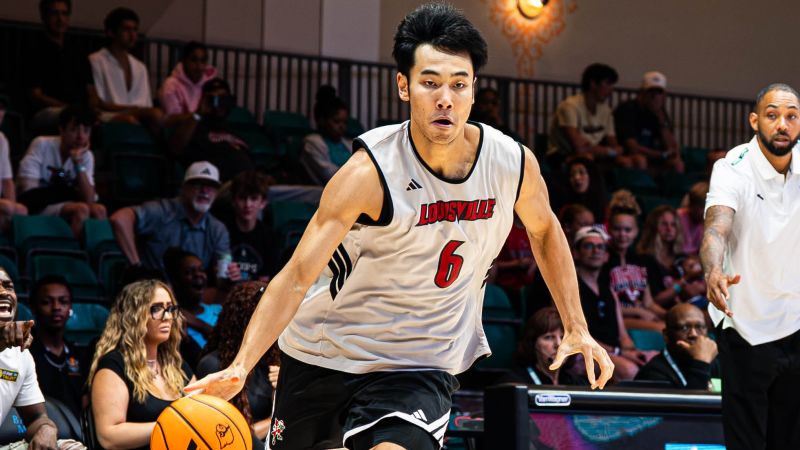
Activelifezero.com – For decades the route from Chinese gyms to the NBA ran in one direction: through the domestic CBA, year after year, until a franchise took a chance. Now the Chinese mavericks looking to buck that single-lane model are arriving in numbers. More than ten Chinese-born athletes are set to suit up for NCAA Division I programs this season, and at the forefront of that wave is Zhang Boyuan, a 19-year-old forward from Changchun who will soon lace up for the University of Louisville Cardinals.
A Rule Change That Opened the Door
The catalyst was regulatory, not cultural. In 2021 the NCAA implemented Name, Image, and Likeness legislation, letting enrolled student-athletes earn compensation without forfeiting eligibility. Jonathan Givony, who tracks both the NBA draft and the college pipeline, credits that shift with making the American college system financially credible for overseas prospects who once had no monetary reason to leave their home leagues.
“So, seeing Chinese players come over and playing high school basketball and then college basketball, that’s another extension of this same trend.” — Jonathan Givony
Before NIL, the playbook was unambiguous. Yao Ming, the Hall of Famer who reshaped how the world viewed the sport, spent his formative years in China before crossing to Dallas. Yi Jianlian walked a parallel domestic-to-international arc. Even Yang Hansen, selected 16th overall by the Portland Trail Blazers last summer, logged multiple CBA seasons before reaching the NBA. The college pathway simply did not exist in the strategic vocabulary of Chinese basketball development.
From Changchun’s Ice to California’s Sunlight
Zhang’s hometown, Changchun, carries a Mandarin meaning of “long spring” — a lyrical name for a northeastern industrial city where winters bite far harder than anything Kentucky can produce. Basketball first entered his household through a television in the living room, where his father tuned in to NBA broadcasts. American games have aired on Chinese television since 1986, and the spectacle has captured successive generations of young athletes across the country.
The Warriors and Stephen Curry defined Zhang’s formative viewing years, becoming his favorite team and player. Yet as veteran basketball journalist Jia Lei, who has covered the sport in China for two decades, puts it, the NBA remained a dream that “can be seen, but never reached.”
Within Changchun’s competitive high-school circuit, Zhang anchored a powerhouse squad that finished third at a national tournament. At the 2024 FIBA U17 World Cup and the U18 Asian Cup he averaged more than 17 points across both events. Jia’s assessment was blunt: Zhang “has been the best in his age group” in domestic competition.
The Portland Game That Rewrote a Five-Year Plan
Through April of last year, Zhang’s roadmap was fixed: a strong Chinese university, continued development at home, and perhaps a distant, uncertain NBA audition. Then the Nike Hoop Summit in Portland intervened. Selected for the World Team against a United States squad stacked with elite American prospects, he scored six points in the opening quarter before AJ Dybantsa and Cam Boozer led the American side to a 124-114 victory.
“Before that game, I never thought about moving to America. My plan was to go to a good college in China. But just that single game changed everything.” — Zhang Boyuan
Back in Changchun, weeks of family negotiation followed before his parents agreed to the transoceanic move. He enrolled at Veritas Academy in California, where a full year of top-tier American high-school competition produced a 20.2 points-per-game average. That output drew college scouts, and ESPN ranked him No. 56 in the 2026 recruiting class.
Pushing the Sled in Louisville
Inside the strength facility at Louisville, weekly sessions close with a ritual. Strength coach Eli Foy loads a weighted sled with added resistance; Zhang, the 6-foot-9 forward, drives it the length of the court while teammates and coaches crowd the sidelines, chanting encouragement. It is the first Friday morning of his freshman adventure in Kentucky.
His profile blends size with a quick first step, letting him attack the rim aggressively while also knocking down three-pointers both off the move and in catch-and-shoot situations. The Chinese mavericks looking to buck old assumptions about where elite development must occur are no longer a curiosity; they are a growing cohort reshaping how the sport’s talent pipelines operate.
Frequently Asked Questions
How many Chinese-born players are entering NCAA Division I this season?
More than ten Chinese-born athletes are preparing to compete at the Division I level this season, a figure that would have been virtually unthinkable a decade ago.
What rule change made the college route financially viable for international prospects?
The NCAA’s adoption of Name, Image, and Likeness rules in 2021 allowed enrolled student-athletes to earn compensation, removing the primary financial disincentive that had kept overseas prospects in their home leagues.
Where did Zhang Boyuan develop his game before enrolling at Louisville?
Zhang spent a full year at Veritas Academy in California, competing at the American high-school level and averaging 20.2 points per game before transitioning to college basketball.
What event prompted Zhang to change his career plan?
Playing for the World Team at the Nike Hoop Summit in Portland in April of last year, Zhang experienced American pace and physicality firsthand. He has said that single contest dismantled his previous assumption that he would develop exclusively within China’s domestic system.