
‘It’s insane’: How climate change is having an impact at Roland Garros
‘It’s insane’: How climate change is having an impact at Roland Garros
It s insane – The French Open, one of tennis’s most iconic tournaments, is facing an unprecedented challenge as record-breaking temperatures threaten to reshape the game. For elite athletes, meticulous preparation and routine are essential, yet the weather has become an unpredictable force disrupting even the most disciplined players. As a relentless heatwave grips Europe, the Roland Garros courts are witnessing conditions that have left competitors struggling to maintain focus and performance. France’s national weather service has reported that daily highs have exceeded 32 degrees Celsius since Saturday, a figure that defies typical seasonal norms. This week alone has seen the country record its hottest May day ever, surpassing even the sweltering July heat, which is traditionally its warmest month.
A Shifting Climate for Tennis Stars
The relentless sun has forced players to adapt in real-time, with many resorting to unconventional cooling strategies. During breaks, athletes sprint to their benches to hydrate, drape themselves in shaded areas, and use portable fans to combat the rising temperatures. Some players have been seen clutching ice packs to their faces and necks, a tactic that has become as routine as their pre-match rituals. Yet, these measures are proving insufficient. World No. 16 Casper Ruud, who recently secured a hard-fought first-round victory, described the conditions as “walking around like a zombie.” His experience echoes that of other players, who report feelings of dizziness and exhaustion under the relentless heat.
“It was kind of a heatstroke feeling,” Ruud said after his five-set win. “I had experienced something similar some years ago when I played in Washington, DC, and I had to retire in the third set. That’s the only time I had that feeling today in the fourth set, where I felt at times really dizzy and walking around like a zombie almost.”
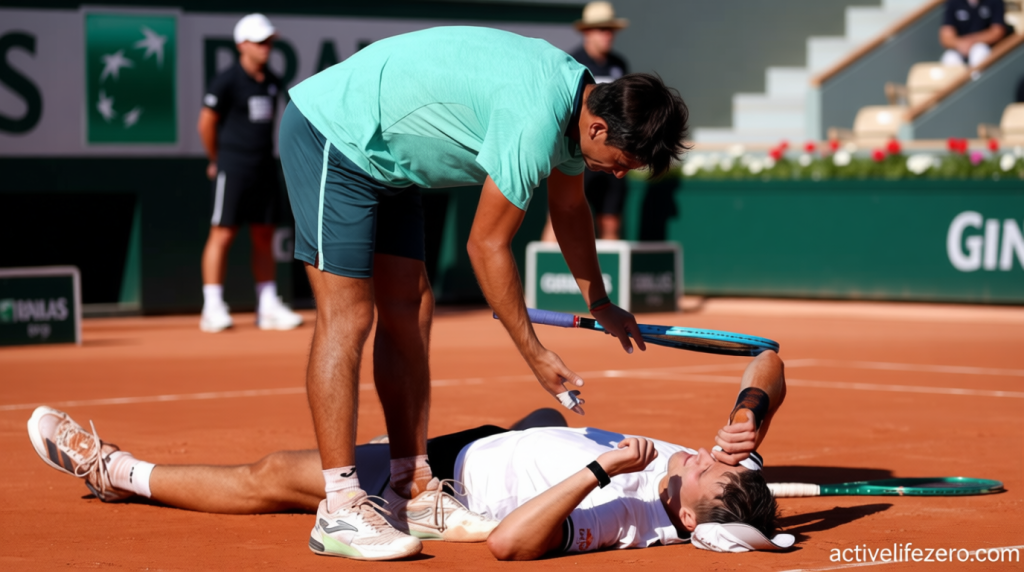
Menšík, the Czech star, took it a step further, calling the situation “insane.” His collapse after a grueling five-set match against Mariano Navone highlighted the severity of the conditions. Despite the support of medical staff, Menšík was able to leave the court independently, though he admitted the strain was immense. “In this heat and in these conditions, it’s insane,” he reiterated, advocating for more flexible rules on match breaks to help players cope.
Heat Dome and Its Consequences
A heat dome—a high-pressure system that acts like a lid, trapping hot air and intensifying temperatures—has been the primary driver of this extreme weather. The phenomenon has not only affected players but also altered the very fabric of the tournament. With temperatures soaring beyond historical averages, the clay courts, known for their forgiving nature, now feel like an unforgiving battleground. Even the equipment is suffering, as string tension in rackets fluctuates with the heat, prompting players to adopt new methods to preserve their gear.
Defending champion Coco Gauff has been spotted using a cooler to store her spare rackets, a strategy aimed at stabilizing string performance. This detail, noted by tennis enthusiasts, underscores how climate change is influencing every aspect of the game. “String tension changes with different weather,” commented former Wimbledon finalist Sabine Lisicki in an Instagram post, explaining that heat accelerates the loss of tension, potentially affecting a player’s ability to generate power and control.
The Human Cost of Heat
The physical toll on athletes is evident in their words and actions. Ruud’s description of the heat as a “zombie-like” state captures the disorienting effect of prolonged exposure. Similarly, Menšík’s near-collapsing moment during a four-and-a-half-hour match illustrates the danger of these conditions. While the latter was able to recover, the incident serves as a stark reminder of how climate change is pushing the limits of human endurance in professional sports.
“It’s insane to play in this weather, especially in front of the sun, to be there for more than four and a half hours it’s just insane and, even with the breaks, you don’t have that much time,” Menšík said postgame.
For some players, the heatwave has been a game-changer. World No. 1 Jannik Sinner, despite his reputation for resilience, was forced to withdraw from the tournament in the second round. His five-set loss to Juan Manuel Cerúndolo sparked discussions about whether the weather played a role in his defeat. Sinner, however, dismissed the idea, stating, “It was a tough spot to be in. But, again, this is the sport. It was warm but not crazy warm. I feel like it was quite OK to play. Really, it was nothing against the heat, nothing against the weather. It was just me today, but it happens.”
Still, the influence of the heat is undeniable. Sinner admitted to moments of stagnation, unable to move from his rally position as the sun beat down relentlessly. “It’s hard to believe the heat didn’t have some sort of impact,” he acknowledged, though he placed the blame squarely on his own performance. This sentiment reflects a broader trend among players, who are increasingly aware of how rising temperatures affect their game.
Reimagining the Game in a Hotter World
As the heatwave continues, the question arises: how will tennis evolve to accommodate these extreme conditions? The French Open, traditionally a bastion of tradition, may need to rethink its approach to scheduling and player welfare. The current system, which limits break times and requires players to endure sweltering conditions, is being tested like never before. With temperatures hitting records and players showing signs of fatigue, the tournament’s organizers may soon face pressure to implement changes that prioritize athlete health.
Meanwhile, the broader implications of this heatwave extend beyond the courts. As Europe grapples with its worst weather event in recent memory, the French Open serves as a microcosm of the challenges posed by a warming planet. The tournament’s ability to adapt could set a precedent for other major sporting events, demonstrating the need for proactive measures in the face of climate change. For now, players continue to push through, their resilience a testament to the sport’s enduring spirit. Yet, as the heatwaves become more frequent and intense, the battle to keep tennis competitive may require more than just determination—it may demand innovation and change.
