
Iran to commute to World Cup games from Mexico after US refusal, Sheinbaum says
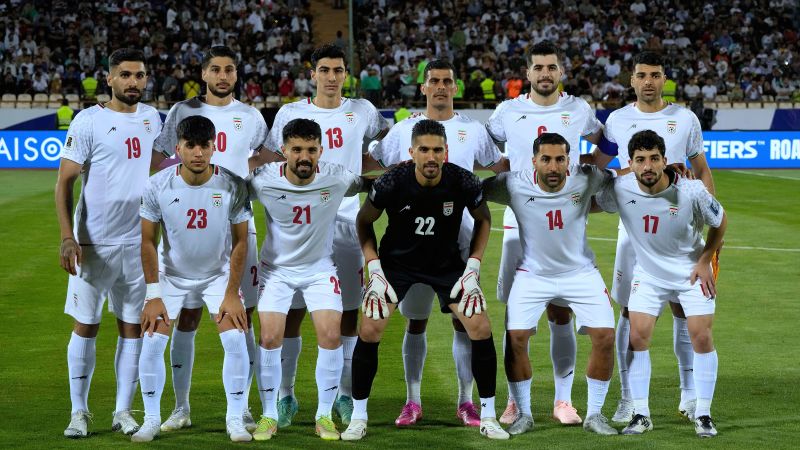
Iran to Commute to World Cup Games from Mexico after US Refusal, Sheinbaum Says
Iran to commute to World Cup games – Following a decision by the United States to exclude Iran from hosting its World Cup matches, Mexican President Claudia Sheinbaum confirmed that the Iranian national team will now reside in Mexico and travel to the United States on the days of its three Group G games. The announcement came as part of a broader discussion about the logistics of the tournament, which spans from June 11 to July 19. Sheinbaum stated during her daily press conference that FIFA had approached her government after US authorities expressed concerns about Iran staying in the country for the entire duration of the competition.
FIFA’s Shift in Hosting Arrangements
The Iranian team was initially set to play its matches in the United States, but Washington’s reluctance to host them has prompted a strategic adjustment. Sheinbaum emphasized that there is no justification for denying Iran the opportunity to stay in Mexico, which will serve as the team’s base during the tournament. The three matches—against New Zealand, Belgium, and Egypt—will require Iran to travel between Mexico and the US, with the latter two games taking place in Los Angeles and Seattle, respectively.
Iran’s football federation head, Mehdi Taj, announced earlier this week that the team’s location will be moved from Arizona to Tijuana, a border city near Mexico’s Pacific coast. This decision aims to streamline travel logistics and ensure direct Iran Air flights to the host country. Taj explained that the change would also help mitigate visa-related challenges, which had been a point of contention during the planning stages of the tournament. FIFA confirmed the relocation, stating that it would allow for smoother operations and greater flexibility in scheduling.
Trump’s Safety Concerns
The shift in hosting arrangements followed months of diplomatic tension, including President Donald Trump’s public remarks in March about Iran’s participation in the World Cup. Trump expressed that while Iran was welcome to compete, it would be inappropriate for the team to stay in the United States due to potential safety risks. His comments sparked debate, with some critics arguing that the concerns were politically motivated rather than purely security-based.
Sheinbaum’s statement on Monday came after the White House and State Department declined to comment on the matter immediately. The Mexican president highlighted that the move is a pragmatic solution to the situation, ensuring that Iran can still participate in the tournament without compromising its access to the host nations. She added that Mexico remains committed to supporting Iran’s presence in the competition, even as the US maintained its reservations.
The decision to relocate Iran’s matches has been a focal point of discussions since late February, when the US joined Israel in targeting Iran during a series of attacks. These actions raised questions about Iran’s willingness to participate in the World Cup, particularly given the geopolitical climate. However, FIFA president Gianni Infantino reiterated earlier this month that Iran would participate in the US-hosted tournament “for sure,” despite the ongoing conflict.
Historical Context and Tournament Implications
Iran’s World Cup participation is a continuation of its tradition of competing in the global event. The team qualified for its fourth consecutive World Cup by finishing top of its group in the third round of Asian qualifying last year. This achievement has placed Iran in a critical position within Group G, where it faces formidable opponents in New Zealand, Belgium, and Egypt. The move to Mexico is expected to ease some of the logistical and diplomatic pressures associated with these games.
While the US has maintained its stance, the situation has also drawn attention from other international stakeholders. In April, Trump’s envoy for global partnerships, Paolo Zampolli, suggested that Italy should replace Iran in the tournament, a proposal that was met with swift dismissal from both Italian officials and FIFA. The federation clarified that Iran’s qualification was not in doubt and that the team would remain part of the competition.
Sheinbaum’s remarks underscored Mexico’s role as a reliable partner in the World Cup. The country has been a host for multiple matches, and its willingness to accommodate Iran reflects a broader diplomatic effort to maintain stability in the sporting event. The Mexican president also noted that the arrangement would allow for better coordination between teams and officials, ensuring that the tournament proceeds without major disruptions.
The Iranian team’s travel schedule between Mexico and the United States has been carefully planned to minimize the impact of the change. Matches against New Zealand and Belgium in Los Angeles will be the most frequent, with the final game against Egypt in Seattle requiring a cross-border trip. This setup is designed to balance the team’s needs with the host countries’ requirements, creating a framework that supports both sides.
Broader Impact on International Relations
The relocation of Iran’s matches has broader implications beyond the sporting arena. It highlights the growing influence of Mexico as a host nation in the face of US geopolitical decisions. The arrangement also serves as a reminder of how international sports can navigate political challenges, ensuring that competition remains a platform for unity and diplomacy.
Sheinbaum pointed out that the move would not only benefit Iran’s team but also strengthen bilateral ties between Mexico and Iran. The president emphasized that the decision was made in consultation with FIFA, which has been instrumental in facilitating the transition. This collaboration underscores the importance of international organizations in mediating conflicts and ensuring the smooth operation of major sporting events.
As the World Cup approaches, the focus will remain on the quality of Iran’s performance, despite the changes in hosting logistics. The team’s ability to adapt to the new schedule will be a testament to its resilience and commitment to the tournament. With the games set to begin on June 15, there is a sense of anticipation among fans and analysts, who will be watching closely to see how the adjustments affect the outcome of Iran’s campaign.
In addition to the immediate implications, the situation has sparked discussions about the role of geopolitics in international sports. The decision to host Iran in Mexico raises questions about the extent to which political considerations influence sporting events. However, Sheinbaum and Taj have framed the move as a practical solution rather than a political concession, ensuring that the team can compete without unnecessary complications.
Conclusion and Future Prospects
The World Cup continues to be a symbol of global unity, even in the face of political challenges. Iran’s decision to commute between Mexico and the US for its matches demonstrates the flexibility required to uphold this tradition. As the tournament progresses, the team’s focus will remain on its performance, with the hope that the logistical adjustments will allow them to compete effectively.
Sheinbaum’s statement concludes that Mexico is fully prepared to host Iran’s team, ensuring that the country plays a key role in the tournament. The arrangement also highlights the importance of international cooperation in overcoming obstacles, whether they are diplomatic or logistical. With the World Cup set to begin, all eyes are on the Iranian team as they prepare to represent their nation on the global stage.
