
Explained: Egypt’s fiery accusations after controversial World Cup defeat
Egypt’s World Cup Heartbreak: A Match Defined by Controversy and Outrage
Explained – After nearly four weeks of relentless football, the global tournament has paused for a brief respite. No fixtures are scheduled for today as squads recover before the quarterfinal stage begins on Thursday. This break feels particularly timely given the dramatic events that unfolded yesterday, when the competition delivered one of its most extraordinary moments.
At Mercedes-Benz Stadium, Argentina staged what supervising editor Kyle Feldscher characterized as something resembling divine intervention—a comeback so remarkable it seemed almost supernatural. While the sporting world celebrated yet another Lionel Messi masterclass, supporters of Egypt found themselves devastated and, perhaps more significantly, deeply angry.
A Tournament Already Under Scrutiny
With FIFA already navigating headlines surrounding potential match-fixing allegations and former President Trump’s red card intervention, the governing body desperately needed to avoid further accusations of bias. Unfortunately, Egypt’s dramatic collapse against Argentina in the Round of 16 provided exactly that narrative.
After squandering a commanding 2-0 advantage, numerous Egyptian players and coaching staff members turned their attention toward what they perceived as systemic injustice. Egypt’s head coach Hossam Hassan was unequivocal in his assessment, describing the experience as fundamentally “unfair.”
The Decisions That Changed Everything
Egypt’s campaign had begun beautifully, with the team taking the lead in the fifteenth minute. Just before the sixty-minute mark, they appeared to extend their advantage further. However, this moment marked the beginning of a series of contentious decisions that would define the match.
Following their celebration of what seemed to be a breakaway goal, Egyptian players experienced that familiar sinking sensation as the VAR review commenced. While the squad revelled in their temporary two-goal cushion, officials carefully examined the sequence of events preceding the goal.
The eventual ruling left many bewildered: the goal was disallowed because the video assistant referee identified a foul on Lisandro Martínez that had enabled Egypt to regain possession for the scoring opportunity. While most observers acknowledged that a foul likely occurred, many felt this was an incident too marginal to warrant VAR intervention.
Despite this setback, Egypt managed to score a second goal through Mostafa Ziko, pushing Argentina toward elimination. Yet the defending champions responded with devastating efficiency, netting three goals within thirteen minutes, with the decisive strike arriving in the third minute of stoppage time.
Anger on the Egyptian Bench
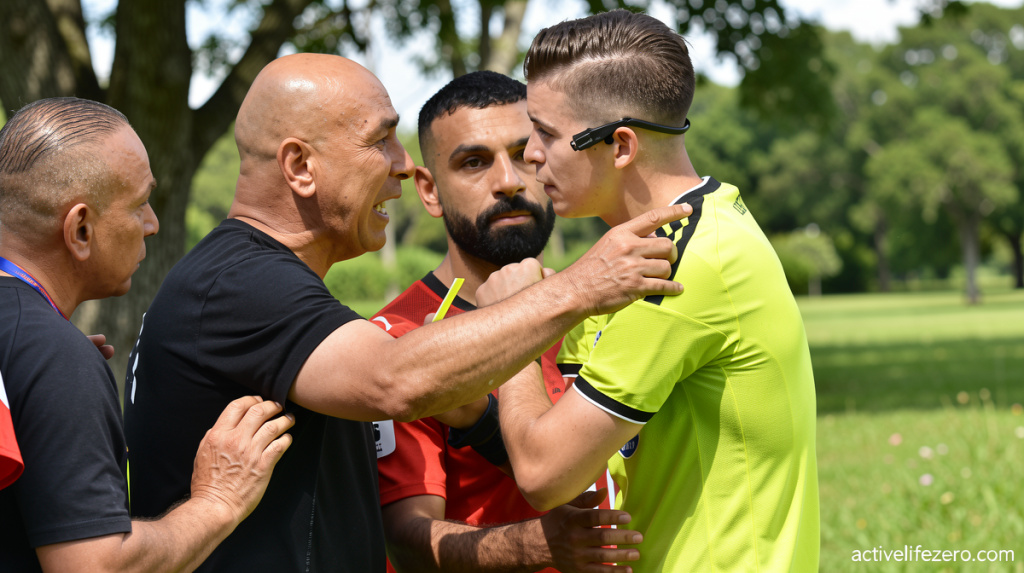
As Argentina celebrated, the Egyptian technical area erupted with fury. Players and staff insisted they deserved a penalty during the buildup to Enzo Fernández’s winner. Less than twenty seconds before the ball found the net, Mohamed Salah had fallen inside the Argentina penalty area.
Television replays revealed that Julián Álvarez had nicked the ball from the Egyptian winger before Salah went down under contact with the Argentine defender. Despite this apparent incident, VAR did not request a review, further inflaming Egyptian sensibilities.
Compounding the frustration, the bench had already been claiming another penalty after Alexis Mac Allister appeared to pull Hamdy Fathy down moments earlier.
“We have been treated unfairly today,” Hassan told reporters after a match that concluded with a flurry of cards for Egyptian players and coaching staff who confronted the referee. “We have suffered injustice.”
“There has not been respect or fair play because a penalty was ruled out,” Hassan added. “A second ball that should have been called as a penalty for us was not even checked by the VAR.”
Hassan’s frustration was visibly evident on the touchline, where he made a distinctive cross gesture with his arms—a symbol FIFA introduced to alert referees to potential racist incidents. Though the head coach did not reference this during his post-match media obligations, he vowed to withdraw from following the tournament entirely.
“I promise you, from the moment I go back, I’m not going to continue following the matches of this FIFA World Cup,” he declared. “This is my internal fight, my internal objection, my own way of speaking up and standing up.”
According to BBC Sport, Egypt’s football federation has formally requested that FIFA investigate the match referee and has urged the governing body to remove the entire officiating team from the tournament.
While Egypt can certainly express disappointment that pivotal decisions went against them throughout the contest, the magnitude of their reaction underscores how deeply these moments resonated with a nation that had invested so much hope in their campaign.
