Trump threatens serious criminal penalties for those he says ‘vandalized’ the Reflecting Pool

Trump Threatens Serious Criminal Penalties for Those He Says ‘Vandalized’ the Reflecting Pool
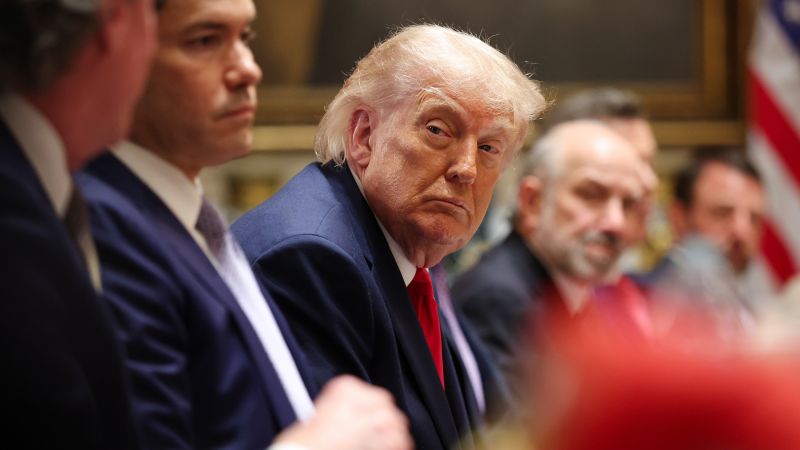
Trump threatens serious criminal penalties for those – In a recent social media post, President Donald Trump leveled accusations against individuals he claimed had damaged the newly renovated Reflecting Pool on the National Mall. The pool, a historic feature in Washington, DC, had undergone a $14 million overhaul earlier this month, only to see its pristine condition begin to unravel within days. Trump’s frustration was evident as he described the incident as an act of “vandalism” and called for swift legal action. “Please remember that there is a 10-year prison sentence for the destruction, or even the attempted destruction, of such things—Which will be fully enforced!” he wrote on Truth Social, emphasizing his stance on holding offenders accountable.
The Legal Framework of the Allegations
While local prosecutors have not yet formally initiated charges, the Justice Department is now evaluating how aggressively to proceed with the cases. The initial citations handed out by the US Park Police are classified as misdemeanors under DC’s Superior Court system, covering acts like vandalizing, disorderly conduct, or defacing public property. However, Trump’s public rhetoric suggests that these charges could escalate if federal authorities, led by US Attorney Jeanine Pirro, deem the actions more severe.
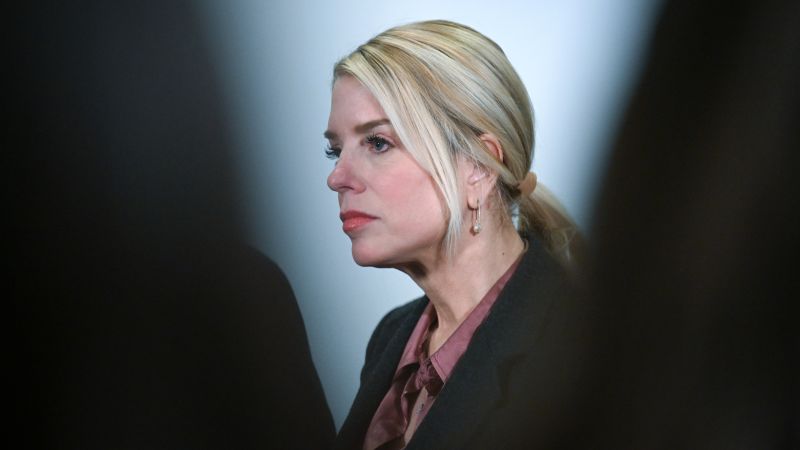
“There are several citations that have been handed out to individuals, and these are cases that will be prosecuted to the full extent,” Pirro stated during a weekend appearance on Fox News. She hinted at the possibility of federal felony charges if the damage to the pool is deemed significant enough, which could result in fines up to $250,000 or prison terms of up to a decade.
The controversy has sparked debate over the nature of the alleged offenses. A Department of Interior spokesperson confirmed that five people were arrested for vandalism, while an additional five received federal citations. A total of 14 police reports have been filed, highlighting the extent of the incident. Despite this, the Park Police remained silent on Monday when asked about the identities of those accused, leaving the public to speculate on the details of the case.
A Case of Curiosity or Criminal Intent?
Among those cited, David Hearn, a former Olympic canoeist, recounted his experience to CNN. Hearn claimed he was simply curious when he touched a flap of blue material that had partially detached from the pool’s bottom. He said a National Park Service worker had warned him not to reach into the water before he was handcuffed by Park Police. “I didn’t mean to do anything wrong,” Hearn stated, asserting that his actions were accidental. His court appearance is scheduled for July 9, where the case will be further examined.
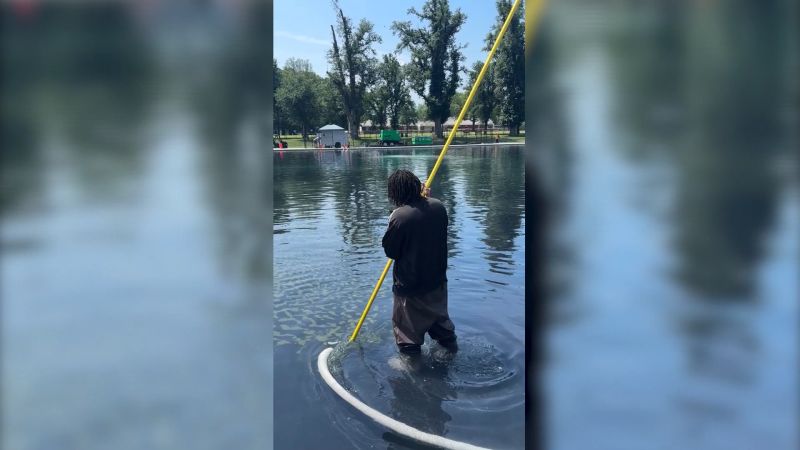
The incident has drawn attention to the pool’s recent renovation, which was part of Trump’s broader efforts to enhance infrastructure in the nation’s capital. The blue material, a key component of the redesign, had been installed to line the pool’s base, but its peeling has raised questions about the project’s durability. Critics argue that the hasty completion of the renovation may have compromised its structural integrity, while Trump supporters see it as a deliberate act of sabotage by opponents of his administration.
The Political Divide in Public Perception
For Trump’s allies, the alleged vandalism is a symbolic attack on his vision for the capital’s appearance. They view the incident as evidence of a broader campaign by critics to undermine his initiatives, even as he faces challenges on other fronts, such as the ongoing war with Iran and rising costs for everyday goods. Conversely, opponents of the president argue that the situation reflects his tendency to amplify minor issues into major political statements, diverting focus from larger policy concerns.
Lawyers representing a nonprofit that has sued the administration over the renovation process have joined the discussion. They contend that the rapid pace of the project allowed for shortcuts that could have been avoided. “The public is now witnessing what happens when agencies barrel ahead with ill-conceived plans in a hasty manner to meet an arbitrary deadline imposed by the White House,” the legal team wrote in court documents filed Monday. Their argument centers on the need for the administration to adhere to procedural standards, which they claim were bypassed to expedite the work.
The algae blooms and peeling material have become focal points of the legal and political discourse. While the Park Police initially cited the incidents as minor offenses, the potential for federal felony charges adds a layer of complexity. Trump’s insistence on strict enforcement has put pressure on the Justice Department to decide whether the cases warrant more serious attention. The upcoming court dates will be crucial in determining the fate of those involved, as well as the broader implications for how government projects are managed under his administration.
The Path Forward
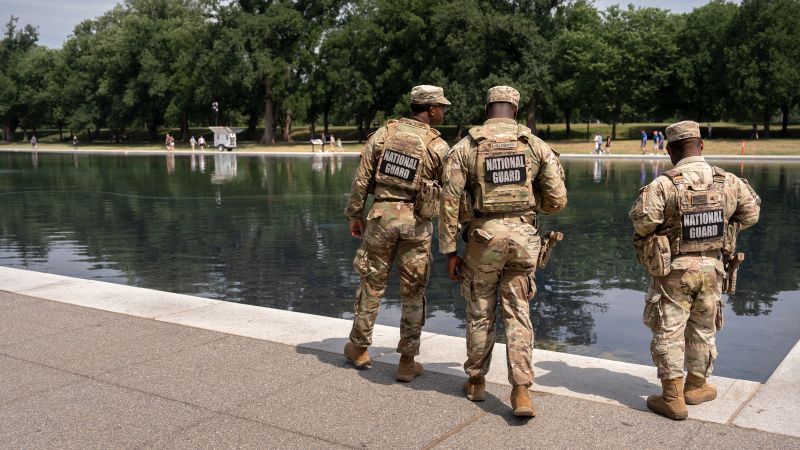
As the situation unfolds, the legal and political ramifications of the incident continue to expand. The US Attorney’s office is reviewing the cases to assess whether the damage to the Reflecting Pool justifies federal-level charges. Meanwhile, the National Guard and other law enforcement units remain stationed near the pool, underscoring the seriousness with which the administration is treating the matter. The public is now watching closely to see if the alleged acts of vandalism will lead to a significant legal outcome or if they will fade into a footnote in the ongoing narrative of Trump’s governance.
For now, the pool stands as a testament to both the administration’s ambition and the challenges of maintaining public order. Whether the incident will be remembered as a minor lapse or a deliberate act of defiance hinges on the decisions made in the coming days. Trump’s threat of criminal penalties has already framed the event as a battleground for ideological differences, with the pool’s condition serving as a symbol of the broader tensions shaping the political landscape.
The debate over the renovation’s quality and the motives behind the alleged vandalism is likely to persist. With the pool’s blue material continuing to peel and algae forming in the water, the situation offers a unique lens through which to view the administration’s priorities. As the Justice Department weighs its options, the case may also become a test of how swiftly and effectively federal authorities respond to claims of property damage in the nation’s capital.
In the end, the Reflecting Pool’s condition and the legal actions taken against those who interacted with it will serve as a microcosm of the larger political struggle. Whether the charges are pursued with vigor or left to local courts, the incident has already captured national attention, proving that even the smallest disruptions can spark significant controversy in a polarized climate.