
Trump Jr.’s investment firm has soared since his father’s election. So has federal funding to companies it backs
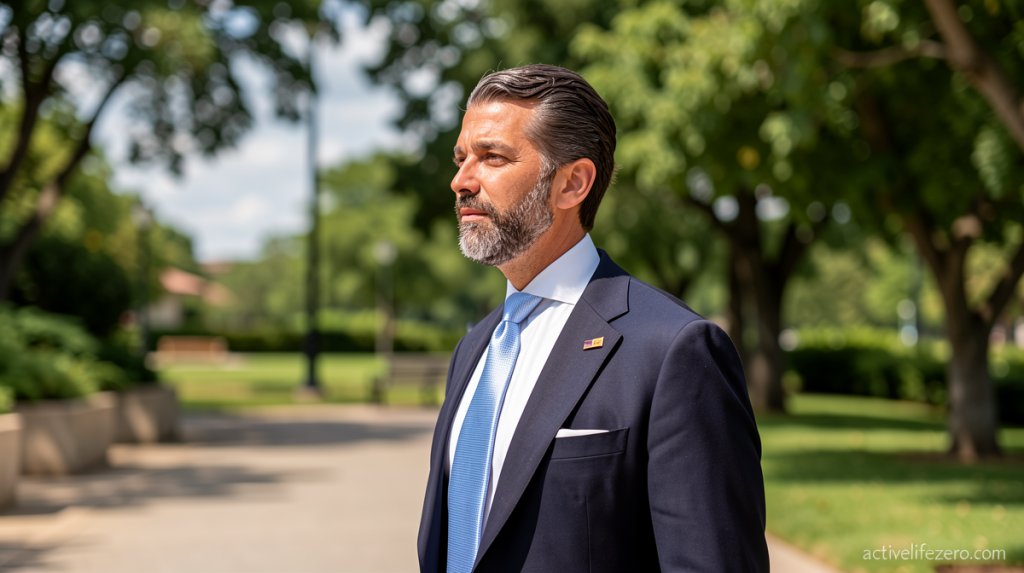
1789 Capital’s Rapid Expansion Coincides with Surge in Federal Support for Portfolio Companies
Activelifezero.com – Nestled in a modest office just one block from the Atlantic shoreline, not far from President Donald Trump’s Mar-a-Lago estate, lies the operational center of 1789 Capital. Established only a handful of years prior, this investment vehicle was created with a clear mission: to channel capital into enterprises that embrace conservative principles. The firm’s trajectory has accelerated dramatically since Donald Trump Jr. assumed a partnership position following his father’s successful reelection campaign. Today, 1789 Capital oversees billions in assets, deploying a strategy that mirrors the current administration’s policy priorities with remarkable precision.
Substantial Growth in Federal Contract Awards
A comprehensive examination of contracting records by CNN reveals that businesses supported by 1789 Capital have experienced notable increases in federal financial support. During the initial 500 days of Trump’s second presidential term, ten companies spanning the defense, aerospace, and software sectors—each holding investments from Trump Jr.’s firm—secured more than $1.6 billion through federal contracts and grant programs. This figure represents a 79 percent increase compared to the identical timeframe at the conclusion of President Joe Biden’s presidency.
Beyond these primary awards, additional federal loans and subcontracts totaling over $1 billion are expected to flow to other startups backed by 1789 Capital under the current administration. The portfolio also encompasses enterprises positioned to capitalize on specific policy initiatives, including a manufacturer of vaping products, a business distributing testosterone supplements, and a company specializing in direct-to-consumer pharmaceutical distribution.
Clarifying the Relationship Between Investment and Government Funding
Despite the timing of these financial developments, no documentation suggests that 1789 Capital or its leadership actively lobbied for federal contracts on behalf of their portfolio companies. When questioned about potential discussions regarding government contracts, Thomas Clare, the firm’s legal representative, provided a definitive response in a written statement: “the answer is unequivocally no.” A representative for Trump Jr. similarly confirmed that his client maintains no involvement in the contracting mechanism.
“Don does not interface with the Federal Government as part of his role with any company that he invests in or advises,” Trump Jr.’s spokesman explained to CNN, characterizing his client as “a lifelong businessman and serial investor with the same Constitutional rights as any other law-abiding private American citizen.”
Companies currently receiving federal contracts have echoed this sentiment, stating they are unaware of any firm representatives influencing the allocation of public funds.
Marketing Advantage Through Proximity to Power
While denying direct involvement in securing contracts, Trump Jr. has openly promoted the benefits of his family’s connection to the White House. Speaking at a business conference in Saudi Arabia during the previous autumn, he emphasized this competitive edge: “We understand what the administration wants to do, because we helped craft some of that messaging.” He noted that this insider knowledge allows 1789 Capital to position itself advantageously despite operating from outside government.
The firm, which markets itself as committed to “patriotic capitalism,” has nearly quadrupled its assets under management, expanding from under $1 billion to approximately $3.5 billion according to leadership statements. Government records indicate that foreign investors contribute a substantial portion of this capital. Several other investment vehicles launched in recent years pursue similar objectives of strengthening American industry and have targeted overlapping companies that are now receiving federal contracts.
Concerns About Public Trust and Potential Conflicts
Government oversight organizations have raised questions about whether the accelerated growth of 1789 Capital and its investment selections might erode confidence in federal spending decisions. Dylan Hedtler-Gaudette, serving as interim vice president at the Project on Government Oversight, articulated these concerns clearly: “There’s money from my paycheck and your paycheck that is being taken out in the form of taxes and is going directly into the pocketbooks of these companies and by extension to the Trump family.” He added that this situation “casts a black cloud over all the decisions that are being made when it comes to contracts.”
The White House dismissed such criticisms in a formal statement to CNN. White House spokeswoman Anna Kelly characterized the concerns as repetitive arguments that Democrats have advanced against the Trump family for ten years. “President Trump only acts in the best interests of the American public – which is why they overwhelmingly re-elected him,” Kelly stated, asserting that “There are no conflicts of interest.”
Following Trump’s 2024 electoral victory, Donald Trump Jr. participated in an interview at a gathering of Republican donors. Addressing several hundred conservative figures energized by the election results, he was asked about potential involvement in his father’s administration. Rather than accepting a government position, Trump Jr. announced his intention to pursue a different path: joining the relatively obscure Florida-based investment firm that would soon become central to both his professional life and public discourse.
