
The White House is upgrading its front door to fortify the entrance
White House Security Overhaul: Front Door Fortification and Beyond
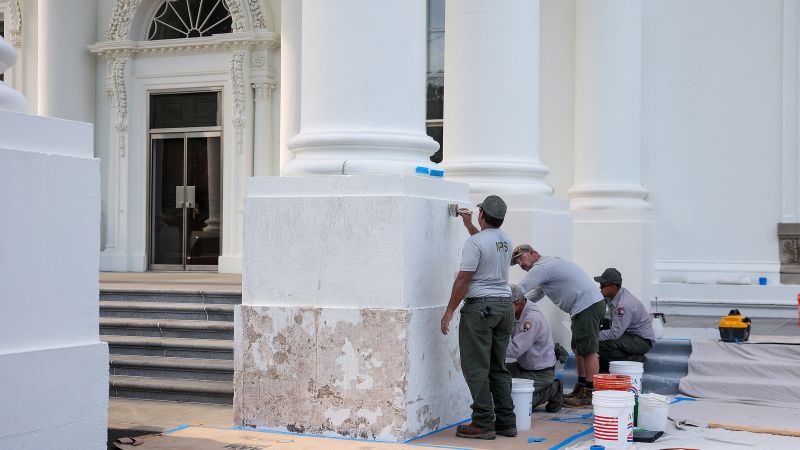
The White House is upgrading its front – The White House is upgrading its main entrance as part of a comprehensive security enhancement initiative. According to a White House official speaking with CNN, the presidential residence is undertaking significant improvements centered on its North Portico entrance. This extensive project, which officials anticipate will span several months, represents a long-sought effort championed by the United States Secret Service. The primary focus involves strengthening the front entrance area, an space currently partially concealed beneath scaffolding and protective tarping as crews address exterior column repairs at President Donald Trump’s direction.
What distinguishes this particular undertaking from numerous other Trump-era modifications is its substantive purpose. While previous enhancements included decorative gold lettering and Rose Garden resurfacing, the current entrance work prioritizes security functionality over aesthetic appeal. The Secret Service, when contacted by CNN regarding these developments, had not yet provided an immediate response regarding the timeline for completion.
Lafayette Park Fencing Initiative
Complementing the entrance improvements, additional security measures are advancing through the approval process. The Trump administration formally presented proposals on Friday for new perimeter fencing designed to surround Lafayette Park, which encompasses the northern portion of the White House grounds. While intermittent public access restrictions during presidential movements represent standard practice, this initiative seeks to establish a lasting alternative to the current system of temporary barriers.
Officials describe the approach as a comprehensive yet flexible fencing strategy for varying security risk.
The permanent installation aims to facilitate more efficient road closures when security protocols require it. A detailed submission was filed with the United States Commission of Fine Arts by the Secret Service, the Executive Office of the President, and the Department of Interior. This initial proposal must now navigate formal approval through multiple federal entities before implementation can proceed.
Security Context and Timeline
These enhancements arrive amid heightened security concerns following several notable incidents involving the president. Multiple assassination attempts have occurred during Trump’s presidency, including an incident at the White House Correspondents’ Dinner held at the Washington Hilton in April. Additionally, authorities identified an alleged conspiracy targeting a UFC event scheduled for the White House South Lawn last month.
Officials have cited these events as primary justification for the president’s ambitious 90,000-square-foot ballroom construction. This expansive facility is projected to incorporate advanced drone landing capabilities, sniper observation positions, and a secure underground refuge. The North Portico fortifications themselves are anticipated for completion around mid-September, according to White House sources.
On Friday morning, workers deployed a third tarp panel displaying an image of the White House exterior around the North Portico scaffolding, where column restoration continues. Interior Secretary Doug Burgum had previously expressed confidence in the project’s pace, noting that the stone restoration work would conclude rapidly despite the visible tarp installations.
It’ll go very quickly. I think they’ve been up, maybe, just about 10 days now, but these guys work very quick, Burgum stated during a recent appearance on The Katie Miller Podcast.
The phased implementation of the broader security improvements could commence as early as 2027, according to the submitted proposal. This represents a coordinated effort to modernize White House security infrastructure while maintaining operational continuity for presidential activities and public access to surrounding areas. The White House is upgrading its security posture systematically, ensuring that each component works together to create a more resilient protective environment for the president and visitors alike.
