
Mamdani defends criticism of AIPAC after being accused of antisemitism
Mamdani defends criticism of AIPAC after being accused of antisemitism
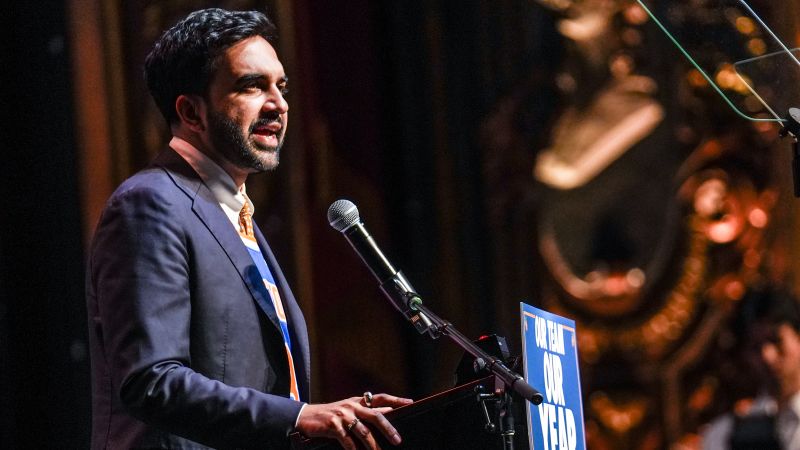
Mamdani defends criticism of AIPAC after – Mayor Zohran Mamdani addressed accusations of antisemitism on Monday, standing by his recent sharp critique of the American Israel Public Affairs Committee (AIPAC). During a press conference at City Hall, he emphasized that his comments targeted an organization he views as perpetuating a harmful status quo, rather than condemning Jewish people themselves. The controversy arose after prominent Jewish leaders claimed Mamdani’s remarks bordered on antisemitism, particularly during a heated debate over AIPAC’s influence in New York’s political landscape.
AIPAC’s Role in Political Spending
Mamdani highlighted AIPAC’s strategy of funneling millions into congressional races, often through ads that focus on domestic issues instead of foreign policy. “They move millions in dark money to accomplish a single goal,” he said, “to preserve their power and turn us against one another.” He argued that this approach distracts from the moral imperatives of addressing regional conflicts, such as the ongoing situation in Gaza. “When I speak about AIPAC, I’m speaking about an organization that has fought any attempt to deliver safety to people, not just in Palestine, but across much of the region,” he added.
“…they can turn us against one another, instead of our leaders turning towards the moral change we all know to be necessary.”
Mamdani’s remarks came as he rallied progressive challengers in the New York House primary. He described “monsters” who fund misleading television ads against his endorsed candidates, including Rep. Adriano Espaillat. These ads, he claimed, spread deceptive narratives to undermine his political allies. The mayor’s criticism of AIPAC was tied to its recent contributions to the super PAC United Democracy Project, which has supported pro-Israel candidates in congressional races this year.
Jewish Leaders Condemn the Remarks
In response, leaders from the Anti-Defamation League (ADL) and the American Jewish Committee (AJC) accused Mamdani of employing antisemitic tropes. They warned that his language could perpetuate harmful stereotypes, especially given New York’s status as the city with the largest Jewish population outside Israel. “Mayor Mamdani, referring to fellow New Yorkers as ‘monsters’ is outrageous and dangerous,” said Ted Deutch, CEO of the AJC, in a post on X. “The impact of your words extends far beyond politics.”
“Swap ‘AIPAC’ for ‘Jews’ and it’s the oldest antisemitic conspiracy theory in the books.”
Democratic Rep. Josh Gottheimer, a Jewish politician, echoed these concerns. “That’s not criticizing a lobby. That’s laundering antisemitism from your podium,” he wrote on X. Gottheimer pointed out that Mamdani’s rhetoric could be interpreted as attacking Jewish people as a whole, using AIPAC as a proxy.
Mamdani’s Defense and Contextual References
On Monday, Mamdani clarified his use of the term “monsters,” stating it was a direct reference to Antonio Gramsci, the Italian Communist leader. “I used the term to describe all those who are preventing the birth of a new world,” he explained. This included not only AIPAC but also larger super PACs that spend heavily on misleading advertisements in New York races.
“…those who fund television ads that blanket the airwaves with misleading and bad faith attacks.”
He cited examples of such spending, including ads opposing his endorsed candidates like Darializa Avila Chevalier, as well as campaigns against Brad Lander and Claire Valdez. “The term is a broad use that speaks to the untenable nature of a status quo,” Mamdani said, “which has asked working people to lower their expectations while starving the city of resources.”
AIPAC’s Political Impact in New York
Federal Election Commission filings revealed that AIPAC’s United Democracy Project contributed over $600,000 last month to BOLD America, a group funding ads for Rep. Adriano Espaillat. This connection has intensified scrutiny of Mamdani’s stance, as his endorsed candidate Darializa Avila Chevalier challenges Espaillat in New York’s 13th District. The mayor’s criticism of AIPAC’s spending tactics aligns with his broader opposition to the Democratic Party’s alignment with Israeli interests.
Mamdani also referenced the ongoing humanitarian crisis in Gaza, noting that Israeli strikes have killed over 1,000 people since the US-brokered ceasefire began in mid-October. “We must ask ourselves how such death and destruction is happening overseas,” he said. “It is important to name those who allow it to take place.” This argument framed his critique of AIPAC as a necessary step to hold pro-Israel lobbying groups accountable for their role in shaping regional policies.
Broader Implications of the Controversy
The debate over Mamdani’s remarks underscores tensions between progressive activists and traditional Jewish organizations in New York. While Mamdani accuses AIPAC of obstructing moral progress, his critics argue that the language risks alienating Jewish communities and framing them as obstacles to change. The mayor’s insistence on using “monsters” to describe those funding deceptive campaigns reflects his frustration with the political machinery that prioritizes short-term gains over long-term justice.
Despite the backlash, Mamdani maintained that his focus remains on the policies and actions of AIPAC, not on Jewish identity. “I am not attacking Jews,” he reiterated. “I am attacking an organization that has consistently supported a system of inequality and conflict.” His remarks highlight the complex dynamics of political advocacy in a diverse city, where criticism of Israeli policies can intersect with concerns about Jewish representation and influence.
The controversy has sparked a wider discussion about the role of lobbying groups in shaping public opinion. As AIPAC continues to invest in pro-Israel candidates, Mamdani’s call to expose their tactics serves as a reminder of the power of political advertising in local elections. CNN has sought comment from AIPAC, signaling the ongoing interest in clarifying the nature of the debate.
Mamdani’s defense of his statements reveals a commitment to challenging the status quo, even if it means facing accusations of antisemitism. By linking AIPAC’s actions to broader moral failures, he aims to position himself as a leader willing to confront powerful interests. Whether his critics see this as a bold stance or an overreach, the episode highlights the polarizing effect of his rhetoric in a city where Jewish and progressive voices often intersect.
