
Kash Patel and the Trump administration’s mockery of congressional hearings
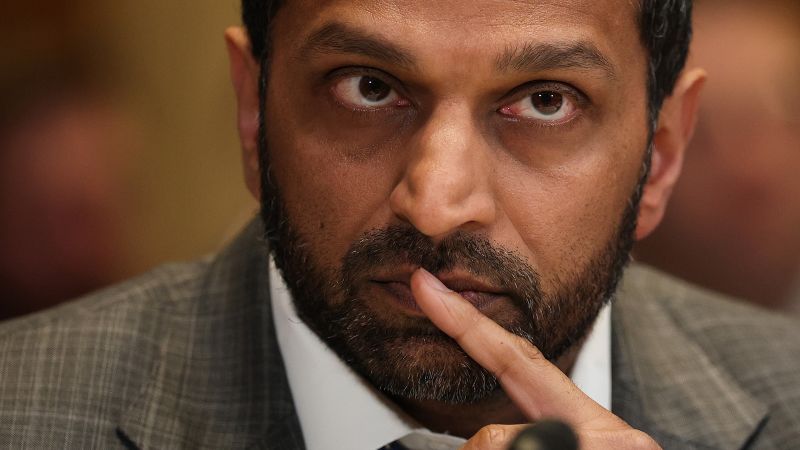
Kash Patel and the Trump administration’s mockery of congressional hearings
The administration’s disdain for congressional oversight
Kash Patel and the Trump administration – From the outset, Trump’s administration has demonstrated a cavalier attitude towards Congress, particularly its role in holding federal agencies accountable. This pattern has been evident in the way top officials have dismissed legislative inquiries, often prioritizing rhetoric over substance. A prime example came during the February hearings, where former Attorney General Pam Bondi humorously referenced her “burn book” and playfully compared the Dow Jones index to her own demeanor. Meanwhile, Defense Secretary Pete Hegseth delivered testimony marked by sharp, confrontational language, seemingly designed to undermine rather than clarify. The underlying strategy appears to center on deflecting scrutiny by attacking lawmakers, even when the questions are straightforward and the accusers are aligned with the administration’s political goals.
Patel’s confrontation with Senator Van Hollen
The most recent instance of this approach unfolded during an FBI Director Kash Patel appearance before a Senate Appropriations subcommittee. The hearing focused on Patel’s leadership of the agency, including scrutiny over a recent Atlantic report alleging he had alarmed colleagues with excessive drinking habits. Though Patel denied the claims and sued the publication, the controversy over his behavior became a focal point of the discussion. Democratic Senator Chris Van Hollen of Maryland seized the opportunity to criticize Patel’s conduct, reading an opening statement that highlighted the director’s alleged recklessness. Patel, in turn, retaliated by accusing Van Hollen of personal misconduct, framing the senator as the one who had “slinging margaritas in El Salvador on the taxpayer dollar with a convicted gangbanging rapist” and “run up a $7,000 bar tab in Washington, DC, at the Lobby Bar.” His remarks, delivered within a 20-second span, drew sharp reactions from his allies, who quickly shared them on social media.
“The only person that was slinging margaritas in El Salvador on the taxpayer dollar with a convicted gangbanging rapist was you,” Patel said. “The only person that ran up a $7,000 bar tab in Washington, DC, at the Lobby Bar was you. The only individual in this room that has been drinking on the taxpayer dime during the day is you.”
Fact-checking Patel’s allegations
Upon closer examination, Patel’s assertions reveal a layer of strategic misdirection. The $7,128 bill he cited, taken from Van Hollen’s campaign finance reports, was for a general “catering” expense at the Lobby Bar in December 2025. Van Hollen clarified that the cost was for a staff holiday party, not for alcoholic consumption. Moreover, the funds used were campaign money, not taxpayer dollars, which means the spending was part of a common practice among lawmakers to fund events at restaurants or bars. While such expenses can raise questions, they do not inherently imply misuse of public funds, as Patel suggested.
Patel also referenced Van Hollen’s 2024 visit to El Salvador, where he had met with Kilmar Abrego Garcia, an undocumented immigrant from Maryland. The Trump administration had deported Abrego Garcia to a harsh prison environment, a decision Van Hollen had previously criticized. Patel implied that Van Hollen had “drunk” during that meeting, but the senator later stated, “Neither of us touched the drinks.” This detail undercuts Patel’s claim, as the senator’s own account contradicts the idea of alcohol consumption in that context. Despite this, Patel framed the incident as evidence of Van Hollen’s negligence, linking it to the broader narrative that Democrats are overly protective of undocumented immigrants.
The administration’s narrative against Abrego Garcia
Abrego Garcia’s case has been central to the administration’s efforts to portray the issue of immigration as a matter of law and order. Patel’s testimony suggested that the immigrant had been “a convicted gangbanging rapist,” a label that aligns with the administration’s push to depict him as a criminal. However, the evidence supporting this claim is incomplete. While Abrego Garcia has been indicted for alleged human trafficking, he has not yet been charged with rape, let alone convicted. The administration has repeatedly amplified claims of his criminal activity, even though they have not been formally established in court. This tactic has been used to pressure lawmakers into supporting stricter immigration policies.
Pam Bondi, another high-profile figure in the administration, has also engaged in similar behavior. During a press conference in June 2025, she cited unverified allegations against Abrego Garcia, including crimes not mentioned in the indictment. This approach mirrors Patel’s, as both officials have used premature accusations to shift focus away from the actual facts. The Justice Department’s ethics guidelines emphasize that officials should not make false statements about individuals or prejudge their guilt. By attacking Van Hollen and casting doubt on Abrego Garcia’s character, Patel and Bondi have crossed into territory that undermines congressional oversight and the integrity of legal proceedings.
Implications for accountability and transparency
Patel’s remarks at the hearing underscore a broader issue within the Trump administration: the tendency to weaponize personal attacks to deflect from substantive policy challenges. As FBI director, he is bound by the oath to testify under penalty of perjury, which means his statements carry legal weight. Yet, by characterizing Van Hollen as a “taxpayer dime” spender, he risks presenting a misleading narrative that could influence public perception of both the senator and the agency he leads. This strategy has been employed across the administration, with officials like Bondi and Hegseth using similar tactics to dismiss scrutiny and maintain a combative public image.
The incident also highlights the administration’s consistent effort to frame immigration enforcement as a moral imperative, even when the evidence is circumstantial. By tying Van Hollen’s actions to the deportation of Abrego Garcia, Patel created a link between the senator’s behavior and the administration’s policies, despite the lack of direct connection. This kind of selective storytelling has become a hallmark of the Trump era, where accountability is often sacrificed for political advantage. The hearings, meant to scrutinize the FBI’s performance, instead devolved into a clash of narratives, with Patel’s comments casting doubt on the credibility of both the agency and its critics.
A pattern of ethical breaches
The Justice Department’s ethics standards demand that officials provide accurate information and avoid prejudging individuals. Patel’s use of the “taxpayer dime” phrase, combined with his accusation against Van Hollen, suggests a deliberate attempt to distort the facts. By painting Van Hollen as a wasteful spendthrift, Patel not only undermined the senator’s reputation but also shifted the focus to a personal attack rather than a discussion of the FBI’s responsibilities. This approach has been repeated in other hearings, where officials have used similar tactics to bypass questions and control the conversation. The pattern raises concerns about the administration’s commitment to transparency, as it prioritizes political messaging over factual accuracy.
While Patel’s comments may have been intended to counter Van Hollen’s criticism, they inadvertently exposed the administration’s own inconsistencies. The senator’s visit to El Salvador, though criticized for its harsh conditions, was part of a routine oversight mission. By reducing this to a personal anecdote about alcohol consumption, Patel’s team transformed a factual event into a symbolic attack. This narrative technique has been effective in rallying support for the administration’s agenda, but it also risks eroding trust in the legislative process. The hearings, which are designed to hold the executive branch accountable, have instead become platforms for partisan grandstanding, with officials like Patel using their positions to advance a specific political storyline.
Ultimately, the episode with Kash Patel illustrates the administration’s broader strategy of discrediting opponents through selective interpretation of facts. While the FBI’s performance is under review, the hearing’s primary focus became a personal confrontation rather than a substantive discussion of policy. This trend reflects a growing disconnect between the executive branch and Congress, as officials increasingly view legislative oversight as an obstacle to be overcome rather than a necessary check on power. The implications for accountability are clear: when the stakes are high, the administration is willing to stretch the truth to protect its narrative, even if it means misrepresenting the facts in front of the very body meant to hold it responsible.
