
DC experiences ‘Code Red’ air quality after massive fireworks display
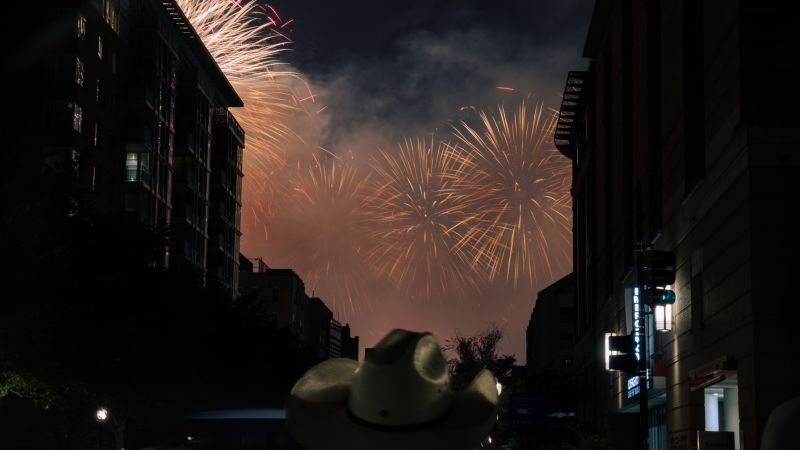
DC Experiences ‘Code Red’ Air Quality After Record-Breaking Fireworks Display
DC experiences Code Red air quality – Washington, DC, residents faced the nation’s worst air quality on Sunday, briefly surpassing other major cities globally, according to IQAir, a leading air pollution monitoring platform. The capital’s atmosphere deteriorated significantly after a 40-minute Fourth of July fireworks show, prompting city officials to issue a Code Red alert. This warning, issued by the DC government, advised people to minimize time outdoors, emphasizing that the air was “unhealthy for seniors, kids, and individuals with medical conditions,” and could trigger respiratory or cardiovascular issues for the general population.
Health Warnings Amid Environmental Impact
Dr. Kisha Davis, chief health officer of Montgomery County, Maryland, voiced concerns before the event, stating, “The air quality today is like running a marathon while smoking a cigarette.” She predicted that the 850,000-firework display around the National Mall would exacerbate the already poor conditions. While forecasts hinted at thunderstorms Sunday evening, Davis noted that the rain might help mitigate the pollution. “It does push all of those, you know, chemicals and pollutants into the water system, but they are at least out of the air,” she told CNN.
A Spectacle Amid Extreme Weather
The fireworks show, organized by Freedom 250—a Trump-backed nonprofit—occurred as DC and the broader Northeast region endured an extreme heatwave. The district recorded a triple-digit high temperature on Saturday, creating conditions ripe for severe thunderstorms. These storms led to the temporary evacuation of the National Mall before the display began. The event’s timing was no coincidence, as the heatwave amplified the concentration of particulate matter in the air, compounding the effects of the fireworks.
Despite the challenges, the fireworks were expected to set a new Guinness World Record for the largest display in history. Hundreds of thousands of shells were launched from 10 locations, including the Lincoln Memorial Reflecting Pool, Potomac River barges, and West Potomac Park. The benchmark for the record was the 810,904 fireworks used during a 2016 New Year’s Eve celebration in the Philippines. This year’s display, however, was roughly 10 times larger than Macy’s Fourth of July Fireworks Show in New York, traditionally regarded as the nation’s most iconic Independence Day event.
Public Health and Emergency Response
Internal National Park Service documents, obtained by The Washington Post, described the event as causing “very unhealthy” air conditions in central DC. The reports recommended limiting exposure to pollution and wearing N95 masks for those watching the display outdoors. While the park service did not comment directly on the documents when contacted by CNN, the findings underscored the urgency of the situation.
Emergency services reported a surge in patient contacts linked to the event. The DC Fire and EMS Department documented 96 patient interactions and 40 transports between midnight Friday and 9 a.m. Sunday, as per the National Special Security Event Joint Information Center, which oversees security for the 250th-anniversary celebrations. George Washington University also noted 289 patient contacts on Saturday night, while the Department of Health and Human Services reported 314 cases. While the exact causes of these incidents remain unclear, heat and air pollution are suspected factors.
President Donald Trump, who delivered a 40-minute late-night address prior to the show, praised the display on social media. He wrote, “The Most Spectacular Fireworks Show I have ever seen, and I’ve seen them all. Congratulations on a job well done!” His endorsement highlighted the event’s significance, even as health officials raised alarms about its environmental toll. The show, while a triumph of visual spectacle, left a complex legacy of both celebration and concern.
Residents who attended the display described a mix of awe and discomfort. “It was beautiful, but the smoke was thick and made it hard to breathe,” said one attendee. The National Mall, a historic venue, became a temporary hub of both joy and tension, as people balanced the thrill of fireworks with the risks of poor air quality. The event’s scale and timing raised questions about the balance between public celebration and environmental responsibility, especially in a city already grappling with climate-related challenges.
Long-Term Implications and Public Awareness
As the smoke cleared, officials and experts turned their attention to the long-term effects of such large-scale events. The fireworks’ emissions, combined with the heatwave, created a perfect storm of environmental stressors. While the rain on Sunday evening provided some relief, it also highlighted the need for more sustainable practices in future celebrations. “We need to think about how these events impact the air we breathe,” Davis said, urging planners to consider alternatives like reducing pyrotechnic use or timing displays to avoid peak pollution periods.
CNN has reached out to Guinness World Records to confirm whether the display officially holds the title of the largest fireworks show. Until then, the record remains unverified, though the event’s scale was undeniable. The fireworks not only dazzled the skies but also served as a reminder of the interconnectedness of environmental factors and public health. As the city recovered from the display, discussions about the trade-offs between tradition and innovation in urban celebrations began to gain traction.
For now, the Code Red alert stands as a testament to the event’s intensity. It marked a rare moment when Washington, DC, found itself at the bottom of the global air quality rankings, a stark contrast to its usual status as a city with relatively clean air. The combination of extreme heat, a massive display, and the resulting pollutants created a unique challenge for residents and officials alike. Yet, the event also sparked a renewed focus on how cities can adapt to the growing impacts of climate change while maintaining their cultural traditions.
As the nation prepares for future milestones, the 2026 fireworks display serves as both a celebration and a cautionary tale. While it captivated millions with its brilliance, it also exposed vulnerabilities in the region’s environmental resilience. For those who experienced it firsthand, the memory of the night’s spectacle will be matched only by the lingering questions about its consequences for public health and the planet.
