
America held a big birthday party — and a soccer extravaganza broke out
America held a big birthday party — and a soccer extravaganza broke out
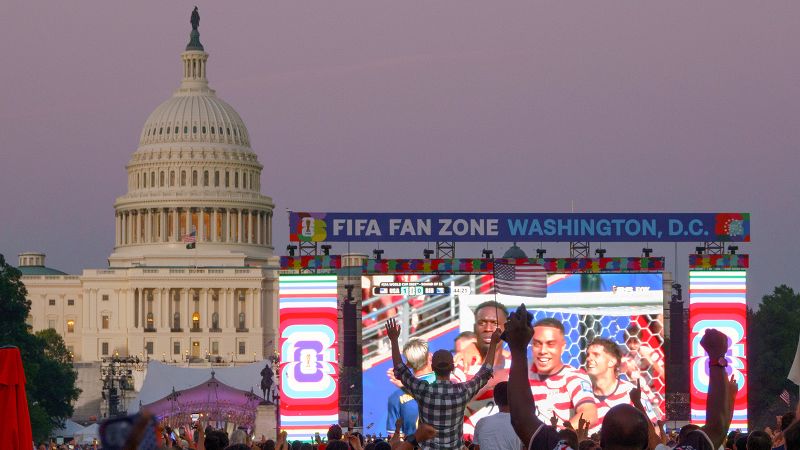
America held a big birthday party – As the world watched the 2026 World Cup unfold, the United States found itself at the center of a celebration that transcended sport. The game, universally known as football, became a mirror reflecting the nation’s complex identity on the occasion of its 250th anniversary. Amid a backdrop of political polarization and economic uncertainty, the tournament offered a rare moment of unity, inviting spectators to set aside divisions and embrace the shared thrill of a global spectacle.
A Unifying Force in a Divided Nation
The World Cup’s arrival coincided with a pivotal moment in American history. As the country marked its 250th year, the soccer event became a catalyst for collective joy, countering the ideological rifts that had deepened over the past few years. The stadium’s roar, the chants of fans, and the camaraderie of strangers became a powerful reminder that America, despite its often harsh political caricatures, can still foster a sense of belonging.
Speculation surrounding the event initially centered on FIFA’s commercial strategies, pricing structures, and political maneuvering. Critics raised concerns about the tournament’s heavy commercialization and the exorbitant costs of tickets, which made it accessible only to a fraction of the population. Yet, once the first match kicked off, these worries faded in the face of the players’ passion and the spontaneous celebrations that erupted across the nation.
For many, the World Cup represented more than just a sporting event; it was a testament to the country’s enduring diversity. The blend of talent from Europe, South America, and Africa underscored the global roots of American society. This cultural mosaic, enriched by centuries of immigration, became a focal point for fans who gathered in stadiums and neighborhoods alike, eager to celebrate the shared spirit of the game.
The Melting Pot of Talent
Team USA’s emergence as a force on the international stage highlighted the nation’s ability to integrate and nurture talent from all corners of the world. The squad, managed by an Argentinian coach, featured players whose backgrounds reflected America’s multicultural fabric. Antonee Robinson, for example, brought the influence of his northern English upbringing to his play, while Malik Tillman’s journey combined the heritage of his German mother and American serviceman father, showcasing the dual influences of his upbringing.
Folarin Balogun, born in Brooklyn to Nigerian parents, embodied the concept of birthright citizenship. Raised in England, he now plays for Monaco but was able to represent the United States thanks to the constitutional principle that allows individuals to claim their birthplace as a national identity. This aspect of American law, though under scrutiny in recent years, was reaffirmed by the US Supreme Court just days before Balogun’s historic goal, a moment that resonated deeply with the country’s values.
These players’ stories, interwoven with their cultural origins, became a symbol of the nation’s ability to transform diversity into strength. Their presence on the field challenged stereotypes, offering a glimpse into the lives of immigrants and their descendants who have become integral to America’s identity. The stadium filled with fans from multiple diasporas, creating a vibrant atmosphere that reflected the ethnic patchwork of the nation.
A Cultural Renaissance Through Soccer
For cities that had struggled with economic stagnation and the shift to remote work, the World Cup reignited a sense of community. Bars and restaurants, once quiet, now buzzed with energy as fans in the colors of various national teams filled the streets. This resurgence of public life was a stark contrast to the subdued atmosphere that had settled over many urban centers during the pandemic.
Interestingly, the World Cup’s impact extended beyond the field. It provided a platform for the nation to showcase its ability to adapt and thrive, even in the face of challenges. The simple act of gathering to watch a match, a ritual that feels almost quaint in today’s hyper-connected digital age, became a unifying experience. People of all backgrounds found common ground in the excitement of the game, demonstrating that shared moments of joy can transcend political divides.
Yet, this moment of unity was not without its complexities. The tournament also exposed the tensions that linger in American society, particularly around immigration and identity. While many celebrated the inclusivity of the event, others questioned the role of political forces in shaping its success. The US Supreme Court’s decision to uphold birthright citizenship, made just days before a key match, underscored the ongoing debate over who belongs in the nation and who is excluded by its policies.
Gianni Infantino, the FIFA president, recognized this duality during his remarks in Los Angeles. “We can see, well, actually this other person from this other part of the world, he’s not so bad or she’s not so bad as described, right?” he said, capturing the essence of the World Cup’s power to humanize individuals beyond their political affiliations. The global soccer leader envisioned the 2026 event as a celebration of both the nation’s founding and its cultural evolution, aiming to connect the past with the present in a way that resonated with fans worldwide.
Politics and Sport: A Delicate Balance
Despite its unifying potential, the World Cup also reminded Americans of the political forces that often overshadow the sport. Debates over players taking a knee during matches or using their platforms to critique the administration had turned sports into a battleground for ideological battles. However, the 2026 tournament offered a rare reprieve, allowing fans to focus on the game rather than the rhetoric.
Team USA’s performance, though not flawless, served as a beacon of hope. Their success was not just about individual talent but also about the collective effort of a nation that had long grappled with the question of identity. Unlike the NFL, which had become a symbol of cultural conflict, soccer’s appeal lay in its ability to create a shared experience, one that could be appreciated by all political tribes regardless of their differences.
The contrast with the US ice hockey team’s Olympic triumph was stark. While their victory over Canada had initially been a source of national pride, it quickly became entangled in political debates. In contrast, the World Cup’s presence offered a more inclusive narrative, one that highlighted the resilience and adaptability of the American spirit. As the tournament continued, it became clear that the nation’s 250th birthday was not just a historical milestone but also a cultural renaissance, one that soccer had the unique ability to amplify.
For the international community, the World Cup served as a reminder of America’s capacity to welcome and integrate diverse cultures. The presence of fans from multiple countries, the blend of styles and strategies on the field, and the shared celebration of the game all pointed to a nation that, while imperfect, continues to evolve. As the celebrations grew, so did the realization that the United States, in all its complexity, remains a place where different worlds can come together under a single banner.
