
Sudan war: Why Hemedti’s legitimacy push in Uganda falters amid RSF atrocities
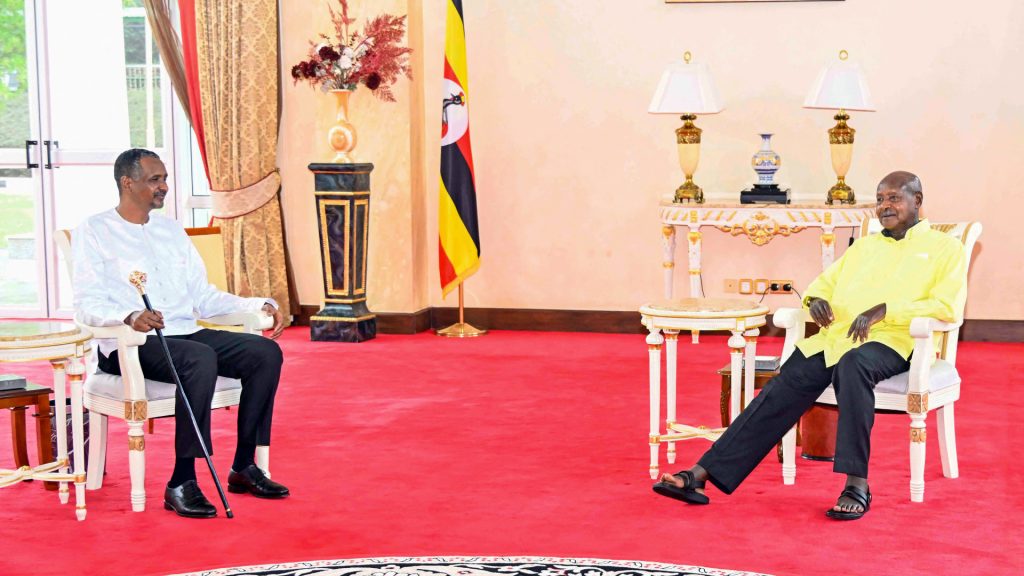
Sudan War: Hemedti’s Uganda Legitimacy Bid Faces Challenges Amid RSF Allegations
On 20 February, Mohamed Hamdan Dagalo, known as Hemedti, the leader of Sudan’s Rapid Support Forces (RSF), traveled to Kampala, Uganda, where he engaged with President Yoweri Museveni. This marked his most prominent diplomatic activity outside Sudan in recent months, underscoring his efforts to gain international backing.
The visit occurred just a day following a UN investigation that identified the RSF as responsible for genocide in Darfur. Concurrently, the US had imposed sanctions on three RSF commanders for their roles in atrocities in el-Fasher. These actions intensified global criticism of the force, which had already drawn condemnation for its conduct in previous years.
International scrutiny of RSF actions has grown steadily, highlighted by a December 2023 US ruling that classified RSF activities in Darfur as ethnic cleansing. Throughout 2024, the UN Security Council also issued resolutions and briefings condemning the force’s continued violence. Hemedti’s trip appears strategically timed to counter these pressures.
Accompanied by figures tied to the Tasis initiative—a political framework established in Nairobi to present RSF control as a civilian-backed administrative model—Hemedti sought to leverage Uganda’s diplomatic standing. However, this parallel structure failed to secure significant support from Sudanese political factions or international entities.
Sudan’s government condemned Uganda for hosting Hemedti, viewing the gesture as a slight to Sudanese sovereignty and the broader African community. For Museveni, the move likely aimed to bolster Kampala’s role as a neutral mediator, offering a platform for RSF legitimacy without binding the country to one side of the conflict.
Uganda’s reputation as a respected regional leader and its strategic position within East Africa made it an ideal venue for Hemedti’s campaign. The country’s neutrality in Horn of Africa diplomacy further supports its appeal as a potential interlocutor for the RSF. This visit also ties into broader mediation efforts by the African Union and the Intergovernmental Authority on Development (Igad).
“Sudan’s war is no longer just a contest for Khartoum but a struggle over competing claims to sovereignty,”
warned analysts at the International Crisis Group. They emphasized that prolonged dual-power dynamics in African conflicts often solidify into enduring fragmentation, raising concerns about the RSF’s growing autonomy.
Hemedti’s public statements in Uganda underscored his vision of national unity and a commitment to dialogue. By framing the conflict as a fight against Islamist networks, he positioned the RSF as a stabilizing force. His claim that the force now boasts over 500,000 fighters was intended to bolster domestic credibility and signal readiness for broader political involvement.
Yet the RSF’s push for recognition contradicts its role in perpetrating mass abuses. Despite accusations of atrocities, Hemedti advocates for democratic governance while overseeing a parallel political system outside state institutions. This duality highlights the tension between military dominance and civilian legitimacy.
