
Israel’s war to erase Syria
Israel’s War to Erase Syria
On Tuesday, a somber announcement resounded from Tel Aviv. Israeli Finance Minister Bezalel Smotrich, addressing a gathering of loyalists, stated: “The fighting will not end until hundreds of thousands of Gazans depart… and Syria is divided.” His remarks, swiftly shared online, laid bare the true intent behind Israel’s military actions. The conflict is not merely about security or countering terrorism—it is a calculated effort to redraw the map, fragment nations, displace populations, and reshape the narrative of history.
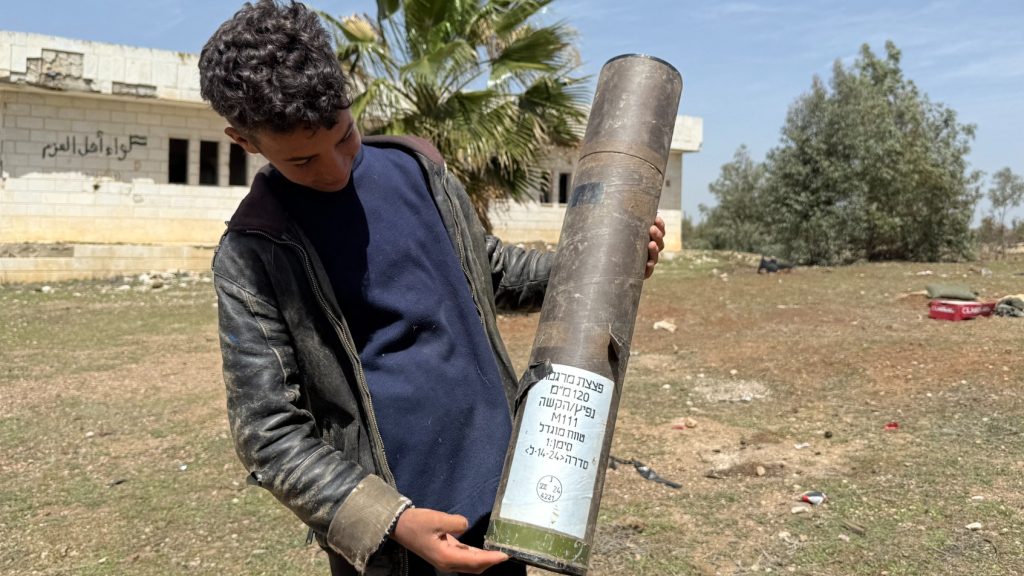
Earlier in April, Israeli airpower once again pierced the skies of Syria, unleashing a relentless barrage of missiles. These strikes targeted both military installations and residential areas, leaving a trail of destruction across the land. The attacks spanned from central airfields to the southern regions, where Israeli troops advanced near Nawa, claiming the lives of nine civilians.
A New Phase in the Campaign
Since the collapse of the Assad regime on 8 December 2024, Israel has intensified its operations in Syria. Hundreds of aerial assaults have devastated infrastructure, defense systems, and weapon stores. The stated reason? A lack of trust in the new transitional government. Yet, the scale and timing of these strikes reveal a more profound motive—a push to establish a “secure zone” spanning over 400 square kilometers, surpassing the size of the Gaza Strip.
Israeli forces have now secured positions along the Syrian side of Mount Hermon, openly defying international law. Initially, officials suggested this was a temporary move, but they soon abandoned that pretense. “We will remain,” declared Defence Minister Israel Katz, standing atop the mountain. “We will guarantee the southern region is demilitarized and safeguard the Druze community from perceived threats.”
The Shield of Minority Claims
While Israel frames its actions as protection for minorities, history reveals the hollow nature of these assertions. The Druze in Palestine, long enlisted in the Israeli military, have fought for the state they believed would grant them equal standing. Yet, as formal citizens of Israel, they have found themselves relegated to second-class status.
But the significance of these strikes runs deeper than mere geography. By bombing Nawa, Israel struck a hub of Muslim heritage and intellectual tradition. This city is the cradle of Imam al-Nawawi, a revered scholar whose teachings have transcended centuries and continents. His memory endures in homes, schools, and mosques from Cairo to Kuala Lumpur. To attack Nawa is to obliterate a lineage of wisdom.
Legacy of Resistance
Adjacent to Nawa stands Tell al-Jabiyah, a site where Caliph Omar ibn al-Khattab once stood. After journeying from Madinah, he received the keys of Jerusalem, marking a pivotal moment in Islamic history. The hill, now steeped in echoes of the past, remains a sacred place for those who trace their roots to Houran.
Further south and east, the region nurtures other figures of distinction. Ibn al-Qayyim al-Jawziyyah, a towering jurist and theologian, emerged from Izraa in Daraa. Ibn Kathir, the celebrated historian of *Al-Bidaya wal-Nihaya*, was born in Majdal near Bosra. Houran has long been a sanctuary of knowledge, its soil a cradle for a civilization that defied borders, sects, and empires.
A Historical Battlefield
By the banks of the Yarmouk River, a pivotal moment in history unfolded in 636 AD. Khalid ibn al-Walid led Muslim forces to a decisive triumph over the Byzantines, dismantling imperial dominance and ushering in a new era. To wage war on this land is not just to breach sovereignty—it is to erase the legacy of resistance, conquest, and renewal that has defined its people for generations.
Israel’s campaign, therefore, is not only a physical assault. It is a symbolic one, aimed at dismantling the very essence of Arab and Islamic continuity. The soil of Houran does not merely bear the weight of history; it stands as a testament to centuries of cultural endurance. And as the strikes continue, so too does the effort to rewrite the past, one bomb at a time.
