
What we know about the LaGuardia plane and fire truck crash
LaGuardia Airport Collision Claims Two Lives
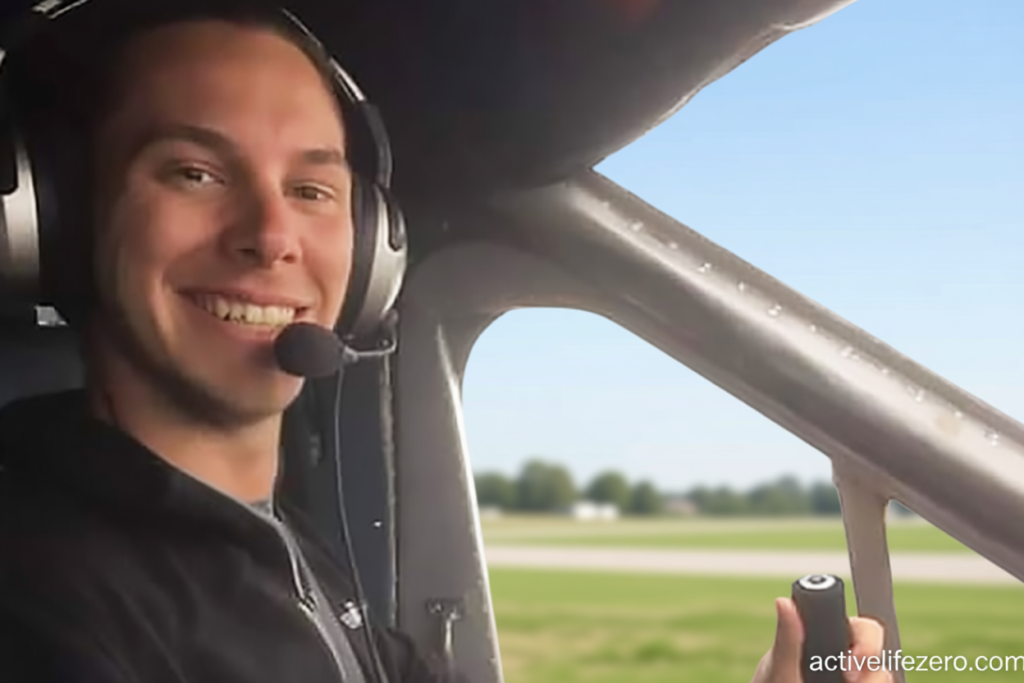
A fatal collision occurred at New York’s LaGuardia Airport late Sunday night, involving a passenger jet and a Port Authority fire truck. The incident resulted in the deaths of two pilots, identified as Antoine Forest and Mackenzie Gunther. Authorities have confirmed the pilots’ identities through Canadian news outlets and a college associated with one of them. Both were based in Canada, according to preliminary reports.
Investigation Unfolds
The Federal Aviation Administration (FAA) and National Transportation Safety Board (NTSB) are leading the inquiry into the crash. Investigators aim to clarify how the fire truck crossed the runway’s path shortly after the plane landed. Key details from the cockpit voice recorder suggest the truck received clearance to move across Runway 20 seconds before the impact.
“From the final three minutes of the cockpit recording, we see the fire truck was authorized to cross the runway 20 seconds prior to the crash,” explained Doug Brazy, NTSB’s senior aviation investigator.
Timeline of Events
Brazy detailed the sequence of radio transmissions during the incident. At 2 minutes and 22 seconds, the flight crew contacted LaGuardia’s tower. Two minutes and 17 seconds later, the tower cleared the plane to land on Runway 4. However, a radio call from an airport vehicle was interrupted by another transmission, raising concerns about communication interference.
“NTSB Chairwoman Jennifer Homendy noted that the transmission was ‘stepped on,’ indicating possible interference. This could have affected the clarity of instructions given to the aircraft,” Brazy added.
By 54 seconds before the crash, the tower confirmed the plane was on a stable approach. At 25 seconds, the fire truck requested permission to cross Runway 4, and the tower granted it 20 seconds later. The truck acknowledged the clearance at 17 seconds, but the tower then ordered it to stop at 9 seconds. A sound consistent with the landing gear touching down was heard at 8 seconds, followed by a pilot transfer of control at 6 seconds.
“Homendy emphasized that the first officer was flying the plane before transferring control to the captain,” Brazy noted.
Controller Responsibilities in Question
Homendy highlighted the roles of two tower controllers during the crash: a local controller managing active runways and immediate airspace, and the controller in charge overseeing safety operations. The latter also handled clearance delivery duties, which typically guide pilots during departure. However, the NTSB is still determining who was responsible for managing vehicle movement on taxiways.
“We have conflicting information—some suggest the controller in charge handled the duties, while others point to the local controller,” Homendy stated.
The local controller logged in at 10:45 p.m., while the controller in charge arrived earlier at 10:30 p.m. Homendy noted that dual controllers are standard during midnight shifts but expressed past concerns about fatigue affecting performance. “I don’t know yet if fatigue played a role here, but it’s a shift we’ve studied in prior cases,” she said.
Survivors and Casualties
Despite the tragedy, the pilots’ quick actions saved the lives of 72 passengers and two crew members. Over 40 individuals were treated for injuries, most of which were minor, though some remain hospitalized with severe wounds. Jack Cabot, a 22-year-old passenger, recounted the moment of impact from his seat in row 18. He described feeling the plane decelerate as it collided with the fire truck, sustaining a cheek bruise and neck soreness from hitting the seat ahead.
The crash underscores the critical role of pilot response in mitigating damage during emergencies. As the investigation continues, officials are piecing together the sequence of events to prevent similar incidents in the future.
