
Attack on Michigan temple was Hezbollah-inspired, FBI says
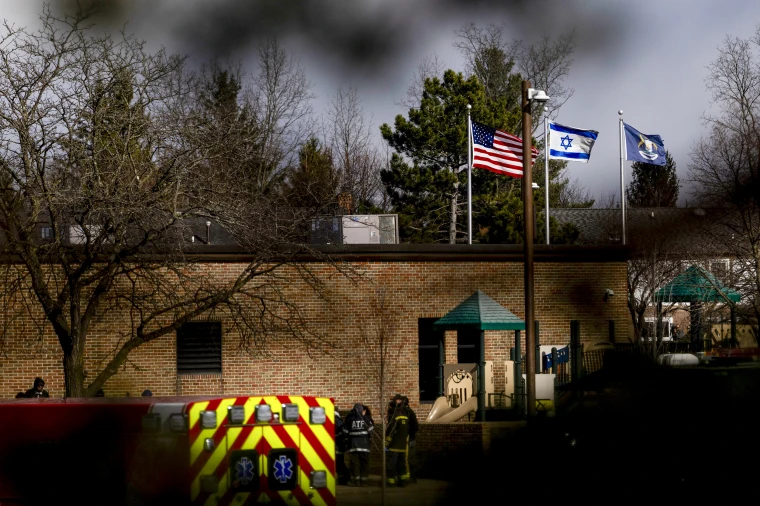
Attack on Michigan Temple Linked to Hezbollah, FBI Confirms
The FBI has confirmed that the recent car ramming and shooting incident at a prominent Michigan synagogue was an act of terrorism inspired by Hezbollah, targeting the Jewish community. The attack, which took place on March 9, involved Ayman Mohamad Ghazali, a U.S. citizen of Lebanese origin, who used an AR-style rifle in the assault. According to Jennifer Runyan, the FBI’s special agent in charge in Detroit, Ghazali purchased the weapon three days prior to the attack.
Ghazali, 41, drove his truck, filled with gasoline and fireworks, into Temple Israel in West Bloomfield. After exchanging fire with security personnel and becoming stuck inside the building, he killed himself. No other casualties were reported, though a temple guard sustained injuries. Runyan emphasized that the attack was a deliberate effort to harm the Jewish community, stating, “Based on the evidence gathered to date, we assess this attack to be a Hezbollah-inspired act of terrorism purposely targeting the Jewish community.”
“This is the largest gathering place for Israelis in the state of Michigan in the United States. I have booby-trapped the car. I will forcefully enter and start shooting them. God willing, I will kill as many of them as I possibly can.”
Hours before the attack, Ghazali sent a video to his sister in Lebanon. Officials noted she did not view it until an hour after the incident. The FBI said Ghazali had been researching pro-Hezbollah content since January and began finalizing his plans on March 9. Despite initial rejections from two gun sellers, he later acquired an AR-style rifle, 10 magazines, and approximately 300 rounds of ammunition at a local store in Dearborn Heights.
In addition to his weapons, Ghazali ordered a magazine pouch and 40 collapsible water containers capable of holding 5.3 gallons each. The next day, he purchased $2,200 worth of fireworks. The containers were delivered a day before the attack, and he filled them with gasoline. Two torch lights were also acquired, which he used to ignite the fire after the shooting.
Ghazali’s attack occurred around two weeks after the U.S. and Israel launched strikes against Iran, killing its leader, Ayatollah Ali Khamenei. This action sparked an ongoing conflict. Hezbollah, a militant group based in Lebanon and supported by Iran, has been designated a foreign terrorist organization by the U.S. since 1997. The group has a history of conducting attacks against Israel.
Officials noted Ghazali had lost several family members in an Israeli airstrike in Lebanon. A local Lebanese official and the mayor of Dearborn Heights confirmed this. On the day of the attack, Ghazali shared photos titled “vengeance” on Facebook, featuring images of the deceased ayatollah and Hezbollah’s secretary general, Hassan Nasrallah. He also posted a phrase in Arabic: “burn their world, for we have a vendetta against them, that we will never forget,” alongside Hezbollah-related visuals.
Earlier that morning, Ghazali sent 19 videos, photos, and messages to his sister, starting at 10:34 a.m., which Runyan described as “reiterated his intent to commit a mass terrorist attack.” His ex-wife in Dearborn Heights, worried by his behavior, had requested a welfare check from police. The attack unfolded at 12:19 p.m., with Ghazali’s truck traveling about 200 feet into the synagogue before the gunfire and subsequent explosion.
Following the incident, a significant fire broke out, prompting several first responders to seek medical attention for smoke inhalation. No other explosive devices were used in the attack, according to investigators. Ghazali’s actions, driven by personal and political motivations, underscore the complex interplay between regional conflicts and individual acts of violence.
