
Artemis II mission was a triumph. Now comes the hard part
Artemis II mission was a triumph. Now comes the hard part
NASA’s Artemis II mission marked a significant milestone as it successfully transported four astronauts around the Moon’s far side and returned them safely to Earth. The Orion spacecraft executed its tasks flawlessly, and the images captured by the crew have sparked renewed excitement about the future of space exploration. However, the success of this orbital journey raises a critical question: will this inspire a generation to one day live and work on the Moon, or even venture to Mars as the Artemis program promises?
While the loop around the Moon was accomplished with relative ease, the true challenge is yet to come. The Apollo missions, which once symbolized human ambition in space, were driven by Cold War competition rather than a long-term vision. Neil Armstrong and Buzz Aldrin’s historic landing in July 1969 demonstrated American technological prowess, but subsequent missions saw declining public interest and were eventually halted. The Apollo program’s achievements were short-lived, as the focus shifted from exploration to geopolitical goals.
Today, NASA’s objectives are more ambitious. Administrator Jared Isaacman has outlined plans for annual crewed lunar landings starting in 2028, with the fifth Artemis mission aiming to establish the foundation for a permanent lunar base. This vision, though futuristic, is backed by serious space experts. “The Moon economy will develop,” says Josef Aschbacher, Director General of the European Space Agency (ESA). “It will take time to set up the various elements, but it will develop.”
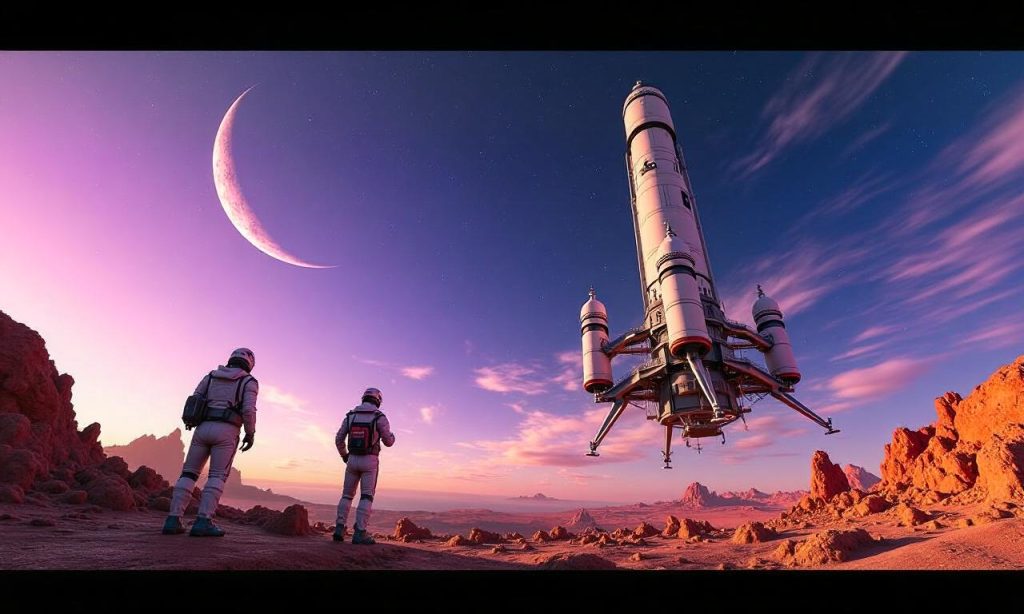
Yet, the path to this goal faces hurdles. The Artemis program relies on advanced landers, with two private companies vying to deliver them: SpaceX, developing a towering 35-meter Starship variant, and Blue Origin, working on a more compact Blue Moon Mark 2. Both are lagging behind schedule. A recent NASA report highlighted that SpaceX’s lunar Starship is at least two years late, while Blue Origin’s Blue Moon is eight months behind, with unresolved issues persisting since a 2024 design review.
These modern landers differ from the Apollo-era Eagle module, which was designed to transport just two astronauts with minimal equipment. The new spacecraft must carry extensive infrastructure, including pressurized rovers and base components, requiring far greater propellant loads. To address this, the Artemis program aims to build an orbital depot for fuel storage, topped up by over ten tanker flights launched at regular intervals. While the concept is elegant, the execution is complex. Maintaining super-cold oxygen and methane in space, then transferring them between vehicles, represents one of the most demanding engineering tasks.
Dr. Simeon Barber, a space scientist at the Open University, acknowledges the physics behind the plan but highlights its practical difficulties. “If it’s difficult to do in the launch pad, it’s going to be much more difficult to do in orbit,” he notes. The Artemis III mission, scheduled for mid-2027, is designed to test Orion’s docking capabilities with landers in Earth orbit. Given the current delays—Starship has yet to complete a successful orbital flight, and Blue Origin’s New Glenn rocket has only managed two launches—this timeline appears ambitious.
The 2028 target for the first lunar landing is partly a political decision, aligning with President Trump’s renewed space policy. This policy envisions Americans returning to the Moon, but the success of such plans depends on overcoming the engineering and logistical obstacles that have already tested the program’s timeline.
