
A free Iran is their shared dream. But the diaspora remains torn on the best path forward.
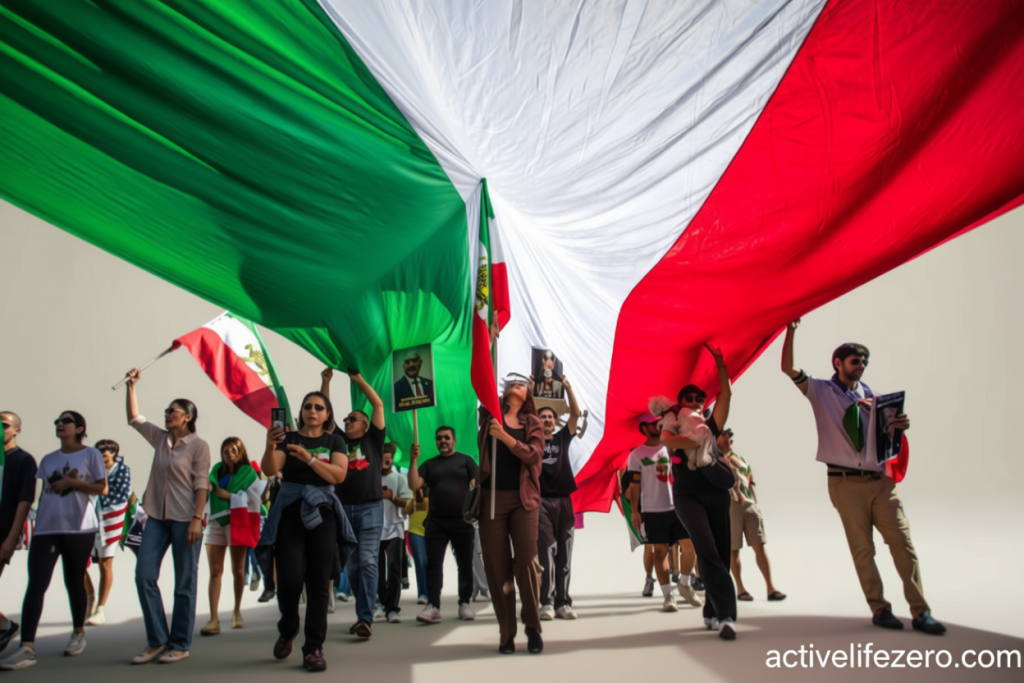
A Free Iran is Their Shared Dream. But the Diaspora Remains Torn on the Best Path Forward
LOS ANGELES — Two contrasting protests emerged last weekend, reflecting a deepening rift within the Iranian diaspora. In one scene, a crowd gathered near City Hall, chanting against the initiation of an unsanctioned war. Their slogans echoed calls for peace, such as “End the war in Iran” and “We the people reject conflict.” Just across town, in Tehrangeles, a community on the Westside, the same group celebrated what they saw as a potential turning point for their homeland. They waved American, Israeli, and Iranian flags, danced to upbeat music, and rejoiced at the news that Ayatollah Ali Khamenei, Iran’s supreme leader, had been eliminated in a U.S.-Israeli strike.
The Iranian diaspora’s emotional landscape has grown more complicated as tensions rise in the Middle East. Many have fled theocratic rule since the 1979 Islamic Revolution, and now they grapple with dual feelings of hope and apprehension. Abbas Milani, director of Iranian studies at Stanford University, noted that some members of the community are so frustrated with the regime that they would support any action to dismantle it, even if it means destroying parts of the country. Others, however, aim to remove the regime without sacrificing the country’s stability.
“The images of destruction and the joyous support for war have created more tension than usual within the diaspora,” Milani remarked. “It will take time before this divides ease.”
Online discourse has intensified since the attack on Iran, with sharp labels being thrown between factions. Those endorsing military action are often called “Zionists,” a term that has taken on a more negative connotation since the Hamas strikes on Israel in October 2023. Meanwhile, opponents of war face accusations of being pro-regime. As the conflict unfolds, debates over leadership succession have also gained momentum. While some advocate for Reza Pahlavi, the son of Iran’s last monarch, others remain cautious about restoring ties to the former royal family.
The government’s internet blackout has deepened the sense of isolation, cutting many from their loved ones. With Nowruz, the Persian New Year, approaching, the contrast between celebration and chaos becomes even more pronounced. Rumors suggest Mojtaba Khamenei, the supreme leader’s son, could step into the role, raising concerns about the Islamic Revolutionary Guard Corps’ growing influence in the country’s political and economic spheres.
President Donald Trump recently proposed a strategy to fully replace Iran’s leadership, citing names for a “good leader” in the process. Despite his plan, a recent NBC News poll revealed that 54% of potential voters disapprove of his military approach. This mirrors the division within the Iranian diaspora, where 53% of respondents in a previous survey by the National Iranian American Council and YouGov opposed U.S. military action against Iran.
The Iranian Diaspora Collective, an Instagram account with over 81,000 followers, emphasized the diversity within the community. “Millions of people will never align with the same ideology or identity,” they wrote. “That diversity is the strength of any free society.” Los Angeles-based pastor Ara Torosian, a Christian who moved to the U.S. from Iran in 2010, expressed heartbreak over the destruction of historic sites and the loss of innocent lives, particularly children. Yet he acknowledged that the current suffering rivals generations of repression faced by dissenters under the regime.
