
Newsletter: US-Israeli strikes legally ‘problematic’ but ‘righteous’, Belgian Defence Minister says
Newsletter: US-Israeli Strikes Legally ‘Problematic’ But ‘Righteous’
Overnight tensions escalated as Washington and Israel launched additional strikes against Iran, sparking concerns that the conflict might expand beyond the Middle East. The incident gained urgency after a US submarine sank an Iranian warship in the Indian Ocean the previous afternoon, raising fears of regional instability. Meanwhile, the US Senate cast its vote on a measure aimed at limiting President Donald Trump’s authority to wage war, with the outcome split along political lines. The House of Representatives is set to revisit the issue tomorrow.
As the situation unfolds, EU foreign ministers are convening virtually to coordinate a unified response to the escalating crisis. The bloc has faced internal disagreements and diminished diplomatic leverage in recent weeks. On Wednesday, the EU’s top foreign policy official expressed doubts about Iran’s potential for democratic transformation, warning of a growing war and a perilous phase for European interests.
Belgian Minister Questions Legal Validity
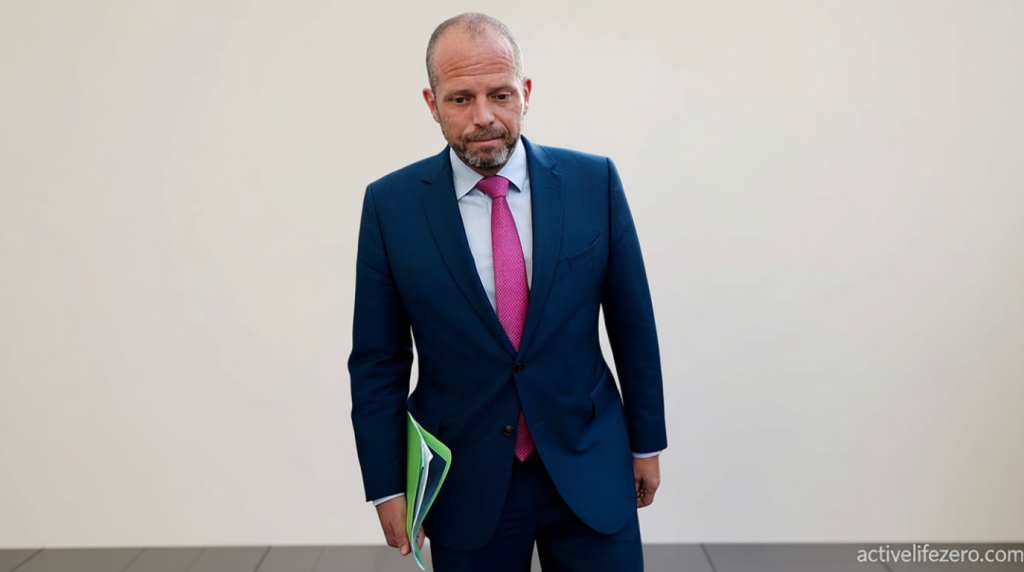
Speaking to Europe Today, Belgium’s Defence Minister Theo Francken questioned the legality of the initial US-Israeli attack but framed it as a “justified effort to undermine the Ayatollah regime.” He noted,
“I believe the strikes may challenge international law, yet they can also be seen as a moral cause.”
Francken’s remarks highlight the ongoing debate over the action’s compliance with legal standards.
The diplomatic tension between Washington and Madrid deepened on Wednesday, as the only EU nation to strongly criticize the US-Israeli strikes continued to dispute the US position. Spanish Foreign Minister José Manuel Albares swiftly denied backing the US campaign after White House press secretary Karoline Leavitt claimed Madrid had endorsed the strikes. Spanish Prime Minister Pedro Sánchez capitalized on the moment to reinvigorate his “no to war” movement, invoking the memory of the 2003 US-led invasion of Iraq in a recent address.
Our EU editor, Maria Tadeo, highlights how Sánchez is positioning himself as a bulwark of progressive socialism in Europe amid a political shift to the right, while also galvanizing domestic support. The EU executive also reiterated its commitment to safeguarding trade interests, following Trump’s threat to cut off all trade with Spain over its critical stance.
Stéphane Séjourné, European Commission Vice-President, emphasized that any attack on a member state automatically threatens the EU itself. This comes as the EU-US trade agreement, finalized last summer, remains stalled after MEPs halted its implementation in February, following a US Supreme Court ruling that invalidated 2025 tariffs.
Energy Disputes Intensify
In a separate development, Hungary and Slovakia’s disagreement with Ukraine over oil supply disruptions via the Druzhba pipeline persists. On Wednesday, MOL, Hungary’s energy firm, and its Slovak affiliate Slovnaft submitted a formal complaint to the European Commission, accusing Croatian oil company JANAF of leveraging its authority unfairly. JANAF has become a critical conduit for Hungary and Slovakia, which received exemptions from EU sanctions on Russian oil, following attacks on the Druzhba pipeline in late January.
MOL had previously warned of legal action if JANAF failed to secure uninterrupted access for Russian crude shipments. While JANAF has pledged to meet both nations’ needs through alternatives, it has yet to confirm if it will allow Russian oil to flow through its Adria pipeline. In a statement, JANAF dismissed MOL’s allegations of exploitative pricing and supply risks.
Meanwhile, Hungary’s Foreign Minister Péter Szijjártó was in Moscow to discuss energy cooperation, stating that Russia would “continue delivering natural gas and crude oil at the same prices, even amid the global energy crisis.” Moscow also agreed to release two Hungarian-Ukrainian prisoners of war to Hungary.
Jorge Liboreiro reports that Trump’s military actions have reignited fears of an energy crisis, a specter the EU believed it had largely overcome. The ongoing conflict has driven gas prices to unprecedented levels, triggering alarm among investors and governments.
Gas prices at the Title Transfer Facility, a key benchmark, surged dramatically on Tuesday, underscoring the broader economic strain. As tensions rise, the EU faces a dual challenge: balancing its diplomatic stance and protecting its energy interests in a volatile geopolitical landscape.
