
Fact check: How can a country actually withdraw from NATO?
Fact check: How can a country actually withdraw from NATO?
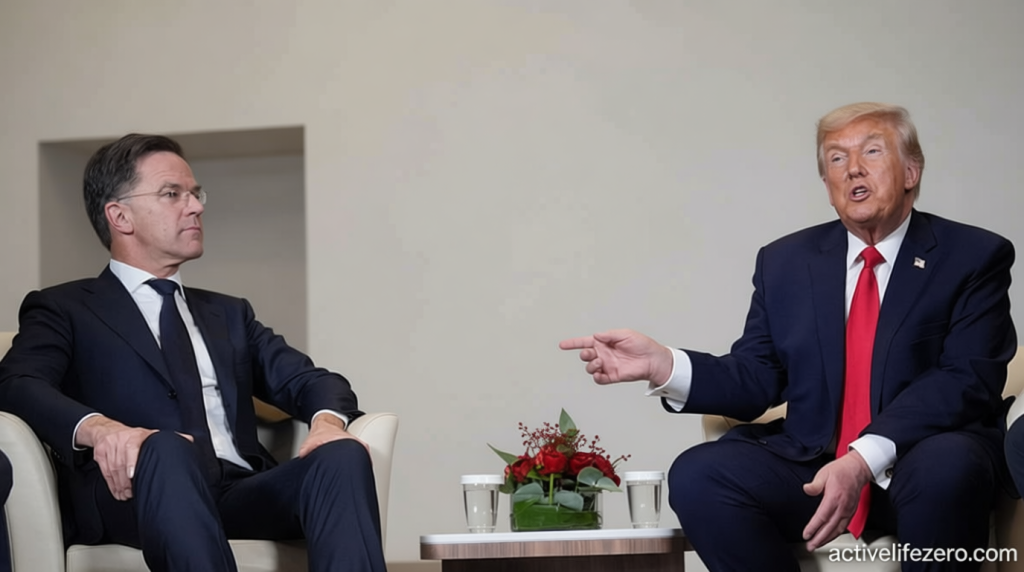
Recent weeks have seen US President Donald Trump intensify his criticisms of NATO, particularly in the context of the ongoing conflict in Iran. He has gone so far as to suggest withdrawing from the alliance, citing dissatisfaction with European allies and other Western partners who did not commit to his proposal to create a naval force to secure the Strait of Hormuz, which Iran has restricted. In an interview with The Telegraph, Trump described NATO as a “paper tiger,” emphasizing his belief that the alliance lacks real authority. He added that Russian President Vladimir Putin also recognizes this weakness.
The Withdrawal Process
According to Article 13 of the 1949 North Atlantic Treaty, a country must formally notify the US of its intent to leave the alliance. Following this notification, the other members are informed, and the withdrawal becomes official after one year. This procedure applies to all NATO members, including European nations and Canada, provided they comply with their domestic legal frameworks.
However, the US holds a unique role as both a member and the treaty’s depositary. This means it is responsible for managing the agreement and handling withdrawal notices. To exit, the US government would inform the Department of State of its decision, then notify the rest of the alliance. Theoretically, the US could remain as the depositary without being a member, but other countries would likely amend the treaty to transfer these duties to another nation.
Domestic Legal Hurdles
Within the United States, the process is more complex. In 2023, then-President Joe Biden signed an amendment to the National Defense Authorization Act for Fiscal Year 2024, which requires a two-thirds Senate majority or Congressional approval for a president to withdraw from NATO. This law also prevents the use of federal funds to support such a move. “The law makes it formally very difficult for the president to take the US out of the treaty,” noted Rafael Loss, a policy fellow at the European Council on Foreign Relations.
“The law makes it formally very difficult for the president to take the US out of the treaty,” Rafael Loss, policy fellow at the European Council on Foreign Relations, told Euronews’ fact-checking team, The Cube.
Loss suggested that Trump’s attempt to withdraw could lead to debates over the legal powers of different branches of the US government. “There might be differing interpretations of the competencies of legislative bodies,” he said. Such a scenario could result in the withdrawal decision being challenged in the Supreme Court, with the administration arguing that the president has the authority to exit the treaty independently.
Meanwhile, Ian Bremmer, president and founder of Eurasia Group, stated on X that “Trump can’t legally withdraw from NATO without Senate consent.” He highlighted the importance of maintaining US commitments to Article 5, the mutual defense clause, which underpins the alliance’s credibility. Loss echoed this, noting that while formal withdrawal would severely impact NATO, it might be better than Washington becoming a passive member, as it would at least provide clarity and advance notice to other members.
“Trump can’t legally withdraw from NATO without Senate consent,” said Ian Bremmer, president and founder of Eurasia Group, in a post on X.
Experts caution that a strategic reduction of US contributions and abandonment of Article 5 obligations could weaken NATO’s structure without a formal exit. This scenario, they argue, would still undermine the alliance’s core purpose, even if the US remains technically part of it. The debate continues over whether such a move would be enough to fracture NATO’s unity in practice.
