
Who might replace Iran’s supreme leader? There’s no clear successor
Who might replace Iran’s supreme leader? There’s no clear successor
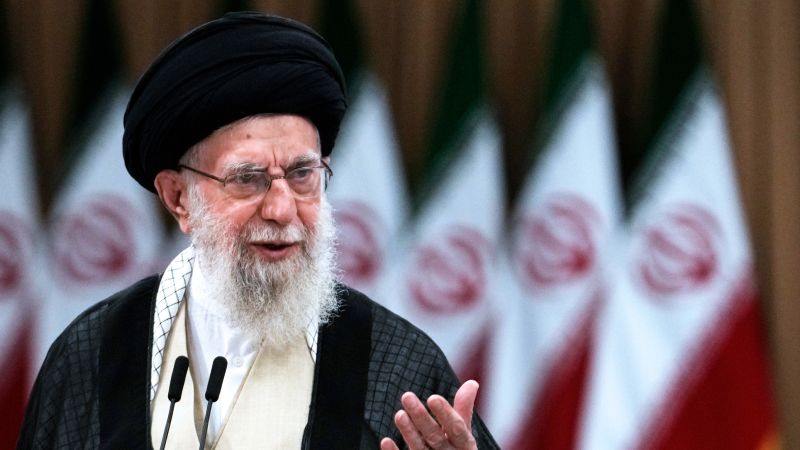
Following the assassination of Supreme Leader Ayatollah Ali Khamenei in a coordinated US-Israeli military operation, Iran’s clerical government faces the urgent challenge of selecting a new leader. Unlike previous transitions, this time there is no official heir designated, leaving the Assembly of Experts—the 88-member clerical body tasked with choosing the next supreme leader—to assume responsibility. This process has only occurred once since the Islamic Republic’s creation in 1979, when Khamenei was appointed after the death of Ayatollah Ruhollah Khomeini.
The regime aims to demonstrate continuity amid uncertainty, with the Assembly expected to convene soon to evaluate potential candidates. However, the decision may be complicated by ongoing threats from the United States, where President Donald Trump has pledged to sustain the joint bombing campaign against Iran’s leadership. The assembly’s choice must align with constitutional criteria, including being a male cleric with political acumen, moral authority, and unwavering support for the Islamic Republic.
Contenders for the leadership
Among the possible replacements, Mojtaba Khamenei—a second son of the late leader—holds significant sway behind the scenes. His strong connections to the Islamic Revolutionary Guard Corps (IRGC) and the Basij paramilitary force suggest a potential role in shaping the new era. Yet, father-to-son succession remains controversial within the Shiite clerical establishment, particularly in a nation that emerged from the overthrow of a monarchy.
“Khamenei’s appointment of Arafi to key roles indicated a high level of trust in his administrative skills,” noted Alex Vatanka of the Middle East Institute.
Arafi, a long-standing confidant of Khamenei, is currently deputy chairman of the Assembly of Experts and a member of the Guardian Council. His involvement in vetting elections and laws positions him as a familiar figure within the system. However, his political influence is limited, and he is not widely recognized as a major power player.
Mirbagheri, a hardline cleric and representative of the most conservative faction, has made provocative statements about the Gaza conflict. He argued that even a half-world population loss would be justified if it brought closer alignment with divine principles. An activist group, IranWire, highlights his opposition to Western interests and belief in an inevitable clash between believers and non-believers.
Khomeini, the grandson of the Islamic Republic’s founder, is another name in the mix. While he holds religious significance, his lack of public office and minimal involvement in security matters suggest limited direct impact. He was excluded from the Assembly of Experts race in 2016, signaling a lack of consensus around his candidacy.
Bushehri, a senior cleric with ties to the succession management system, serves as the first deputy chairman of the Assembly of Experts. He is considered a key figure in the process but has remained relatively low-key in public affairs. His relationship with Khamenei and role in institutional decision-making make him a notable contender, though his alignment with the IRGC is unclear.
