
‘Their new nuclear option’: Why Iran’s influence over the Strait of Hormuz is here to stay
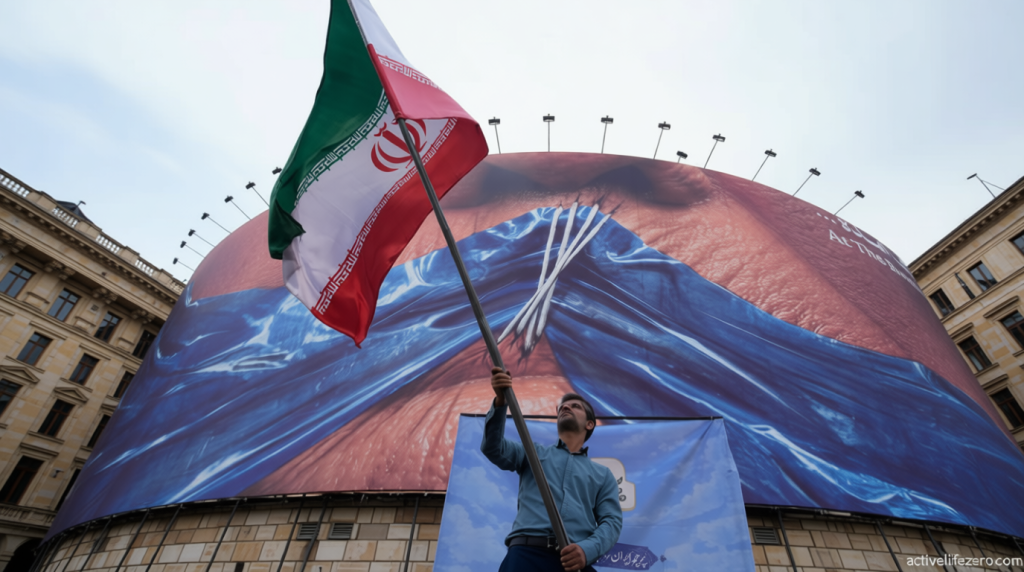
‘Their new nuclear option’: Why Iran’s influence over the Strait of Hormuz is here to stay
Their new nuclear option – Iran’s strategic dominance over the Strait of Hormuz has introduced a fresh economic tool, one that could reshape global markets for years to come. The nation’s recent demonstration of the ability to halt oil shipments through the vital waterway, using a limited arsenal of missiles and drones, has underscored its evolving role as a geopolitical player. Analysts emphasize that this influence will persist beyond the current tensions, regardless of any diplomatic resolutions with the White House. The latest escalation of hostilities between the United States and Iran signals that a lasting agreement may still be distant, yet the consequences of Iran’s control over the strait are already being felt.
Analysts Warn of Long-Term Impact
Multiple experts suggest that Iran’s hold on the strait will not be easily relinquished. Despite the recent military exchanges, the threat of prolonged disruption remains, as the country has solidified its ability to assert authority over one of the world’s most critical maritime routes. The strategic importance of the Strait of Hormuz, which connects the Persian Gulf to the Arabian Sea, cannot be overstated. It is a lifeline for global energy trade, with over 20% of the world’s oil and liquefied natural gas (LNG) passing through it before the current crisis.
“What Iran has demonstrated is that it has the power to close the strait and to keep it closed, even in the face of immense US and Israeli bombardment,” said Gregory Brew, a senior analyst at Eurasia Group, a political risk consultancy. “And that is something that no one will ever be able to take away from them,” he added. “It is their new nuclear option.”
These assessments align with broader concerns about the strait’s long-term security. While some oil traders and shipping companies have attempted to bypass Iranian restrictions, the waterway’s strategic significance ensures that any lasting control by Tehran will have far-reaching effects. The ability to manipulate supply chains through this chokepoint has become a cornerstone of Iran’s economic strategy, offering a tool to exert pressure on global markets even after hostilities subside.
The Institutionalization of Control
In a move that challenges US dominance, Iran has formally institutionalized its oversight of the strait. Last month, the Persian Gulf Strait Authority (PGSA) was established to manage transit protocols, including the vetting of vessels and the imposition of fees. This step marks a shift toward permanent control, as Tehran seeks to consolidate its role in the region. The US, in response, has imposed sanctions on the PGSA and barred shipping firms from negotiating deals with Iranian officials for safe passage. Secondary sanctions are also threatened against companies that pay tolls to the regime, aiming to curb its influence.
Despite these measures, some oil traders have reportedly forged secret arrangements with Iran to resume shipments. This highlights the difficulty of dismantling the country’s grip on the strait, even in the face of economic pressure. The PGSA’s establishment is seen as a symbolic gesture, signaling Iran’s intent to maintain a say in the waterway’s operations, regardless of international objections.
Global Economic Repercussions
The potential for extended closures of the Strait of Hormuz has significant implications for the global economy, which is already grappling with a historic energy crisis. If the strait remains blocked, the consequences could be severe, with oil prices soaring to unprecedented levels. According to Wood Mackenzie’s head of economics, Peter Martin, the benchmark Brent crude could exceed $200 per barrel by year’s end, turning a regional disruption into a global economic emergency.
“The important thing is that flows through the Strait resume in significant volumes. That would start to eliminate the energy shock,” said Alan Gelder, senior vice president for refining, chemicals and oil markets at Wood Mackenzie. He noted that the restoration of pre-war transit levels—around 140 tankers per day—would mitigate the impact on oil prices, even with a $2 million fee per vessel.
Gelder estimated that such a fee would add only about $1 per barrel to global oil prices, a relatively minor adjustment compared to the current volatility. However, he cautioned that the logistics of managing 140 daily transits under Iranian control could pose challenges, potentially limiting the efficiency of the toll system. Meanwhile, Rystad Energy consultancy argues that a $1-2 per barrel premium is a conservative estimate, suggesting a much higher geopolitical risk premium of $10-20 per barrel could materialize.
Security Concerns Beyond Energy
While the focus has been on energy, the uncertainty surrounding the strait’s security extends to other vital goods. From fertilizers to jet fuel, and from helium to aluminum, the waterway’s instability could ripple across industries. Analysts warn that even partial Iranian control of the strait might lead to prolonged supply chain disruptions, affecting everything from industrial manufacturing to aviation. The strait’s role as a strategic bottleneck means that any prolonged closure would have cascading effects on global trade.
Some experts argue that an Iranian-managed strait, possibly in collaboration with Oman, could offer a more stable alternative than complete blockage. A report by Kpler, a trade intelligence firm, outlined how shared oversight might balance Iran’s influence with regional partners, reducing the risk of total shutdown. These discussions reflect a growing consensus that Iran’s control, though contentious, could become a normalized reality in the region’s energy and trade dynamics.
A New Era of Geopolitical Power
As the conflict evolves, the question remains: will the world adapt to Iran’s new role as a key player in maritime security? With oil stockpiles dwindling and demand surging, the need for reliable supply routes has never been greater. Yet, the strait’s vulnerability to Iranian tactics suggests that the country’s influence will not wane. The recent establishment of the PGSA and the persistence of oil traders seeking Iranian cooperation indicate that the strait’s management is already shifting.
Gregory Brew’s assertion that Iran’s control is now an “unassailable” asset underscores the transformation in regional power dynamics. The US’s efforts to impose sanctions and control the strait’s operations are seen as insufficient to counteract Tehran’s strategic positioning. With oil prices projected to remain elevated, the world may soon grow accustomed to a new normal—one where Iran’s shadow looms over global energy security. Whether through direct control or a more cooperative framework, the strait’s future seems inextricably linked to Iran’s geopolitical ambitions.
Even if Iran does not fully dominate the strait, its presence will continue to shape the global energy landscape. The ripple effects of this influence are already evident, with market participants bracing for prolonged uncertainty. As the White House weighs its options, the strait’s fate appears to be a defining factor in the ongoing struggle for control over the world’s energy supply. Iran’s “nuclear option” is no longer a hypothetical threat—it is a reality that will define the next chapter of international energy politics.
