
SpaceX sets the stage for a record $75 billion IPO
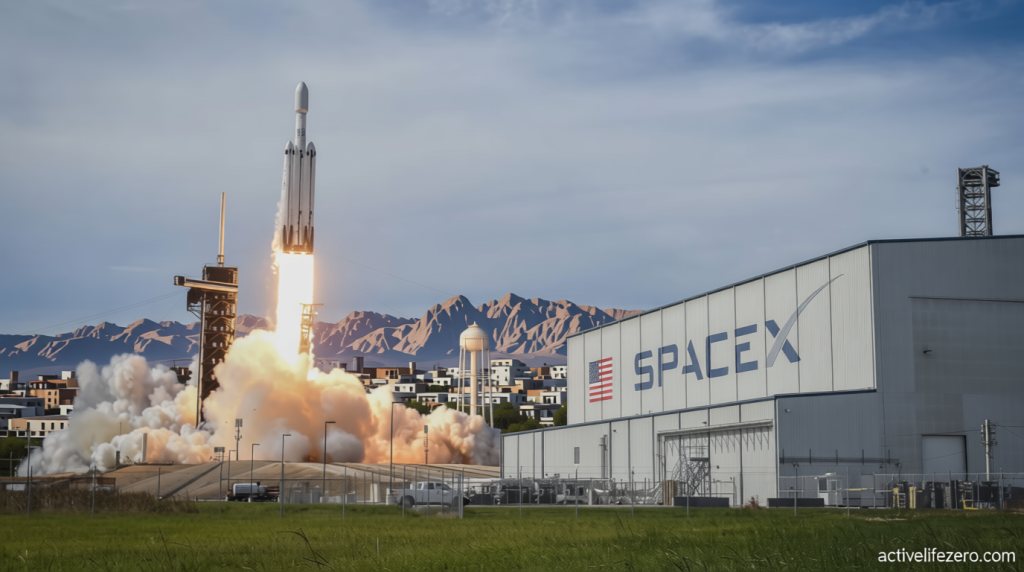
SpaceX Launches Historic $75 Billion IPO, Targeting $1.77 Trillion Valuation
SpaceX sets the stage for a record – Elon Musk’s SpaceX has taken a bold step into the public markets, revealing plans to raise $75 billion through an initial public offering. This ambitious move, if realized, would value the company at approximately $1.77 trillion, potentially making Musk the first individual to reach the trillion-dollar mark in net worth. The IPO, set to debut next Friday, represents a transformative moment for the aerospace giant, signaling a shift toward greater financial transparency and market integration.
Financial Structure and Ownership Dynamics
According to filings submitted to the Securities and Exchange Commission, SpaceX will issue 555.6 million shares at an initial price of $135 per share. This pricing strategy—fixing a single target rather than offering a range—is a notable departure from traditional IPO practices. It underscores the current fervor in the public market, driven by the rapid advancements in artificial intelligence and Musk’s reputation for setting audacious goals. The decision also reflects confidence in the company’s trajectory, as it positions itself as a leader in both space exploration and cutting-edge tech innovation.
Despite the IPO, Musk, who currently holds a 50% stake in the company, will retain a substantial portion of voting power. The filing notes that while he may own nearly half the total shares, some of these are special voting shares that grant him 82.4% of the company’s decision-making authority. This structure ensures that Musk remains a dominant figure in SpaceX’s operations, even as the company expands its investor base and diversifies its business models.
The AI Imperative and Market Shifts
SpaceX’s valuation is not solely based on its rocket and satellite ventures. The company has increasingly positioned itself as a key player in artificial intelligence, a sector that has recently become a catalyst for Wall Street enthusiasm. While profitability in AI remains an ongoing challenge for many firms, investors are optimistic about its long-term potential to drive productivity and revenue growth. This optimism is evident in the rising valuations of AI startups, which have often surpassed traditional benchmarks before even launching their public offerings.
The company’s foray into AI coincides with its broader expansion into telecommunications, marked by the launch of Starlink in 2021. This satellite-based internet service has already begun to reshape global connectivity, and the integration of xAI, Musk’s AI venture that includes his social media platform X, further solidifies SpaceX’s role in shaping the future of technology. By merging these domains, the company aims to create a seamless ecosystem that bridges the gap between space infrastructure and AI-driven innovation.
Apollo’s Legacy and the Road Ahead
SpaceX’s IPO is expected to surpass the previous record for the largest public offering, which was set by Saudi Aramco’s $29.4 billion raise in 2019. This milestone highlights the growing appetite for high-growth ventures, even in the face of economic uncertainty. The company’s focus on both space travel and AI reflects a dual strategy: expanding human exploration beyond Earth while leveraging technological advancements to unlock new revenue streams.
The IPO’s success hinges on the ability of investors to envision the long-term value of SpaceX’s ventures. While the company has yet to demonstrate consistent profitability, its revenue streams—from satellite internet to space logistics—suggest a path toward financial stability. The funds raised will be used to accelerate projects such as orbital data centers, which are designed to support AI operations in space. This initiative could revolutionize how data is processed and stored, offering a competitive edge in the global tech landscape.
Musk’s net worth is projected to reach $841 billion if the IPO price of $135 per share holds. This figure alone would eclipse the combined net worth of the next three wealthiest individuals—Larry Page and Sergey Brin, the founders of Google, and Larry Ellison of Oracle—according to Forbes’ real-time billionaire tracker. Adding his stake in Tesla, which is valued at approximately $300 billion as of Wednesday’s closing, Musk’s total wealth could soar to $1.1 trillion, surpassing the collective net worth of the top five billionaires on the list.
Broader Implications and Industry Trends
The SpaceX IPO is more than just a financial event; it symbolizes the commercialization of space and the growing influence of tech moguls on global markets. As the company prepares to trade on the stock market, it joins a wave of AI-focused firms that are redefining valuation standards. Anthropic, a rival in the AI space, has already announced its plans, and OpenAI is anticipated to follow suit. Together, these offerings could generate thousands of millionaires, with some investors potentially achieving billionaire status in the process.
While SpaceX’s valuation may seem extraordinary, it is rooted in the transformative potential of its technologies. The company’s rockets dominate the commercial space industry, transporting astronauts and satellites to orbit with increasing frequency. However, the AI component has become a cornerstone of its value proposition, as Wall Street increasingly prioritizes innovation over immediate profitability. This trend has led to a surge in investments in AI startups, even as their financial models remain in flux.
When Musk founded SpaceX in 2002, its mission was to revolutionize space travel through reusable rocket technology. Over the years, the company has evolved into a multifaceted enterprise, blending aerospace engineering with digital innovation. The integration of AI into its operations underscores this evolution, as the company seeks to leverage machine learning for mission planning, satellite management, and data analysis. This expansion into AI also aligns with Musk’s broader vision of establishing human settlements on the Moon and Mars, where autonomous systems will be essential for survival and exploration.
Investors are betting on the future of AI, recognizing its potential to transform industries and economies. While the current landscape is characterized by rapid development and speculative growth, the long-term benefits—such as increased automation and efficiency—are seen as critical drivers of wealth creation. SpaceX’s IPO is
