
Golf equipment is already a multibillion-dollar market. AI could be about to supercharge it
Golf Equipment Market Grows, AI Supercharges It
Golf equipment is already a multibillion – The golf equipment market is already a multibillion-dollar industry, driven by a global surge in interest in the sport. Participation levels hit an all-time high in 2025, with over 160 million people worldwide playing golf. This marks a nearly 50% increase from 2023, reflecting a renewed passion for the game. In the U.S., the number of golfers is projected to exceed 50 million by 2026, further cementing the sector’s financial potential. Innovations like driving ranges and virtual simulators have drawn a new wave of casual players, boosting demand for cutting-edge golf equipment. As technology advances, artificial intelligence is emerging as a powerful catalyst, poised to transform the industry’s trajectory.
AI-Powered Golf Trolleys Redefine the Game
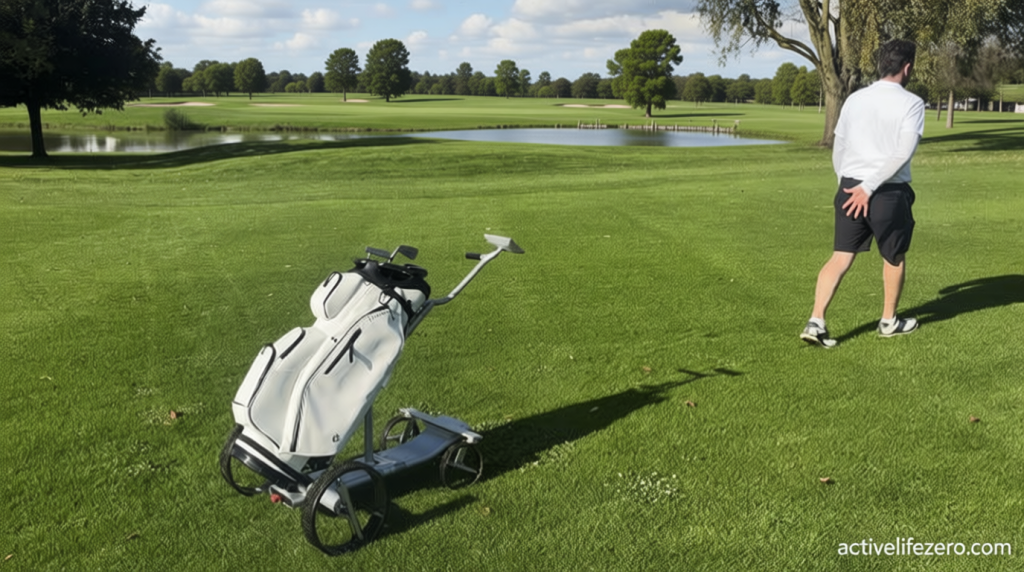
One of the most exciting developments in AI-driven golf equipment is Botronics’ iXi trolley, an autonomous device that acts as a digital caddy. Based in Nivelles, Belgium, the startup unveiled the trolley in 2021, originally targeting a summer 2026 launch. However, it has now reached the “advanced prototype” phase, with a scheduled release in June 2027. The iXi trolley uses two cameras and a GPS system to navigate over 40,000 courses, delivering real-time insights to players. It can detect when a putter is removed, signaling the start of a green, and automatically adjust its path to the next tee. This innovation represents a significant leap from traditional equipment, merging physical mobility with AI-powered intelligence.
“Imagine a computer with wheels that not only provides real-time feedback but also evolves with your needs,” said Laetitia Fraikin, Botronics’ chief revenue officer, in a CNN interview. “The goal is to give you everything you need to maximize your performance, whether it’s guidance on the course or data analysis after each round.”
Revolutionizing Club Design and Player Training
Ai integration extends beyond trolleys, reshaping how golf equipment is designed and how players improve their game. Callaway, a major manufacturer, has been using machine learning since 2019 to create clubs tailored to individual swings. Their Ai Smoke Irons, for instance, were developed through an AI model trained on thousands of golfers’ techniques. This data-driven approach allows for precise adjustments, enhancing performance for specific players. Similarly, Wilson’s Fit AI app, launched in 2024, leverages algorithms to analyze swing data from launch monitors, offering personalized club recommendations. These tools are becoming critical in an era where customized equipment can significantly impact performance.
The golf equipment market is also seeing AI’s role in training. Two-time U.S. Open champion Bryson DeChambeau, known for his tech-forward methods, recently acquired Sportsbox AI for an 8-figure sum. The company’s 3D Golf app creates motion-capture avatars, providing detailed feedback to refine technique. DeChambeau’s use of Google’s Gemini AI assistant highlights how professionals are embracing AI to elevate their game. This trend underscores the growing importance of intelligent systems in both equipment and player development within the golf equipment market.
Consumer Demand and Market Expansion
Consumer enthusiasm for AI-enhanced golf equipment is evident in the rapid adoption of new technologies. Botronics’ iXi trolley, priced at $5,385, saw pre-orders surge during a crowdfunding campaign that raised nearly $1 million. Over 125 units were sold within the first 10 minutes of its launch, signaling strong interest. This momentum reflects a broader shift in the golf equipment market, where tech-savvy and traditional players alike are embracing innovation. Companies are responding by investing in AI research, aiming to create products that adapt to user behavior and performance metrics.
As the golf equipment market expands, the integration of AI is expected to streamline production, reduce costs, and improve user experience. From self-navigating trolleys to smart club-fitting systems, the industry is witnessing a transformation driven by data and automation. With over 160 million global players, the potential for AI to personalize equipment and training is immense. The combination of affordability and accessibility in AI technologies is likely to further accelerate growth in the golf equipment market, making it more inclusive and efficient for all skill levels.
