
Bridgerton is finally celebrating a lesbian romance – the homophobic reactions are gutting
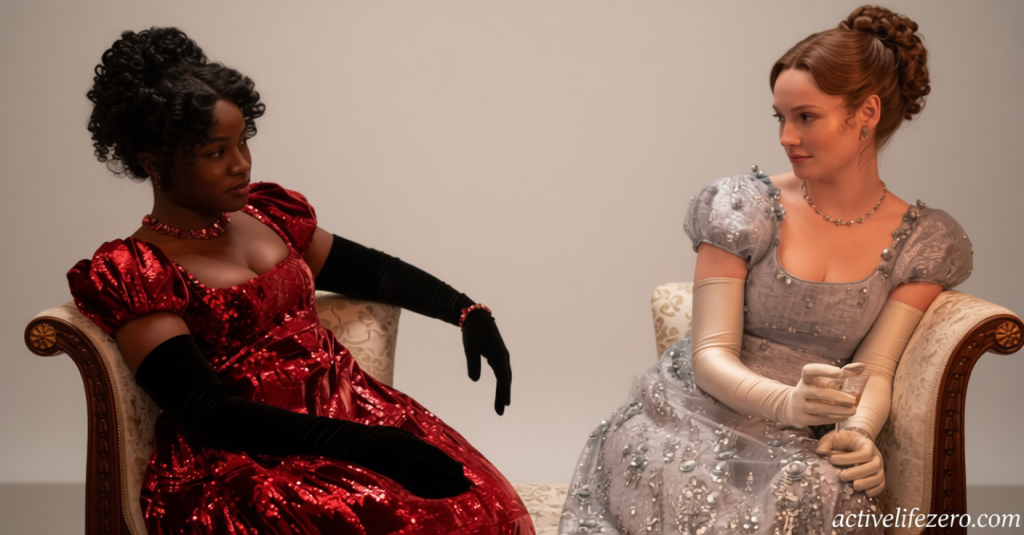
Bridgerton is finally celebrating a lesbian romance – the homophobic reactions are gutting
Upon learning that Francesca (Hannah Dodd) and Michaela (Masali Baduza) would be the lead duo for season five of Bridgerton, I was thrilled. However, the rest of the show’s so-called fanbase swiftly derailed my excitement with their discontent.
Scrolling through social media quickly reveals a flood of distressed responses, often dividing into two categories: sorrow over Eloise’s love story being delayed or fervent homophobes vowing to quit the series for daring to feature a sapphic romance.
The focus on Eloise’s perceived snub
Most of the disappointment centers on Claudia Jessie’s character, Eloise, who has long resisted societal expectations of marriage. While I wouldn’t have opposed her story being told next, I believe the frustration may be unwarranted. Eloise’s arc has been in the works since the series began, and her narrative will find its place in season five.
Francesca’s storyline, including her union with John, her introduction to Michaela, and John’s untimely death, has already been explored across two seasons. The foundation for her romance was established early, making its continuation feel redundant. Yet, some fans insisted Francesca required more time to grieve, with a two-year gap confirmed. I struggle to see how additional episodes of mourning would enrich the plot.
Evolution of the show’s narrative
The shift between Colin and Benedict, which originated from the books, allowed for Benedict’s character to develop independently. This change resolved Colin’s tension with Penelope, much like the one emerging between Francesca and Michaela. Such adjustments have proven beneficial, suggesting that altering Eloise’s timeline could be equally justified.
While some wish Eloise would return to her rebellious roots—such as her clandestine meetings with Theo and advocacy for societal change—her story, particularly her relationship with Sir Phillip Crane, still holds promise. This pairing, which appears in the books, offers a compelling arc that could complement the show’s evolving themes.
Reactions and underlying biases
Among the backlash, a recurring theme is the belief that relationships should adhere to 19th-century norms. Comments like “Why can’t they just stick to the ‘tradition’ of relationships in that period?” and “We don’t have to make everything we watch gay” reflect a growing intolerance for LGBTQ+ representation.
Though LGBTQ+ characters have been part of the Bridgerton universe for years, they’ve often been relegated to secondary, male-dominated storylines. For instance, Benedict’s bisexuality and Brimsley and Reynold’s romance in the Queen Charlotte spin-off were minor, yet well-received, elements. The current outrage, however, feels more intense and disproportionately focused on Francesca and Michaela.
One argument claims Francesca’s female love interest undermines her infertility plotline from the book, When He Was Wicked. This critique seems shallow, as the struggle of conceiving has already been addressed. It’s ignorant to assume that same-sex couples wouldn’t face similar challenges in the 1800s, especially without modern medical advances.
A chance for broader representation
Far from being a setback, the inclusion of a sapphic romance opens doors for diverse storytelling. It introduces nuance to the series, allowing characters from historically underrepresented groups to take center stage. This evolution is not only fitting but necessary for the show’s continued relevance.
Bridgerton fans will still have ample opportunities to witness Eloise’s growth, with her relationship with Sir Phillip Crane set to unfold. I hope this storyline, and the broader representation it embodies, can ease the current storm. After all, a girl can dream of seeing more love stories that reflect the spectrum of human connection.
“We do not have to make everything we watch gay.”
With the backlash reaching a peak, it’s vital for Eloise supporters to temper their outrage. The comments she faces from fans of Franchaela could be overwhelming. Let’s not forget, the series has already embraced LGBTQ+ elements in the past—why should this be any different?
