
The fight for Michigan: How a marquee Senate primary became the Democrats’ latest proxy war
Michigan’s Senate Race: A Battle Within the Democratic Party
A Proxy War for the Soul of the Party
Activelifezero.com – The upcoming Michigan Senate primary has evolved into something far greater than a simple contest for one congressional seat. What began as a routine succession race has transformed into a bitter microcosm of the ideological divisions currently tearing through the Democratic Party. With just hours remaining before voters cast their ballots, the outcome remains uncertain, and both campaigns acknowledge that regardless of who emerges victorious, the party may have inflicted significant damage upon itself heading into November.
At the center of this storm sits Senate Democratic Leader Chuck Schumer, who has been actively maneuvering behind the scenes to shape the race in his preferred direction. When he summoned retiring Senator Gary Peters to his office in late June, Schumer was direct in his assessment. He believed that Abdul El-Sayed’s polling numbers had declined from earlier peaks, creating an opportunity to defeat the former Wayne County health director. Schumer harbored concerns about El-Sayed on multiple fronts—ideologically, the candidate runs hard from the Bernie Sanders and anti-Israel factions of the party, and Schumer fears El-Sayed could lose the general election to former Representative Mike Rogers.
The Inside Game: How the Race Was Reshaped
Schumer’s strategy became clearer when he discussed the three-way Democratic contest with Peters. State Senator Mallory McMorrow, according to Schumer’s assessment, was clearly not positioned to win. While Schumer never explicitly stated his preference, Peters understood his mission: convince McMorrow to withdraw from the race and allow Representative Haley Stevens to face El-Sayed in a head-to-head matchup.
The maneuvering involved several key players. Schumer’s initial preference for Peters’ successor was term-limited Governor Gretchen Whitmer, as he consistently favors candidates with prior statewide electoral victories. Whitmer, however, firmly rejected the idea. For months, Schumer and New York Senator Kirsten Gillibrand, who chairs the Democratic Senatorial Campaign Committee, had signaled their unofficial support for Stevens. They invited her to donor events and channeled additional resources toward her campaign. Gillibrand even went so far as to suggest to several donors that McMorrow had been a member of the Democratic Socialists of America—a claim that turned out to be inaccurate.
Two Candidates, Two Visions
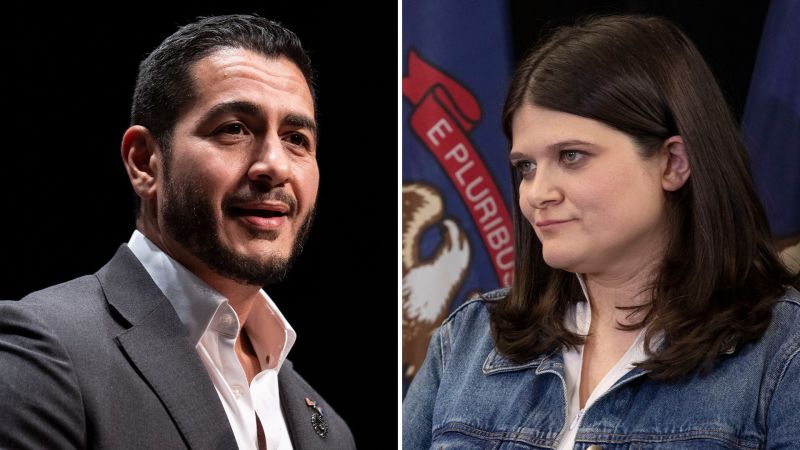
Now that McMorrow has exited the race, the contest has narrowed to two distinct visions for the Democratic Party. Stevens has emphasized her experience working for former President Barack Obama and highlighted the importance of focusing on manufacturing and other Michigan-specific issues. Her campaign has been buoyed by more than $50 million in outside spending. El-Sayed, meanwhile, has centered his campaign on promoting Medicare for All while simultaneously targeting the American Israel Public Affairs Committee and other outside interests that have attempted to undermine his candidacy.
The stakes extend well beyond Michigan. This purple state has historically been central to determining which party controls the White House, and both Republicans and Democrats believe it could decide the Senate majority this year. The intensity of the primary reflects the broader struggle within the party between its establishment wing and its more progressive factions.
“There are a lot of very strong, intense feelings right now, and we have to bring people together because we have to remember what the November election is about. It is about winning the House and the Senate, so we cannot lose the Senate seat,” said Rep. Debbie Dingell, one of the few Michigan Democrats who have not taken sides in the Senate primary.
“Nobody can like the kind of brutality, the ugliness that we have seen,” she said. “That makes it harder to come together. But we have no choice.”
The Final Push
Peters, urged on by his wife, undertook his mission in his characteristic soft-sell manner. McMorrow called him, visibly irritated, after a Wall Street Journal story published on June 26 included a mention that Peters believed she needed to consider dropping out. The two did not speak again before McMorrow gave Peters a heads-up on July 5 that she was about to suspend her campaign. She and her advisers decided she did not want to be painted as a spoiler if she hoped to run for another office in the future.
Stevens, according to two people familiar with the situation, couldn’t believe her luck but struggled to determine how to proceed. As the primary approaches, committed supporters of both El-Sayed and Stevens view each other with suspicion and disdain. Backers of each candidate across the country have treated the race as if it represents an existential crisis for their vision of the Democratic Party. Schumer’s gut check with Peters had confirmed his suspicions that the National Republican Senatorial Committee, which had been working to boost El-Sayed, was onto something about the progressive candidate’s vulnerability. With the dust still settling from McMorrow’s withdrawal, the stage is set for a dramatic conclusion to what has become the Democrats’ latest proxy war.
Related Reading
Frequently Asked Questions
What is The fight for Michigan?
The fight for Michigan is the main topic of this guide. The article explains the context, practical details, and next steps readers should understand.
Why does The fight for Michigan matter?
The fight for Michigan matters because readers are looking for a useful answer, not just a short summary. Good content should match search intent and help them decide what to do next.
